

The Nigeria Police confirm Omoyele Sowore arrest for allegedly leading protesters into a restricted Abuja area, violating a court order on public gatherings.
The Omoyele Sowore arrest by the Nigeria Police Force has once again sparked public debate on human rights, lawful protests, and government accountability in Nigeria.
Authorities claim the human rights activist and former presidential candidate was detained for leading protesters into a restricted area in Abuja, allegedly violating a standing court order.
The Force Public Relations Officer, CSP Benjamin Hundeyin, disclosed the details of the Omoyele Sowore arrest during a press briefing in Abuja on Thursday.
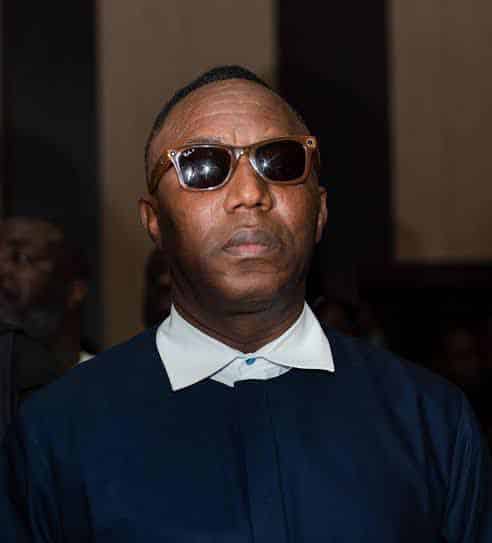
He said Sowore’s detention followed evidence linking him to the organization of a protest tagged “Free Nnamdi Kanu”, which took place earlier in the week within restricted zones of the Federal Capital Territory (FCT).
“Omoyele Sowore has been arrested by the Nigeria Police Force because 13 protesters earlier arrested mentioned him as the one who led them into the restricted area in violation of a court order,” Hundeyin said.
He added that it would be unjust to arraign those who followed Sowore into the prohibited area without including the alleged instigator himself.
“It would be unfair to charge those arrested while excluding the person they claim led them to commit the offence. In the spirit of fairness and justice, Sowore was arrested today,” Hundeyin emphasized.
The Omoyele Sowore arrest stems from a protest demanding the release of Nnamdi Kanu, the detained leader of the proscribed Indigenous People of Biafra (IPOB).
A previous court ruling had restricted protests and large gatherings in some parts of Abuja, including the Transcorp Hilton vicinity and areas surrounding the Ministry of Finance.
Despite repeated warnings from authorities, protesters were reported to have gathered in those areas, leading to the arrest of 13 individuals.
According to the police, eight suspects were picked up around Transcorp, while five others were arrested near the Ministry of Finance.
CSP Hundeyin explained that all 13 suspects were arraigned in court within 24 hours of their arrest. He also noted that their statements implicated Sowore as the person who coordinated and directed the protest despite the court’s restriction.
“The investigation revealed that the protest was not spontaneous but organized, with Sowore allegedly taking a leadership role in mobilizing participants into restricted areas,” he said.
The Nigeria Police Force maintained that the Omoyele Sowore arrest was not politically motivated. Hundeyin stressed that the police acted purely on legal grounds and in line with judicial directives.
“Sowore will not spend more than 24 hours in police custody. We intend to conclude his charges and ensure he is arraigned in court today, once documentation is complete,” Hundeyin assured.
He explained that the quick processing of Sowore’s case aligns with the police’s renewed commitment to transparency and respect for due process.
The Omoyele Sowore arrest has ignited mixed reactions nationwide. Supporters of the activist have condemned the action, describing it as an attack on freedom of speech and peaceful assembly. Civil society organizations and human rights advocates argue that Sowore’s detention represents a continuous pattern of intimidation of dissenting voices in Nigeria.
Conversely, some legal experts and government supporters argue that the rule of law must be upheld, emphasizing that no one is above judicial orders. They maintain that while peaceful protest is a constitutional right, it must not contravene valid court directives that safeguard public safety.
Sowore, known for his consistent activism, has been involved in several political movements and protests against government actions. He previously ran for president under the African Action Congress (AAC) and has remained a vocal critic of perceived injustices and human rights abuses in the country.
The police clarified that the Omoyele Sowore arrest should not be seen as an attempt to silence activism. According to CSP Hundeyin, the Nigeria Police Force supports citizens’ right to protest but must enforce laws that protect lives and property.
“We are not against peaceful protests. However, when a valid court order restricts movement or demonstrations within certain zones, such directives must be obeyed by everyone, regardless of status or political affiliation,” he said.
Hundeyin urged citizens to respect court rulings and work with law enforcement agencies to maintain peace and stability in the nation’s capital.
The Omoyele Sowore arrest raises crucial questions about the tension between activism and state authority in Nigeria. Legal analysts believe the outcome of this case could shape future interpretations of citizens’ rights to protest within a lawful framework.
Sowore has had multiple confrontations with authorities in the past. In 2019, he was arrested and charged with treason for leading the #RevolutionNow protest, which called for nationwide reform. Although he was later granted bail, his frequent clashes with the government have made him a symbol of resistance for many Nigerians advocating for good governance and accountability.
Observers note that the police’s approach in this case will be closely monitored both locally and internationally. The manner in which the courts handle the case could influence Nigeria’s global human rights perception and its adherence to democratic principles.
The Omoyele Sowore arrest serves as another test of Nigeria’s democratic maturity and respect for civil liberties. While the police insist that their action was in line with the law, rights advocates argue that such arrests undermine free speech and the right to dissent.
As Sowore awaits arraignment, attention remains on the judiciary to ensure justice is delivered fairly and transparently.
The case highlights the continuing struggle between the pursuit of lawful order and the protection of fundamental freedoms — a balance that remains central to Nigeria’s democratic journey.
More news at ireport247news


