Human rights activist Okere Kingdom condemns police brutality in Nigeria, exposing illegal arrests, intimidation, and threats to free speech.
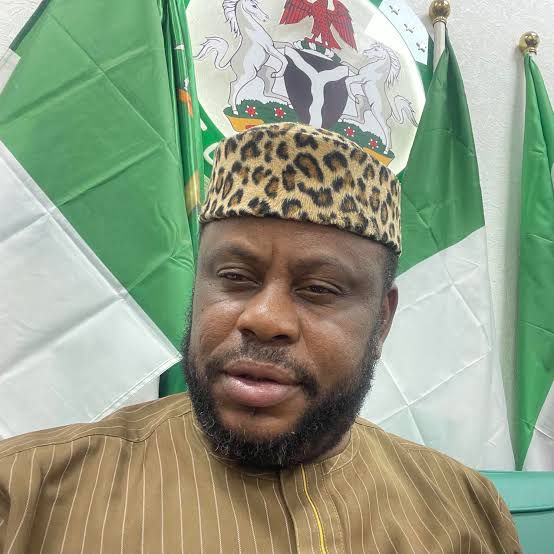
Human rights lawyer and activist Okere Kingdom has publicly condemned his recent arrest and detention in Abuja, describing it as “illegal, brutal, and deeply traumatic.”
The incident has intensified national conversations about police brutality in Nigeria, particularly its impact on journalists, civil society actors, and activists advocating for justice and equality.
Speaking after his release, Okere accused the Inspector-General of Police (IGP), Kayode Egbetokun, of abusing power and becoming what he called “the chief terrorist of the Federation.”
He highlighted that unchecked authority and the illegal extension of his tenure have emboldened law enforcement to suppress dissent arbitrarily.
“My arrest was extremely traumatic. The IG himself has become the chief terrorist of the Federation,” Okere said.
“They say power corrupts, and absolute power corrupts absolutely. His regime was illegally maintained—the Police Act was unlawfully amended to give him absolute authority. That is why we are witnessing such egregious police brutality in Nigeria.”
Okere, who is a prominent human rights advocate across the Southeast and South-South regions, was violently apprehended in Utako, Abuja, while addressing the press about justice and equality for all Nigerians.
“I was speaking live on News Central, Arise Television, and other outlets, explaining why justice must be ensured for all Nigerians, regardless of tribe or region,” he said.
“While I was addressing the media, armed policemen suddenly swooped in and arrested me as if I were a criminal.”
According to Okere, his only “crime” was calling attention to the marginalization of certain regions, especially the Southeast. He also criticized the detention of IPOB leader Nnamdi Kanu as ethnically motivated.
“I was very direct in stating that Nnamdi Kanu is being held because he is an Igbo man,” he said.
“I also pointed out cases where political leaders, like the former Governor of Kaduna State, accused national security officials of funding bandits, yet no one was arrested. But if you speak against injustice in this country, you are immediately targeted.”
Okere condemned the government’s so-called “politics of insecurity,” accusing authorities of using selective enforcement and intimidation to silence critics.
“I called on them to stop victimizing citizens from the Southeast, who are particularly vulnerable,” he said.
“Every citizen should be treated equally. If you are Igbo, you should be treated as a Nigerian. I refuse to live in a country where I am considered a second-class citizen.”
He further noted that his arrest lacked any legal foundation. The court order cited by police only restricted protesters from approaching the National Assembly and the Three Arms Zone—it did not prohibit addressing the media.
“The supposed court order stated that protesters shouldn’t go near the National Assembly or Three Arms Zone. I was in Utako, far from those locations, speaking to the press. When did addressing the media become a crime in Nigeria?” he questioned.
Now free, Okere intends to pursue legal action against the Inspector-General of Police for unlawful arrest, detention, and violation of fundamental human rights.
“Now that I am out of this illegal, brutal detention, I will take him to court and demand damages,” he said.
“Speaking to the press was the only ‘crime’ I committed. Citizens should not live in fear for exercising their rights to free speech and civic participation.”
Okere’s experience illustrates the broader problem of police brutality in Nigeria, which has escalated under the current administration.
Arbitrary arrests, intimidation, and violent suppression of peaceful protests have become increasingly frequent, raising fears that Nigeria is sliding toward a police state.
“This government is turning Nigeria into a police state,” Okere warned.
“Citizens, journalists, and activists are now targets simply for speaking up. But we will not be silent. We will continue to resist oppression with the power of truth.”
His arrest coincided with growing outrage over violent crackdowns on peaceful protests across Abuja and other cities.
Demonstrators were advocating for the release of Nnamdi Kanu and for justice, equality, and human rights protections. Journalists and activists covering these protests were frequently met with tear gas, physical assault, and harassment—further evidence of police brutality in Nigeria.
Human rights organizations have repeatedly condemned these actions, warning that arbitrary detention, suppression of free speech, and excessive use of force threaten Nigeria’s democratic institutions. Okere stressed that citizen activism must continue despite threats of violence or legal intimidation.
“We cannot allow fear to silence our voices,” he said.
“Speaking truth to power is not a crime. Defending human rights and demanding equality are civic duties. We will continue to highlight abuses, challenge illegal actions, and demand accountability from those in power.”
Okere Kingdom’s ordeal highlights how police brutality in Nigeria disproportionately affects outspoken voices advocating for justice, particularly in marginalized regions.
As civil society presses for reform, activists like Okere remain steadfast in fighting for accountability, equality, and protection of fundamental rights.
Okere’s arrest highlights the urgent need to address police brutality in Nigeria, enforce the rule of law, and uphold human rights for all citizens.
His determination to challenge unlawful arrests and resist government impunity serves as a rallying point for those committed to democracy and justice.
More news at ireport247news
About The Author