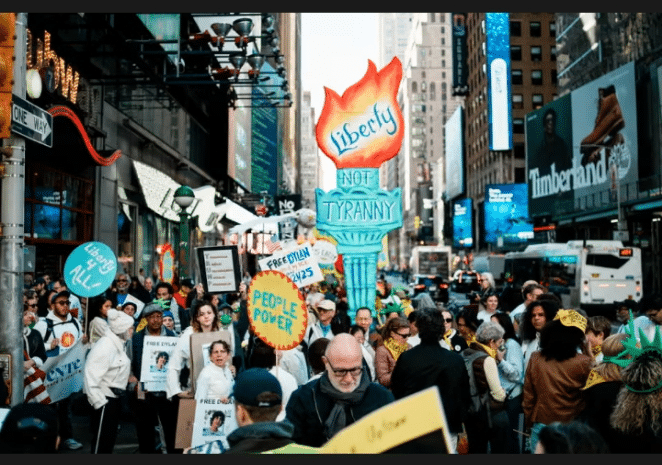
Crowds filled streets across major US cities today as the No Kings protests swept the nation, challenging President Donald Trump’s growing assertion of unchecked executive power.
Organisers described the No Kings protests as a movement to defend democracy from creeping authoritarianism, uniting thousands under a shared call that “America was founded without kings or crowns.”
In Washington DC, marchers surrounded the Capitol chanting “No Kings, No Dictators,” waving flags and placards portraying Trump wearing a golden crown crossed out in red ink.
The No Kings protests gained momentum online earlier this week, quickly translating digital outrage into physical demonstrations across the country, from New York and Chicago to Los Angeles and Seattle.
Protesters accuse Trump of disregarding constitutional limits and dismissing judicial authority, warning that his recent executive orders suggest a dangerous belief in presidential supremacy over democratic institutions.
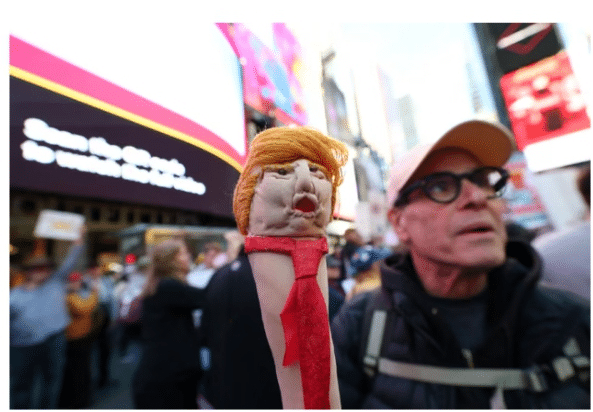
“We are the guardians of a republic, not subjects of a ruler,” said activist Maria Thompson, who helped coordinate the No Kings protests in Washington’s Freedom Plaza.
In New York’s Union Square, crowds sang patriotic anthems while speakers reminded attendees that the United States was founded in rebellion against hereditary power and monarchic arrogance centuries ago.
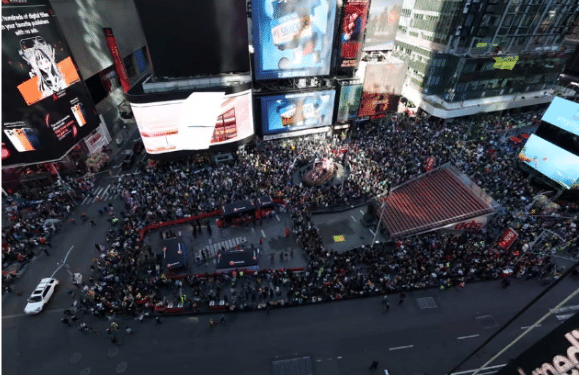
“The No Kings protests remind us that freedom isn’t inherited—it’s defended,” declared one banner held high by demonstrators marching down Broadway as police redirected traffic around Times Square.
President Trump dismissed the No Kings protests on his social media platform, calling participants “paid agitators” and insisting that “the real kings are American voters defending greatness against chaos.”
Despite his rhetoric, estimates suggest over 200,000 people participated nationwide, marking one of the largest coordinated protest actions of Trump’s current presidency and drawing international attention to dissent.
In Philadelphia, birthplace of the Declaration of Independence, marchers gathered near Independence Hall chanting “1776 again” as part of the No Kings protests, invoking the revolution’s anti-monarchist ideals.
Historians noted the symbolic power of staging No Kings protests at sites central to America’s democratic founding, warning that complacency could allow authoritarian habits to erode constitutional safeguards quietly.
Political analysts argue the No Kings protests tap into broader discontent with Trump’s handling of justice, transparency and accountability—issues that resonate beyond party divisions in an increasingly polarised electorate.
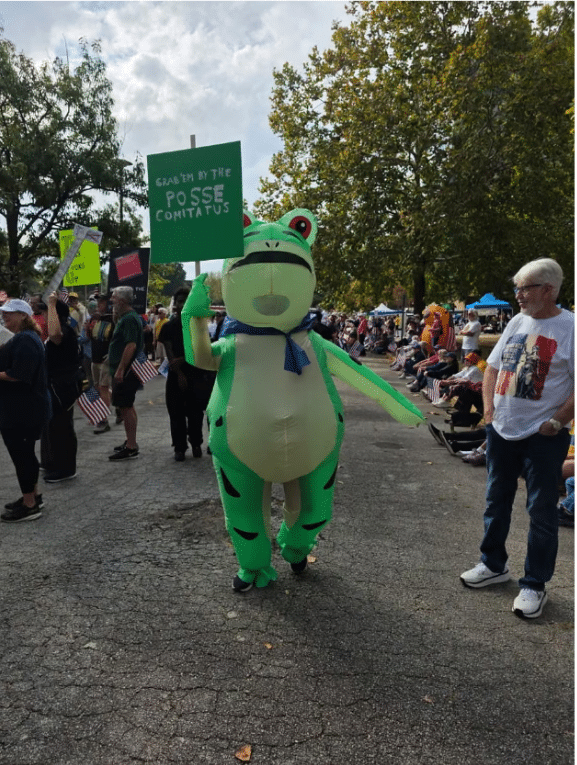
“This is not merely partisan anger,” said Dr Elaine Morris of Georgetown University. “The No Kings protests show citizens recognising institutional decay before it becomes irreversible political damage.”
Across the country, participants in the No Kings protests emphasised peaceful resistance. Demonstrators were urged to wear white as a symbol of civic unity and moral restraint amid rising national tensions.
Police reported minimal disturbances, crediting organisers for extensive coordination. Local authorities said the No Kings protests were largely peaceful despite isolated confrontations between protesters and a handful of counter-demonstrators.
In Los Angeles, veterans marched beside environmentalists and faith leaders, reflecting the No Kings protests’ unusual breadth, uniting Americans across ideological lines under the shared defence of constitutional democracy.
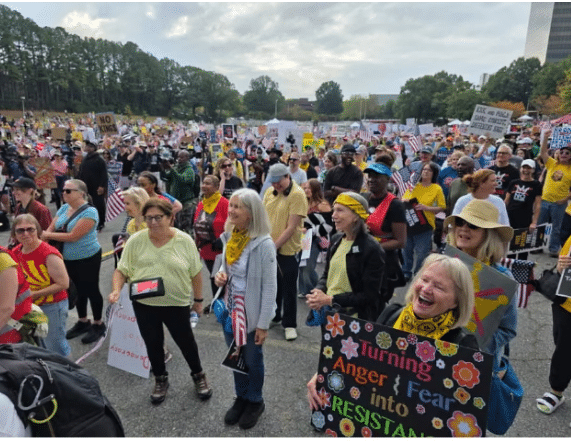
“This movement belongs to everyone who believes in checks, balances and accountability,” said Reverend Denise Carter in Atlanta, addressing thousands gathered outside Georgia’s statehouse during the evening rallies.
Participants in the No Kings protests used handmade signs, digital projection displays, and live musical performances to express their frustration over Trump’s growing disregard for institutional boundaries and civic norms.
Some protesters carried replicas of broken crowns as symbols of defiance, chanting “no kings, just citizens” through megaphones while children waved miniature American flags beneath giant democratic murals.
Social media amplified the No Kings protests, with hashtags trending globally by midday. Livestreams from multiple states showed vast crowds moving in coordinated silence before breaking into rhythmic chants.
In Boston, university students unfurled banners quoting Thomas Paine’s Common Sense, declaring that tyranny “repeats itself through complacency.” The No Kings protests embraced this revolutionary imagery deliberately and forcefully.
White House officials declined to comment formally but privately described the No Kings protests as “performative dissent,” downplaying their significance while acknowledging the scale of public participation surprised advisers.
Internationally, reactions were mixed. European newspapers compared the No Kings protests to past American civil movements that reshaped politics through persistent grassroots action rather than institutional reform or partisan negotiation.
Observers from Canada and Germany noted the No Kings protests mirrored growing global anxiety about democratic backsliding, especially among countries witnessing populist leaders testing limits on constitutional governance.
Political scientists believe the No Kings protests could influence mid-term voting patterns by galvanising civic engagement among independents alarmed by Trump’s consolidation of executive influence and erosion of oversight norms.
Legal experts participating in the No Kings protests vowed to challenge new executive orders they view as unconstitutional, promising litigation to reaffirm separation of powers before federal courts nationwide.
Meanwhile, Trump supporters staged counter-rallies under the slogan “Loyal to the Leader,” underscoring deepening divisions as both sides framed the No Kings protests as a battle for America’s democratic soul.
In Texas, demonstrators faced scorching heat yet persisted for hours, chanting “Our republic, not your throne,” a phrase repeated widely throughout the No Kings protests across southern states.
Footage from Chicago showed massive crowds circling federal buildings, holding candles during dusk vigils as speakers invoked the legacy of Martin Luther King Jr. and Lincoln’s enduring democratic vision.
Participants described the No Kings protests as cathartic—a reawakening of civic conscience after years of political exhaustion. “This is patriotism, not rebellion,” one elderly protester told reporters tearfully.
Media coverage has been extensive, though partisan networks offered contrasting narratives. Supporters of Trump dismissed the No Kings protests as elite-driven spectacles, while mainstream outlets highlighted authentic grassroots mobilisation.
Economists suggested unrest could briefly dampen investor confidence, yet others predicted the No Kings protests might strengthen America’s global democratic image by showing citizens actively resisting authoritarian drift.
In Miami, Latin American immigrants joined the No Kings protests, warning they had fled nations where leaders gradually dismantled freedoms while insisting they were protecting the people from chaos.
The protests’ inclusive tone struck many observers as decisive. Participants emphasised unity over ideology, declaring the No Kings protests were about preserving institutions, not promoting partisan agendas or political personalities.
President Trump, however, remained defiant. In televised remarks, he said, “America needs strength, not weakness,” portraying the No Kings protests as misguided efforts to undermine national success stories.
Political commentators noted such language may reinforce perceptions that Trump views himself above constraint, inadvertently lending credibility to the message driving the nationwide No Kings protests movement itself.
In Denver and Portland, organisers announced further rallies, promising that the No Kings protests would continue weekly until Congress enacts stronger limits on presidential powers and reaffirms judicial independence.
As night fell over Washington, candles illuminated the steps of the Supreme Court where thousands knelt silently, symbolising commitment to constitutional order beyond any single presidency.
The No Kings protests now represent a moral reckoning within American democracy—citizens demanding that power serve principles rather than personalities, echoing revolutionary ideals across two and a half centuries.
While outcomes remain uncertain, the symbolism of these nationwide demonstrations endures. The No Kings protests have become a reminder that democracy survives only through participation, vigilance and courage against hubris.
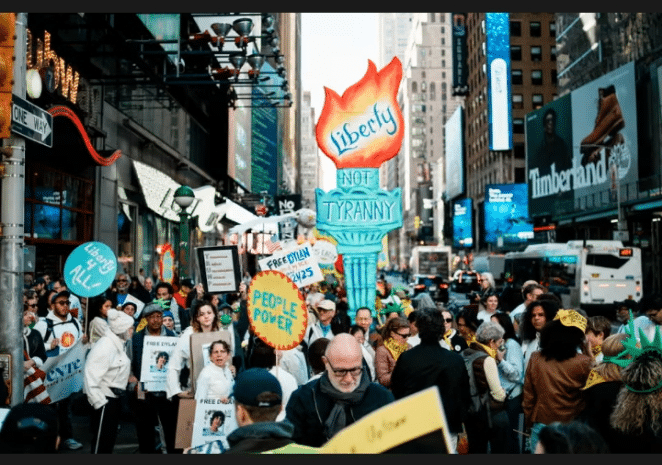
For many Americans, this weekend’s No Kings protests offered reassurance that collective action still matters—that ordinary people, united by conviction, can stand firm against the allure of autocratic temptation.
Across fifty states, diverse voices merged into one unified declaration: the presidency is not a throne, and freedom demands boundaries even for leaders elected by overwhelming mandates.
By the time dawn breaks tomorrow, organisers say the No Kings protests will have marked a turning point—reviving public engagement and restoring hope that America’s democratic experiment endures unbroken.
About The Author