A recent shipment of liquefied natural gas exported from Nigeria has been redirected toward Asian markets after rising gas prices created a lucrative opportunity for international traders.
Market data indicates that the cargo, which originated from Nigeria’s major LNG export facility on Bonny Island, changed its sailing route after price differences between European and Asian markets widened significantly.
Energy market analysts say the shift highlights how flexible global gas trade has become, with exporters often redirecting shipments to destinations offering higher returns.
Nigeria LNG cargo diversion reflects global price arbitrage
The latest Nigeria LNG cargo diversion underscores the growing impact of global price movements on international gas trade flows.
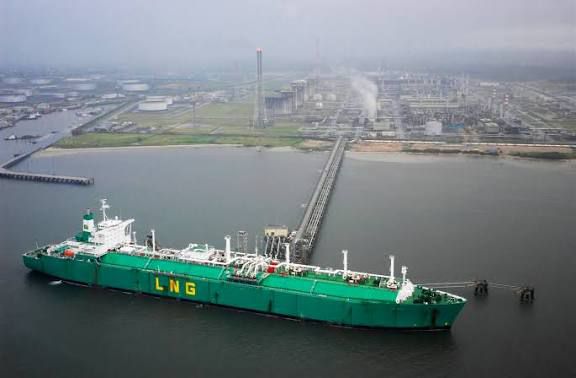
Shipping data revealed that an LNG tanker known as the BW Brussels initially signalled a westward route toward Europe after loading its cargo at the Bonny Island export terminal operated by Nigeria LNG Limited.
However, the vessel later changed course and headed south around the Cape of Good Hope, signalling a new destination in Asia.
Industry data compiled by energy analytics firm Kpler confirmed that the ship altered its trajectory several days after departure.
Analysts believe the Nigeria LNG cargo diversion occurred after Asian spot gas prices surged sharply, making the region a more profitable destination for available cargoes.
The flexibility built into many LNG shipping contracts allows traders to redirect shipments to markets where demand and prices are strongest.
Asian gas prices climb to multi-year highs
The Nigeria LNG cargo diversion comes at a time when Asia’s LNG market is experiencing a significant price rally.
According to market benchmarks, the Japan-Korea Marker, a widely used reference price for spot LNG deliveries in Asia, climbed dramatically in recent trading sessions.
Prices for April delivery surged to more than $25 per million British thermal units, representing the highest levels recorded in about three years.
By comparison, spot LNG prices in Europe, particularly those linked to the Dutch gas hub known as the Title Transfer Facility, have also risen but remain lower than Asian benchmarks.
European prices recently hovered around $15 per million British thermal units for April delivery.
Energy traders say the widening gap between the two markets created an arbitrage opportunity that encouraged the Nigeria LNG cargo diversion toward Asia.
Middle East tensions tighten global gas supply
The surge in Asian LNG prices has been partly driven by supply concerns linked to geopolitical tensions in the Middle East.
Ongoing tensions involving the United States and Iran have increased uncertainty in global energy markets.
In addition, disruptions affecting production in Qatar—one of the world’s largest LNG exporters—have contributed to tightening supply.
Industry experts note that Asian buyers rely heavily on Qatari LNG shipments, which account for a large share of regional gas imports.
With supply disruptions emerging, several Asian countries have intensified efforts to secure alternative LNG cargoes from global exporters.
Market observers say the Nigeria LNG cargo diversion reflects this scramble for additional gas supplies in Asia.
Growing competition for LNG shipments
Energy analysts say the global LNG market has become increasingly competitive as buyers in Europe and Asia compete for available cargoes.
Flexible shipping arrangements allow traders to change routes mid-journey, depending on price signals from different regional markets.
For exporters in the Atlantic Basin, including Nigeria, this flexibility means cargoes can be directed to whichever market offers the strongest commercial advantage.
The Nigeria LNG cargo diversion demonstrates how rapidly these decisions can occur when market conditions shift.
Experts say that if Asian prices remain significantly higher than those in Europe, more LNG shipments from Atlantic producers may be redirected eastward in the coming weeks.
Asian buyers seek alternative suppliers
The tightening gas market has also pushed several Asian countries to explore new sources of supply.
Government officials in India have reportedly begun scouting for alternative LNG imports after disruptions affected deliveries from Qatar.
Meanwhile, Bangladesh’s state-run energy company Petrobangla is said to be preparing tenders to secure additional LNG shipments in the spot market.
Energy analysts believe that Asia-Pacific buyers are likely to remain aggressive in seeking cargoes in the short term as they try to meet rising energy demand.
Implications for Nigeria’s LNG exports
Nigeria is among the world’s significant LNG exporters, with shipments primarily produced by Nigeria LNG Limited at its Bonny Island facility.
The country exports LNG to multiple global markets under a mix of long-term contracts and flexible spot agreements.
The Nigeria LNG cargo diversion illustrates how price dynamics in global markets influence where these cargoes ultimately land.
Analysts say the ability to redirect shipments allows exporters and traders to optimise revenue when regional prices fluctuate sharply.
At the same time, such diversions demonstrate the increasing interconnectedness of global energy markets, where supply disruptions in one region can quickly reshape trade patterns elsewhere.
For Nigeria, rising LNG demand in Asia could create additional export opportunities if the country maintains reliable production and shipping capacity.
About The Author