

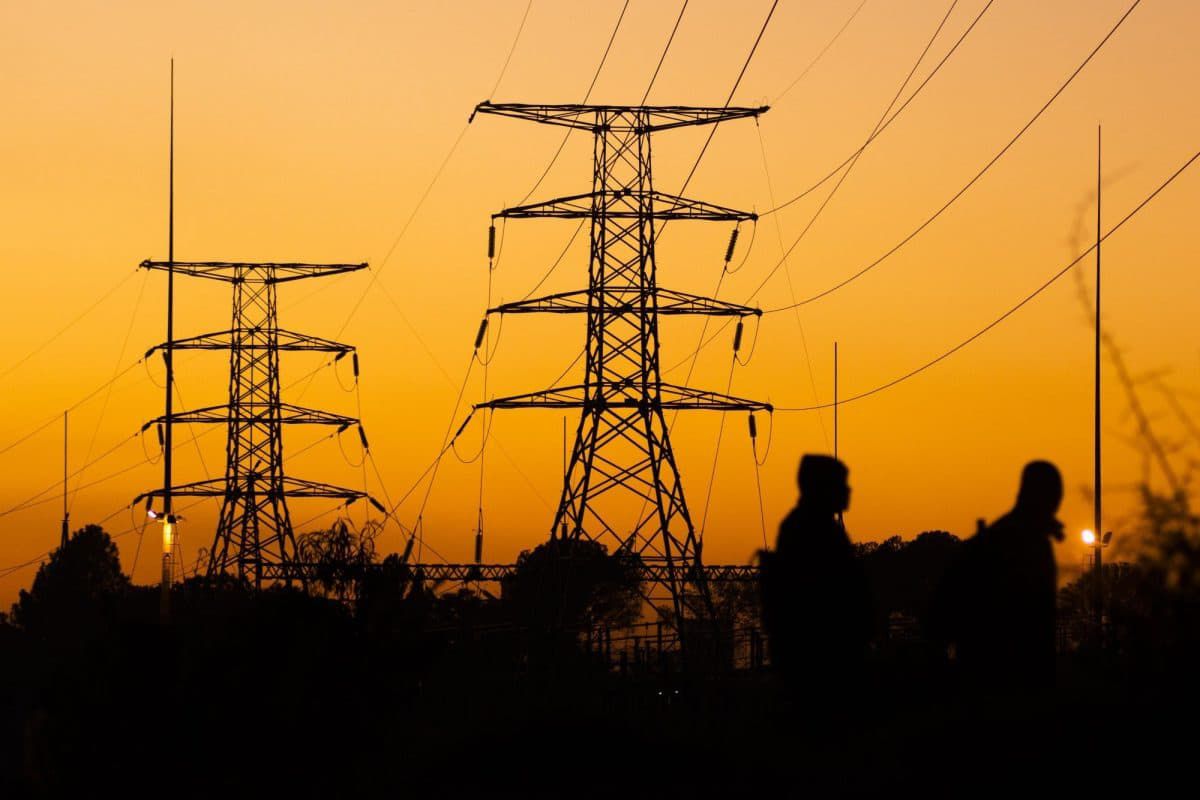
Power Improves on Paper, Darkness Deepens in Reality
Nigeria’s power crisis is worsening—despite official claims of improvement.
While the government reports a rise in electricity generation to over 4,300MW, millions of Nigerians continue to face daily blackouts, forcing homes and businesses to depend on costly generators.
Behind this disconnect lies a deeper structural failure: over 9,536 megawatts of installed electricity capacity is sitting idle.
Latest data from the Nigerian Electricity Regulatory Commission (NERC) reveals a troubling contradiction at the heart of the Nigeria power crisis—a country with enough installed capacity to significantly improve supply, yet unable to deliver power where it is needed most.
Nigeria Power Crisis: A System Producing Far Below Its Potential
At the core of the Nigeria power crisis is a persistent gap between what the country can generate and what it actually delivers.
In March 2026, Nigeria’s total installed capacity stood at 13,625MW, but only 4,089MW was available for dispatch. That means nearly 70 per cent of the country’s electricity capacity remained unused.
Average generation hovered around 3,815MWh/h, reinforcing a pattern that has defined the sector for years—stagnant output despite rising demand.
For a country of over 200 million people, this level of supply is not just inadequate—it is economically damaging.
Idle Plants, Rising Costs: Inside Nigeria’s Power Failure
The numbers reveal more than inefficiency—they expose a system struggling to function.
Several major power plants recorded zero output during the period under review. Facilities like Alaoji and Omotosho II, each built to generate 500MW, produced no electricity at all. Others, including Sapele and Afam plants, operated far below their installed capacity.
This underperformance translates into wasted infrastructure and lost economic value.
At the same time, Nigerians are paying more for alternative energy. Businesses run on diesel, households rely on petrol generators, and production costs continue to rise—feeding directly into inflation.
In effect, the Nigeria power crisis is no longer just about electricity—it is about economic survival.
Few Plants Holding the Grid Together
Despite the widespread underperformance, a handful of power stations continue to carry the burden of national supply.
Plants such as Egbin, Kainji, Jebba, and Shiroro account for the majority of electricity generation, collectively contributing over 80 per cent of total output.
This heavy dependence on a limited number of plants exposes a critical vulnerability. Any disruption to these facilities could trigger widespread outages, further deepening the Nigeria power crisis.
Adelabu’s Gains vs What Nigerians Experience

Minister of Power Adebayo Adelabu has pointed to recent gains, noting that electricity generation increased from about 3,951MW to over 4,300MW between late March and early April.
The improvement, driven by increased gas supply—from 605 million to over 704 million standard cubic feet per day—suggests progress within the system.
But for most Nigerians, those gains remain largely invisible.
Across cities and rural communities alike, electricity supply remains inconsistent. Outages persist, and reliance on self-generated power continues to grow—undermining any perceived improvement in generation figures.
This gap between official data and lived experience continues to define the Nigeria power crisis.
Stranded Power: The Hidden Problem Behind the Crisis
Industry experts argue that Nigeria’s electricity challenge is not just about generating power—but about delivering it.
Generation companies say they can make up to 7,000MW available, yet the transmission and distribution networks can only handle about 4,000–4,500MW.
The result is stranded power—electricity that is produced but cannot be delivered to consumers.
In January alone, stranded power stood at 2,985MW, while February recorded 3,274MW of unused electricity.
This inefficiency not only limits supply but also leads to billions of naira in losses, further weakening the sector.
A Broken Chain: Where the System Fails
The Nigeria power crisis is also a story of fragmentation.
Generation companies blame distribution firms for rejecting electricity. Distribution companies, in turn, point to transmission bottlenecks that prevent efficient delivery.
Caught in the middle is a system where each segment operates below capacity, and coordination remains weak.
Without alignment across the value chain, improvements in one area fail to translate into meaningful gains for consumers.
Related: Nigeria electricity generation hits 4,300MW—but many still in darkness
Read Also: Nigeria public debt hits N159tn, raising inflation fears and cost-of-living pressure
Monaco FA Cruise past Adecorum in Ireport247news football competition group stage
Tinubu’s Plan: Can GAMCO Unlock Idle Power?
In response to the growing crisis, President Bola Tinubu has introduced the Grid Asset Management Company (GAMCO), aimed at unlocking stranded capacity and improving transmission efficiency.
The initiative targets key power plants and proposes the development of a new high-capacity transmission corridor along the Benin–Lagos axis, one of Nigeria’s most critical electricity routes.
The government hopes to recover at least 1,600MW of idle capacity within 18 to 24 months.
While the plan signals intent, analysts caution that execution will determine whether it can meaningfully reduce the Nigeria power crisis.
Economic Impact: How the Power Crisis Is Driving Inflation
The effects of the Nigeria power crisis extend far beyond electricity supply.
With unreliable power:
- Businesses spend more on diesel and petrol
- Production costs increase
- Prices of goods and services rise
This creates a ripple effect across the economy, contributing to inflation and reducing purchasing power.
For households, the impact is immediate—higher energy costs, reduced income flexibility, and lower living standards.
A Crisis of Utilisation, Not Capacity
The latest data confirms a critical reality: Nigeria does not lack electricity capacity—it lacks the ability to use and distribute it effectively.

With over 9,536MW lying idle, the challenge is no longer about building new power plants, but about fixing the systems that connect generation to consumers.
Until those structural issues are addressed, the Nigeria power crisis will continue to define daily life—where electricity exists in theory, but remains out of reach in practice.
Read more at ireport247news
About The Author

domperidone bangladesh
domperidone bangladesh
ozempic semaglutide injection dosage
ozempic semaglutide injection dosage
propecia rogaine combination
propecia rogaine combination
doxycycline and alcohol side effects
doxycycline and alcohol side effects
tadalafil dosage rates
tadalafil dosage rates
stopping bupropion side effects reddit
stopping bupropion side effects reddit
erly liraglutide injection uses
erly liraglutide injection uses
toradol explained simply
toradol explained simply
terbinafine tolerability
terbinafine tolerability
ketoconazole indication page
ketoconazole indication page
terbinafine for fungal nail recovery
terbinafine for fungal nail recovery
sildenafil high‑fat meal effect
sildenafil high‑fat meal effect
avanafil use restrictions
avanafil use restrictions
Viagra vs sildenafil study overview
Viagra vs sildenafil study overview
tadalafil absorption and elimination
tadalafil absorption and elimination
this antibiotic overview
this antibiotic overview