

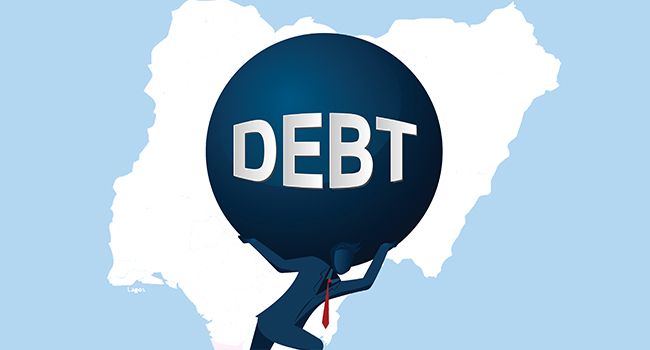
Rising Nigeria Public Debt Adds Pressure on Nigerians as Borrowing Accelerates
Nigeria public debt has hit N159tn, raising fresh concerns over inflation, fiscal pressure, and the rising cost of living—even as the government continues to ramp up borrowing.
Fresh data from the Debt Management Office shows that the country’s total public debt climbed to N159.28 trillion as of December 2025. But beyond the headline figure lies a deeper concern: while borrowing is increasing, the economic strain on households and businesses is also intensifying.
The contradiction is becoming harder to ignore. Debt is rising to support development and stabilise the economy, yet its side effects—higher interest rates, inflation risk, and fiscal pressure—are being felt across the system.
Borrowing Surge Signals Structural Fiscal Weakness
Nigeria added N5.98 trillion to its debt stock within just three months, rising from N153.29 trillion in September 2025 to N159.28 trillion by December.
On a yearly basis, the increase is even more pronounced, with total debt jumping by N14.61 trillion—an indication that borrowing is no longer a temporary tool, but a structural feature of fiscal management.

This trend reflects deeper challenges: weak government revenue, persistent budget deficits, and rising expenditure obligations. In effect, borrowing is filling a widening fiscal gap, not just funding long-term development.
Domestic Debt Expansion Raises Interest Rate Pressure
A closer look at the data shows that domestic borrowing remains the dominant driver of Nigeria’s debt profile.
Domestic debt rose to N84.85 trillion, accounting for over half of total public debt. External debt, meanwhile, climbed to N74.43 trillion.
While domestic borrowing reduces exposure to foreign exchange volatility, it creates another layer of economic pressure. By absorbing liquidity from the financial system, it pushes interest rates higher—making it more expensive for businesses and individuals to access credit.
This dynamic has direct consequences for economic growth. As borrowing costs rise, private sector expansion slows, investment declines, and job creation weakens.
External Debt and FX Pressure: A Dangerous Link
Nigeria’s external debt also increased significantly, reaching $51.86 billion in dollar terms.
This introduces a critical vulnerability: exchange rate risk.
As the naira weakens, the cost of servicing dollar-denominated debt rises, placing additional strain on government finances. This creates a feedback loop where borrowing contributes to FX pressure, which in turn increases the real burden of debt.
In recent months, Nigeria has already faced:
- persistent foreign exchange demand
- declining reserves
- increased intervention in the FX market
Adding more external debt into this environment amplifies fiscal risks and limits policy flexibility.
Government Defends Borrowing, But Questions Persist
At the IMF Spring Meetings, Director-General of the Debt Management Office, Patience Oniha, defended the country’s borrowing process, emphasising transparency and legislative oversight.
According to her, all loans are subject to approval by the National Assembly, ensuring scrutiny and accountability.
While this framework may strengthen institutional credibility, it does not fully address the central issue: sustainability.
Analysts argue that the real concern is not whether borrowing is approved, but whether it is sustainable in the long term—especially in an environment of rising inflation and limited revenue growth.
Debt Servicing Burden Squeezes Fiscal Space
One of the most critical implications of rising debt is the growing cost of servicing it.
A significant portion of Nigeria’s revenue is already allocated to debt repayment, leaving limited resources for infrastructure, healthcare, education, and social programmes.
This creates a fiscal squeeze where:
- government spending becomes constrained
- development projects slow down
- economic recovery weakens
For households, the impact is indirect but real—reduced public investment often translates into slower economic opportunities and declining living standards.
Inflation Risk and Cost-of-Living Impact
Nigeria’s rising debt is increasingly linked to broader inflation dynamics.
Higher borrowing can lead to:
- increased money supply
- tighter monetary policy
- higher interest rates
These factors combine to drive inflationary pressure, which is already a major concern for Nigerians.
With food prices rising and fuel costs remaining volatile, additional fiscal pressure from debt could further worsen the cost-of-living crisis.
This is where the issue becomes personal. What appears as a macroeconomic statistic ultimately affects:
- household purchasing power
- business operating costs
- overall economic stability
Revenue Challenge Remains the Core Issue
At the heart of Nigeria’s debt problem is a persistent revenue gap.
Despite its economic size, the country continues to generate relatively low revenue compared to its expenditure needs. This imbalance forces the government to rely heavily on borrowing.
Oniha acknowledged this challenge, noting that Nigeria must begin to prioritise revenue mobilisation over continuous debt accumulation.
Without significant improvement in revenue generation, borrowing will remain the default option—further deepening fiscal vulnerability.
Weak Institutional Capacity Raises Oversight Concerns
While Nigeria’s borrowing framework includes legislative approval, concerns remain about the capacity of oversight institutions.
Frequent turnover in the National Assembly, combined with the increasing complexity of global financial instruments, can limit the depth of scrutiny applied to borrowing decisions.
Related: US Iran crisis escalates as blockade of Iran ports, Strait of Hormuz sends oil prices higher
Read Also: Food prices surge again as war disrupts supply chains — Nigerians face fresh cost pressure
Oyo state lawmakers deny alleged plot against Governor Makinde
In some cases, approvals may be rushed due to time constraints, reducing the effectiveness of oversight mechanisms.
Strengthening institutional capacity will be essential to ensuring that borrowing decisions are not only transparent but also economically sound.
Outlook: Growing Risks Amid Limited Fiscal Space
Looking ahead, Nigeria faces a narrowing path between necessary borrowing and rising fiscal risk.
On one hand, borrowing is required to fund infrastructure and support economic growth. On the other, the pace of accumulation is raising concerns about long-term sustainability.
Key risks include:
- rising debt servicing costs
- continued FX pressure
- persistent inflation
- weak revenue performance
Unless these issues are addressed through structural reforms, the country could face increasing difficulty balancing growth objectives with fiscal stability.
Debt Growth Signals Deeper Economic Strain
Nigeria public debt reaching N159.28 trillion is more than just a headline figure—it is a reflection of deeper economic pressures building within the system.
While borrowing remains a necessary tool, its growing scale highlights the urgency of reform.
Without stronger revenue generation, improved fiscal discipline, and structural economic changes, the risks associated with rising debt will continue to mount.
For now, the numbers may suggest expansion—but beneath the surface, the pressure is clearly intensifying.
Read more at ireport247news
About The Author

vidalista 80 dosage
vidalista 80 dosage
loperamide regular use
loperamide regular use
vidalista 60 mg reviews
vidalista 60 mg reviews
doxycycline hyclate 100mg dairy
doxycycline hyclate 100mg dairy
what is metronidazole mean
what is metronidazole mean
5mg cialis daily
5mg cialis daily
terbinafine dosage essentials
terbinafine dosage essentials
ketoconazole shampoo for redness
ketoconazole shampoo for redness
ivermectin safety overview
ivermectin safety overview
sildenafil PDE5 suppression
sildenafil PDE5 suppression
vardenafil mechanism in ED treatment
vardenafil mechanism in ED treatment
vardenafil risk warnings
vardenafil risk warnings
online safety rules
online safety rules
Sildenafil vs vardenafil therapeutic comparison
Sildenafil vs vardenafil therapeutic comparison
Sildenafil vs Cialis Onset vs Duration
Sildenafil vs Cialis Onset vs Duration
list of tadalafil brands
list of tadalafil brands
SemaGLP guide to legitimate pharmacy access
SemaGLP guide to legitimate pharmacy access
learn about cephalexin
learn about cephalexin