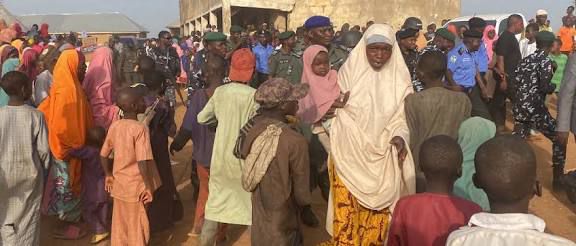
The rise of Nigeria kidnappings since 1999 has transformed parts of the country’s security landscape. Abductions range from politically‑motivated mass kidnappings by extremist groups to ransom‑driven seizures by criminal “bandits”, as well as targeted kidnappings for recruitment, forced marriage and slavery. High‑profile incidents such as the Chibok abduction (2014), the Dapchi and Kankara raids, and frequent school assaults across 2020–2024 have focused global attention on the human cost and on failures of prevention, rescue and accountability. This investigative report presents a chronological timeline (1999–2025) of major kidnappings, summarises regional patterns, and identifies gaps in response, recovery and redress.
Timeline of major kidnappings (1999–2025)
Note: Kidnapping figures are often contested — release, rescue, ransom negotiations and insurgent claims affect counts. Sources are linked inline.
1999–2008: Early high‑profile incidents and the precedent for mass abductions
- November 1999 – Odi (Bayelsa State) — In the aftermath of militia violence, large‑scale military operations and alleged kidnappings/forced detentions were reported; the episode set a pattern where security crackdowns accompanied communal violence (see reporting on Odi).
- Actors: local militias, state security forces.
- Notes: This period established a culture of armed retaliation and mass displacement.
2009–2013: Kidnappings amid the early Boko Haram insurgency
- 2009–2013 – North‑east states — Boko Haram began to abduct civilians, recruiters and fighters, and used abductions for forced marriages and recruitment. Amnesty and other groups documented numerous abductions across Borno, Yobe and Adamawa.
- Actors: Boko Haram.
- Notes: Kidnapping became part of the insurgents’ toolbox to control communities and terrorise populations (Amnesty reporting).
14–15 April 2014 — Chibok schoolgirls (Chibok, Borno State)
- Date & location: 14–15 April 2014, Government Secondary School, Chibok.
- Actors: Boko Haram.
- Estimated victims: 276 schoolgirls abducted; dozens later escaped or were freed in small numbers; hundreds remained missing for years. Chibok background and followups (Reuters / BBC / Amnesty).
- Accountability/aftermath: The mass abduction sparked the global #BringBackOurGirls movement. Partial releases and rescues followed over the years, but many remained captive for years; the Nigerian government faced heavy criticism for the initial security failure and for slow rescue progress. (See: Reuters, BBC.)
February 2015 – Continuation of mass abductions and forced recruitment
Boko Haram continued abducting youths and civilians for use as fighters or domestic slaves in territory under its control. Reports estimated thousands abducted across the insurgency’s peak years (Amnesty / UN reporting).
February 2018 — Dapchi schoolgirls (Dapchi, Yobe State)
- Date & location: 19 February 2018, Government Girls’ Science and Technical College, Dapchi.
- Actors: Boko Haram (claimed responsibility).
- Estimated victims: About 110 schoolgirls abducted; most were released after negotiations, though one girl (a young Christian) was reported killed. BBC coverage and Amnesty responses.
- Aftermath: The release raised questions about the negotiation approach and selective protections for minority girls.
December 2020 — Kankara mass abduction (Katsina State)
- Date & location: 11 December 2020, Kankara, Katsina State.
- Actors: Unknown gunmen (some reports linked to Boko Haram or bandits).
- Estimated victims: Approximately 333 schoolboys were taken from Government Science Secondary School; most were freed within a week after negotiations (some reports say governor involvement in release). See Reuters and BBC reporting.
Notes: Renewed debate over school security and the prevalence of mass abductions in the north.
2021 cluster — Multiple school kidnappings (Kagara, Jangebe / Zamfara, Kaya / Zamfara)
- 17 February 2021 – Kagara, Niger State: Gunmen kidnapped 42 people (students, teachers and family members). Guardian reporting.
- 26 February 2021 – Jangebe (Government Girls Science Secondary School), Zamfara State: 279 girls abducted; majority released days later. Wikipedia summary and Reuters coverage.
- 1 Sept 2021 – Kaya, Zamfara: Dozens of children abducted from a day school; several rescued later (Reuters).
Notes: 2021 showed a surge in school attacks and mass abductions by bandit gangs, often motivated by ransom and territorial control. Negotiation and ransom payments were widely reported.
2021–2023 — Ongoing bandit kidnappings and community abductions
Across Zamfara, Katsina, Kaduna, Sokoto and Niger states, bandit gangs frequently abducted villagers for ransom, sometimes killing those who could not pay. Hundreds of families were displaced; local governments paid ransoms in some high‑profile cases, generating debate about incentivising criminality.
- March 2024 — Kuriga mass school abduction (Kaduna State)
- Date & location: 7 March 2024, Kuriga (Kaduna State).
- Actors: Gunmen / bandit group.
- Estimated victims: Reports indicated around 286 pupils and staff abducted — one of the largest school abductions since 2021. Reuters and follow‑up reporting gave contemporaneous counts and noted ransom demands. Reuters: “Gunmen kidnap 227 pupils…” / follow‑up coverage on numbers.
- Aftermath: Military search and rescue missions were launched; families reported ransom demands and chaotic communication about student welfare.
2024–2025 — Continued large‑scale abductions and diversifying tactics
2024–2025: Multiple kidnappings continued, including mass village abductions, highway kidnappings of travellers, and targeted raids on schools. Kidnappers diversified transport and tactics, sometimes wearing security uniforms to bypass checkpoints. Reports emphasised ransom economies and links between criminal bandits and some insurgent groups.
Patterns and regional analysis
Where kidnappings concentrate
North‑east (Borno, Yobe, Adamawa): Boko Haram/ISWAP historically used abductions for terror campaigns, forced recruitment and control.
- North‑west and north‑central (Zamfara, Katsina, Kaduna, Niger): Bandit groups carry out most ransom‑driven kidnappings.
- Occasional urban kidnappings (South and the middle belt): Kidnappings for ransom have also targeted wealthier urban residents and commuters.
Actors and motivations
- Boko Haram / ISWAP: Ideological and strategic motives (recruitment, terror, punishment), especially in early‑to‑mid 2010s.
- Bandits / criminal gangs: Primarily financial motive (ransom), often operating from forested rural areas; escalation since ~2018.
- Political / cult‑related abductions: Targeted kidnappings for political leverage or local feuds.
- Security force collisions and impersonations: Some kidnappers use military or police uniforms to facilitate abductions.
Methods and evolution
- School raids: Night or early‑morning attacks on boarding schools and day schools; use of superior firepower, motorcycles and pick‑ups.
- Village raids: Abductions of dozens of villagers (men, women, children) to pressure families and local governments.
- Roadside ambushes: Kidnapping bus passengers or travellers to extract ransoms.
- Use of negotiations & ransom economy: Many kidnappings end with negotiated releases or paid ransoms; this perpetuates criminal markets.
Humanitarian costs
- Long‑term trauma for kidnapped children and families.
- School closures and education disruption.
- Internal displacement and loss of livelihoods.
- Economic costs for families and local governments paying ransoms.
Accountability, government response and outcomes
Rescue operations and negotiations
Nigerian military and police conduct rescue missions; their success varies. Some mass releases followed negotiations; in other cases, security operations led to rescues but also casualties or retaliatory violence. Transparency around ransom payment or negotiation methods is inconsistent.
Investigations and prosecutions
Convictions for mass kidnappings are rare at scale; arrests of low‑level perpetrators occur but dismantling networks proves difficult. Impunity, porous borders, and forested hideouts complicate law enforcement.
Policy responses & school security
Repeated directives to close or secure boarding schools in vulnerable zones; some states temporarily closed boarding schools and increased military patrols. Critics argue responses are reactive and do not address prevention or root causes (poverty, lack of alternative livelihoods, weak local policing).
International and civil society reactions
Global media attention (e.g., after Chibok) spurred NGO advocacy and donor support for education and victim support. But sustained international pressure has not eliminated mass abductions.
Key case studies
Chibok (2014)

Why it matters: Sparked global #BringBackOurGirls campaign; highlighted Boko Haram’s ability to attack deep into communities and to weaponise mass abduction. Long-term consequences: many captives coerced into marriage, recruitment, or long captivity; ongoing rescues years later. Reuters / BBC / Amnesty coverage.
Dapchi (2018)
Why it matters: Large group release after negotiations suggested differing negotiation outcomes compared to Chibok and raised questions about selection and protection dynamics. BBC link.
Kuriga (Kaduna, 2024)
Why it matters: One of the largest mass school abductions since 2021, underscoring that school security remained fragile and that kidnappers continued to scale up operations beyond the north‑east.
Recommendations
- Strengthen school protection — investment in perimeter security, early warning, community response teams and intelligence sharing.
- Disrupt ransom markets — anti‑money laundering operations, prosecution of intermediaries, and transparent government policy on ransom payments.
- Targeted community engagement — build trust between communities and security forces, incentivise local intelligence, and support alternative livelihoods to reduce bandit recruitment.
- Care & rehabilitation — dedicated psychosocial support, education continuity and reintegration services for rescued or released children.
- Regional coordination — cross‑state and cross‑border cooperation to dismantle kidnapping networks that exploit borders and inaccessible terrain.
- Data transparency — centralised, verified database of abductions, releases, ransom payments and prosecutions to inform policy.
References
Reuters. “Nearly 300 pupils kidnapped in Kuriga, Kaduna state” (7 Mar 2024). https://www.reuters.com/world/africa/gunmen-nigeria-kidnap-dozens-pupils-school-parents-say-2024-03-07/
Reuters. “I forced her to go to school – mother cries after Kuriga abduction” (8 Mar 2024). https://www.reuters.com/world/africa/i-forced-her-go-school-nigerian-mother-cries-after-mass-school-abduction-2024-03-08/
BBC. “Dapchi schoolgirls: Nigeria’s freed students return” (2018). https://www.bbc.co.uk/news/world-africa-43168607
Reuters. “FACTBOX – Ten facts about Boko Haram and Nigeria’s kidnapped Chibok girls.” (2017). https://www.reuters.com/article/nigeria-boko-haram-idAFL8N1I90LG
Wikipedia (summary & links) – Chibok schoolgirls kidnapping. https://en.wikipedia.org/wiki/Chibok_schoolgirls_kidnapping
The Guardian. “Gunmen kidnap hundreds of students in central Nigeria” (17 Feb 2021). https://www.theguardian.com/world/2021/feb/17/gunmen-kidnap-hundreds-of-students-in-central-nigeria
Reuters. “Gunmen abduct 73 children from school in northwest Nigeria” (1 Sep 2021). https://www.reuters.com/world/africa/many-children-feared-abducted-school-northwest-nigeria-2021-09-01/
Global Citizen / aggregated reporting re: Jangebe release (2 Mar 2021). https://www.globalcitizen.org/en/content/300-abducted-school-girls-nigeria-released/
About The Author