

The Federal Government of Nigeria has initiated high-level discussions with global financial institutions to secure over $60 million in climate finance aimed at piloting green energy hubs across the country. The strategic plan includes a groundbreaking hybrid renewable energy project to be deployed at a major Nigerian airport, marking a critical step in the nation’s transition to a low-carbon economy.
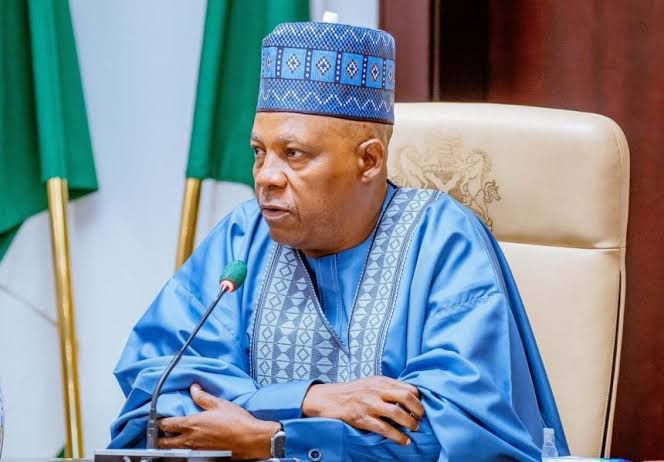
Vice President Kashim Shettima made this announcement during the Decarbonising Infrastructure in Nigeria Summit held at the State House Conference Centre, Abuja. The summit was convened to drive sustainable development through climate-focused investments and attract financing for decarbonisation across critical infrastructure sectors.
According to Shettima, the pilot energy hub, once operational, will serve as a model for clean, affordable, and digitally monitored energy use across public institutions, including airports, hospitals, and government buildings. He stressed that the government’s approach will centre on inclusive and location-specific solutions that bring clean energy to the grassroots level.
“This is not just about infrastructure; it’s about ensuring energy equity for every Nigerian community,” Shettima said. “The time for bullet points is over. The time for bold action is now.”

Nigeria’s decarbonisation efforts target its most polluting sectors: energy, transportation, agriculture, and urban infrastructure. These sectors account for over 75% of the country’s greenhouse gas emissions, according to the Vice President. With Nigeria’s population projected to exceed 440 million by 2050, Shettima warned that failure to act decisively could aggravate resource scarcity and environmental degradation.
“Our emission-heavy sectors also drive our economy and provide jobs. To decarbonise them is to invest in the future prosperity and well-being of our people,” he said.
To drive its green growth vision, the government is exploring partnerships with multilateral lenders, climate investment funds, and green bond issuers. Shettima noted that the administration would launch several programmes including:
A State Innovation Challenge Park, focused on local climate adaptation solutions
Regional climate clinics, to train state-level policymakers
A green growth financing white paper, to unify climate investment strategies
The Vice President also emphasized the importance of harmonising national and subnational climate policies to avoid duplication and ensure a seamless shift to sustainable infrastructure models.
Nigeria’s proactive climate financing push aligns with global climate commitments under the Paris Agreement and the African Union’s Agenda 2063. Analysts say Nigeria’s move to seek $60m in initial funding could unlock more resources from development partners, particularly the World Bank, African Development Bank, and climate-focused funds like the Green Climate Fund.
Energy transition expert and former REAN executive, Dr. Nnenna Obasi, welcomed the development, saying, “For once, we’re seeing political will at the top level to mobilize finance for infrastructure that’s both climate-smart and pro-poor. The hybrid airport project could become a symbol of what’s possible.”
However, stakeholders have warned that implementation delays, weak regulatory frameworks, and lack of local capacity could hamper success. They advised the government to back up its commitments with legal enforcement mechanisms, budgetary allocations, and public-private partnerships.
As climate change continues to pose an existential threat to Nigeria’s development trajectory, the government’s pursuit of $60 million for green energy hubs signals a firm shift towards environmental accountability and resilience-building. While this is only a first step in a long journey, it positions Nigeria as a potential leader in sustainable infrastructure across Africa.
About The Author

