Nigel Farage has sought to clarify his position on Russia, telling Bloomberg News that Vladimir Putin is “a very bad dude” who poses a direct threat to Europe.
“I have never admired Vladimir Putin as a person,” Farage said firmly. “He’s a very bad dude. Anyone rational can see he’s dangerous and unpredictable.”
The Reform UK leader made his remarks amid growing criticism that his party remains too lenient toward Russia, an accusation that has haunted him since early comments about the Kremlin.
Farage insisted that his words had often been “taken out of context,” explaining that acknowledging Putin’s political skill “is not the same as condoning his brutal actions in Ukraine.”
He added, “you can recognize that someone is an operator without supporting what they do. I’ve always condemned Russia’s aggression, and my position on that is absolute.”
His interview came as Reform UK’s popularity continued to rise in opinion polls, increasing scrutiny of its policies and prompting questions about whether the party could be trusted on national security.
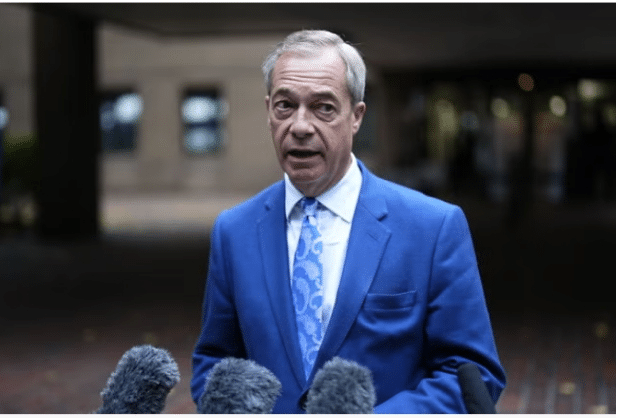
Nigel Farage’s attempt to reposition his foreign policy stance marks a deliberate effort to show he supports Nato and Ukraine, distancing himself from previous statements critics viewed as sympathetic to Moscow.
He told Bloomberg’s Mishal Husain Show that Putin “cannot be described as rational anymore,” adding that Russia’s recent air incursions and nuclear rhetoric “show the behaviour of a regime divorced from logic.”
When asked how Britain should respond to Russian aircraft violating Nato airspace, Farage replied, “You have to be decisive. Gotta shoot them down if they cross that line. No hesitation.”
The statement, one of his strongest yet on defence, underscored Reform UK’s efforts to appear credible on foreign policy after weeks of criticism from government ministers and opposition MPs.
Nigel Farage also endorsed the idea of using frozen Russian assets to rebuild Ukraine, saying, “If oligarchs have money earned through corruption, it should go to the victims of their government’s war.”
He added, “That money shouldn’t be sitting idle in European banks while innocent Ukrainians suffer. Justice demands that the aggressor pays, directly or indirectly, for what’s been destroyed.”
The Reform UK leader’s rhetoric marks a noticeable shift from 2022, when he questioned the long-term wisdom of arming Ukraine. Critics have accused him of inconsistency and opportunism.
Responding to that charge, Farage said, “I have always believed peace should be pursued, but circumstances have changed. Deterrence now requires action, not hesitation. Putin respects strength, not weakness.”
The new tone is part of what analysts describe as a broader rebranding effort by Reform UK to expand beyond its populist roots and appeal to mainstream conservative voters.
Political strategist Laura McKenzie said, “Nigel Farage understands that voters now want reassurance on security. The more he sounds like a serious statesman, the more credible Reform becomes.”
The change follows controversy involving Nathan Gill, Reform’s former Welsh leader, who admitted to receiving bribes for pro-Russian statements. The scandal triggered questions about the party’s internal culture.
Farage addressed the issue head-on, saying, “Nathan Gill was a rogue individual. What he did was wrong. He’s no longer with us, and we’ve cleaned house.”
He emphasized that Reform UK would act swiftly against any future misconduct. “We have zero tolerance for unethical behaviour,” he said. “One bad apple won’t define our movement.”
Still, some in Westminster remain skeptical. Labour’s Defence Secretary John Healey told reporters, “Farage can say whatever he likes now, but his record shows admiration for Putin’s tactics in the past.”
Healey added, “Calling Putin a ‘bad dude’ today doesn’t erase years of flirting with pro-Kremlin narratives. Voters should be wary of political reinventions born out of pressure.”
Nigel Farage, however, dismissed those remarks as “predictable political theatre.” He said, “They’re desperate to paint me as pro-Russian because they fear how well we’re doing in the polls.”
He continued, “My only loyalty is to Britain and its people. I want our nation strong, independent, and respected. That includes standing with our Nato allies when it counts.”
Reform UK’s platform now calls for increased military readiness, modernized air defences, and deeper coordination with European allies against hybrid threats such as cyberattacks and misinformation campaigns.
Nigel Farage argued that strengthening Britain’s armed forces is “not about aggression but deterrence,” adding, “Peace is preserved by preparation, not by wishful thinking or empty speeches.”
When asked whether he would ever support deploying British troops to Ukraine, Farage said, “Only under a UN peacekeeping mandate and after a ceasefire. No open-ended commitments.”
He explained that “any mission must have a clear goal, international support, and an exit strategy. Otherwise, we risk another endless entanglement like Iraq or Afghanistan.”
Analysts say such careful phrasing reflects Farage’s awareness of voters’ fatigue with foreign wars while signaling alignment with Britain’s traditional allies in times of crisis.
Commentator James Hartley observed, “Nigel Farage’s evolution is less ideological than tactical. He knows credibility requires clarity, and calling Putin a ‘very bad dude’ helps him appear decisive.”
The Reform leader’s remarks also come amid heightened global tension. Moscow’s recent escalation of missile strikes in Ukraine has alarmed Western governments and revived debate about Nato’s response.
By labeling Putin irrational, Farage aligned himself with mainstream Western consensus, emphasizing that “Russia today is led by a man whose ambitions endanger peace across the continent.”
He went on, “I will always defend Britain’s sovereignty, but sovereignty means strength. That strength includes unity with allies who share our values and our sense of duty.”
Farage’s message appears calculated to appeal to voters disillusioned with both major parties yet wary of isolationism at a time when global instability continues to affect domestic security.
Party insiders say his media appearances now follow a clear strategy: emphasize leadership, reject extremism, and underline patriotism through pragmatic engagement with global realities.
One adviser, speaking anonymously, said, “We want Nigel to be seen as a national figure ready to lead, not just a protest voice. Security is central to that image.”
Farage’s repositioning could reshape perceptions of Reform UK ahead of the next general election, transforming it from a populist insurgency into a contender for broader political legitimacy.
“The British public wants a leader who can talk tough but think strategically,” Farage said. “That’s what I’m offering—realism, not rhetoric, in defending our country.”
He reiterated that Reform UK’s principles are rooted in accountability and sovereignty, saying, “We’re not here to please elites or foreign powers. We’re here to protect Britain’s interests first.”
Observers note that Farage’s statements have drawn a line under previous controversies and may strengthen his party’s hand among undecided voters concerned about global threats.
Yet doubts remain. Professor Eleanor Smith of the London School of Economics cautioned, “Voters remember his earlier tone. They’ll need to see consistent action before believing this transformation.”
Even so, Farage’s declaration that Putin is a “very bad dude” has dominated headlines, signalling a notable moment in Britain’s ongoing political conversation about security and identity.
It positions Reform UK firmly within the Western mainstream, supporting Nato, defending Ukraine, and rejecting any perception of Russian influence in British political life.
For Nigel Farage, the test now lies in maintaining that message under pressure, ensuring his rhetoric translates into policy coherence and voter confidence ahead of a pivotal election year.
As he concluded in his interview, “We live in dangerous times. Britain must be ready, united, and proud. That’s the only way to guarantee peace through strength.”
The comments have reignited debate about leadership, loyalty, and credibility, demonstrating how the question of Russia continues to shape Britain’s political landscape well into 2025.
.
About The Author