
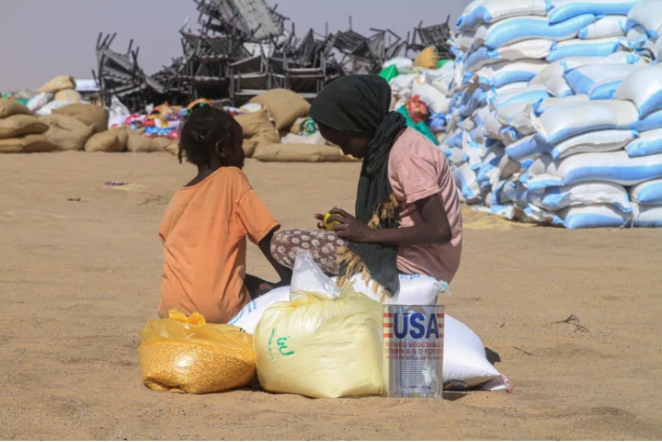
A deepening new world disorder is driving humanitarian crises to unprecedented levels, with Sudan and Palestine identified as the most dangerous emergencies facing civilians worldwide today.
According to the International Rescue Committee, global instability is accelerating human suffering as political rivalries override humanitarian responsibility across fragile and conflict-affected regions.
Sudan and Palestine once again top the IRC’s 2026 Emergency Watchlist, marking the third consecutive year both crises have ranked highest for humanitarian risk.
The report warns that prolonged conflicts are becoming entrenched, while international mechanisms designed to protect civilians are increasingly paralyzed or ignored.
The IRC assessed twenty countries facing extreme humanitarian stress, measuring conflict intensity, displacement, hunger, and the ability of aid systems to function.
Although these countries represent just twelve percent of the global population, they account for nearly eighty-nine percent of people requiring humanitarian assistance worldwide.
This imbalance reflects a global order drifting away from collective responsibility toward fragmented power politics, according to the report’s findings.
The IRC argues the post-World War II rules-based order is being replaced by a destabilizing new world disorder shaped by rivalry and transactional diplomacy.
This emerging disorder is defined by shifting alliances, intensifying geopolitical competition, and deals that prioritize influence over civilian protection.
David Miliband, president of the IRC, described the Watchlist as both a record of suffering and a warning about the future.
“Disorder begets disorder,” Miliband said, cautioning that without urgent action, 2026 risks becoming the most dangerous year yet for vulnerable populations.
He stressed that political decisions made by powerful states now carry life-or-death consequences for millions living in conflict zones.
The report highlights how paralysis at the United Nations Security Council has stalled responses to some of the world’s worst humanitarian emergencies.
A surge in vetoes has blocked ceasefires and accountability measures, particularly in relation to Sudan and Palestine.
Russia has repeatedly obstructed stronger action on Sudan, limiting international pressure on warring parties.
The United States vetoed multiple resolutions demanding a Gaza ceasefire before advancing a US-backed peace framework earlier this year.
While that plan led to an October ceasefire, the IRC says it failed to stop civilian suffering or restore humanitarian access.
Selective diplomacy, the report argues, has eroded faith in international law and encouraged a climate of impunity.
This environment emboldens armed actors and weakens protections for civilians, aid workers, and essential infrastructure.
The scale of global need outlined in the report is unprecedented in modern humanitarian history.
Worldwide, an estimated 117 million people are forcibly displaced due to conflict, persecution, and instability.
At least 40 million people face life-threatening levels of severe hunger driven by war, climate shocks, and economic collapse.
Despite this, humanitarian funding has fallen by nearly fifty percent, dramatically limiting the ability of agencies to respond.
The resulting funding gap leaves millions without food, healthcare, shelter, or protection.
Donor fatigue, domestic political pressures, and shifting priorities are cited as major drivers of declining aid commitments.
The IRC warns that without renewed political will, humanitarian responders will continue falling dangerously behind escalating needs.
Sudan ranks first on the 2026 Emergency Watchlist, reflecting the devastating impact of nearly three years of war.
Fighting between the Sudanese army and the Rapid Support Forces has killed an estimated 150,000 people.
More than 12 million people have been displaced, creating one of the largest displacement crises on earth.
The report estimates that 33 million people inside Sudan now require humanitarian assistance to survive.
At least 207,000 people face catastrophic food insecurity, placing them at immediate risk of famine.
The IRC points to the role of unnamed regional backers accused of fueling the conflict through weapons supplies and economic exploitation.
“Large quantities of gold flow out of the country, while weapons move in the opposite direction,” the report states.
The United Arab Emirates has been widely accused of backing the RSF, allegations the country strongly denies.
Foreign involvement, the IRC argues, has prolonged the war and entrenched impunity for atrocities against civilians.
Hospitals, schools, markets, and aid convoys have been repeatedly attacked, severely restricting humanitarian access.
Palestine ranks second on the Watchlist, reflecting overlapping crises in Gaza and the occupied West Bank.
Israel’s military campaign in Gaza has killed more than 70,000 people and displaced nearly the entire population.
Although large-scale bombardment declined after the October ceasefire, violence has continued at devastating levels.
Authorities report nearly 800 Israeli attacks since the ceasefire, killing about 400 people.
The IRC says there is limited hope that external pressure will significantly reduce the intensity of conflict.
Even at lower levels of fighting, civilians face extreme suffering amid widespread destruction.
By late 2025, approximately 641,000 people in Gaza were experiencing famine or catastrophic food insecurity.
Tight restrictions and militarized aid delivery have severely limited humanitarian access into the enclave.
In the occupied West Bank, escalating settler violence and military raids have compounded Palestinian suffering.
The report warns humanitarian conditions across Palestine are likely to remain dire well into 2026.
The IRC describes 2025 as the deadliest year on record for humanitarian workers, particularly in Gaza.
Aid workers have been killed in attacks on schools, hospitals, shelters, and aid distribution sites.
Such attacks reflect a dangerous normalization of violence against civilians and those attempting to assist them.
The report argues that impunity on this scale threatens the foundation of humanitarian action worldwide.
When aid workers are targeted without consequence, lifesaving assistance becomes increasingly impossible to deliver.
The Emergency Watchlist is presented as a warning rather than a prediction of inevitable disaster.
Without urgent diplomatic engagement, restored funding, and accountability, humanitarian crises will worsen.
Read also: Bondi terror attack mission travel: How alleged shooters journeyed overseas before striking Sydney’s iconic beach
The IRC urges powerful states to recommit to multilateralism and international law.
Sudan and Palestine, the report concludes, are symptoms of a broader collapse in global responsibility.
As geopolitical competition intensifies, the cost is paid in civilian lives, lost futures, and shattered societies.
Failure to act, the report warns, risks entrenching a world where crisis becomes permanent and compassion optional.
About The Author





