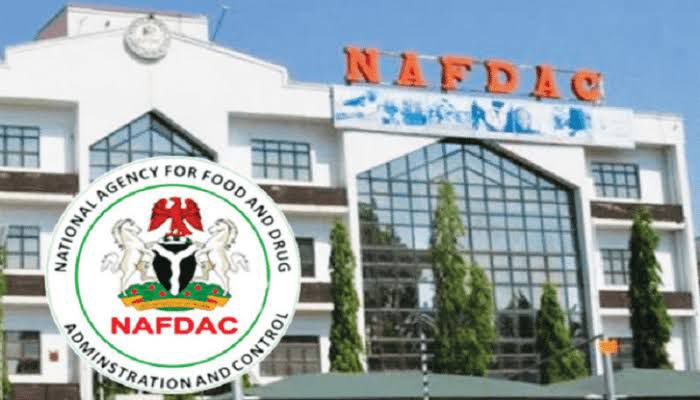
The National Agency for Food and Drug Administration and Control (NAFDAC) has intercepted more than 10 million doses of counterfeit drugs and cosmetic products valued at nearly N3 billion during a major raid at the Trade Fair Market in Lagos.
The operation, described by officials as a significant breakthrough, underscores the persistent threat that fake drugs pose to public health in Nigeria.
Dr. Martin Iluyomade, NAFDAC’s Director of Investigation and Enforcement and Chairman of the Federal Task Force on Counterfeit and Fake Drugs and Unwholesome Processed Foods, disclosed the details during a press briefing held at the agency’s Apapa office.
He said the seizure was prompted by credible intelligence received on February 3, leading to the swift identification and raid of a three-storey building used to store the illegal products.
“The seized items included counterfeit malaria medicines and injections used for cerebral malaria, antibiotics, Postinor, and Analgin—an analgesic banned in Nigeria for nearly 15 years—among other products,” Iluyomade explained.
“These counterfeit drugs were hidden in a building disguised as a spare parts warehouse, highlighting how sophisticated these operations have become.”
According to the agency, eight truckloads of counterfeit drugs and cosmetics were evacuated from the site during the raid.
Four suspects have been arrested in connection with the operation, and investigations are ongoing.
The agency described the seizure as one of the most significant interventions against counterfeit drugs in recent years.
Iluyomade noted that counterfeiters are increasingly employing unconventional methods to conceal fake drugs, which makes detection a growing challenge for regulatory authorities.
“Many of the seized products were cloned to closely resemble genuine brands, making it difficult even for authorized manufacturers to distinguish between the real and the fake,” he said.
Experts warn that the circulation of counterfeit drugs poses severe risks to public health.
Fake malaria medicines, in particular, can lead to treatment failures, prolonged illness, and even death if administered unknowingly to patients.
Dr. Iluyomade emphasized that the volume of counterfeit drugs intercepted during this operation could have caused widespread harm had they reached consumers.
NAFDAC, under the leadership of Prof. Mojisola Adeyeye, remains committed to protecting Nigerians from fake and unwholesome products.
The agency has intensified inspections, raids, and public awareness campaigns to ensure that medicines available in the market meet safety and quality standards.
“Our mission is to rid the country of counterfeit drugs and ensure that public health is never compromised,” Iluyomade added.
The task force chairman further advised major drug distributors to source medicines exclusively from NAFDAC-accredited manufacturers to prevent the infiltration of counterfeit drugs into the supply chain.
He also urged members of the public to remain vigilant, verify the authenticity of their medicines, and report suspicious products to the nearest NAFDAC office nationwide.
Public health analysts have highlighted that Lagos, as Nigeria’s commercial hub, remains a key target for counterfeit drug operations due to its large population and bustling markets.
The interception of such a significant volume of counterfeit malaria medicines is therefore seen as a timely intervention that could save countless lives.
Authorities also warned that the sophistication of counterfeit drug operations has evolved over the years.
Criminal networks now use advanced packaging, branding, and concealment techniques to mimic legitimate products.
This makes regulatory vigilance and public awareness more critical than ever in preventing fake medicines from reaching unsuspecting consumers.
“The fight against counterfeit drugs is not only the responsibility of NAFDAC but also that of the public, pharmaceutical companies, and distributors,” Iluyomade said.
“We encourage everyone to report unusual activities, and we assure that all tips will be treated confidentially and acted upon swiftly.”
The Lagos raid is one in a series of nationwide operations by NAFDAC aimed at tackling the proliferation of counterfeit drugs.
Over the past few years, the agency has recorded multiple seizures, arresting suspects and dismantling illegal networks operating in both urban and rural areas.
These efforts are part of a broader strategy to safeguard public health and strengthen the integrity of Nigeria’s pharmaceutical sector.
In addition to malaria medicines, the seized counterfeit drugs included antibiotics, analgesics, and hormonal products, many of which had been banned or restricted due to their potential health risks.
The agency cautioned that the consumption of counterfeit drugs can lead to adverse reactions, resistance to treatment, and even fatalities, highlighting the urgent need for strict regulation and consumer awareness.
NAFDAC’s operation in Lagos sends a clear message to counterfeiters: the agency is determined to disrupt illegal drug networks, enforce regulations, and protect the health of Nigerians.
As counterfeit drugs continue to threaten public health, collaborative efforts between authorities, distributors, and the public remain essential to prevent fake medicines from entering the market.
About The Author