

Myanmar Junta Elections have been framed by the country’s military rulers as a long-awaited return to democratic order, yet many citizens and analysts describe the vote as a calculated strategy to entrench authoritarian power rather than restore popular rule.
“This is not about the people choosing leaders freely, it is about generals protecting themselves and reshaping legitimacy on their own terms,” said a young Myanmar activist living in exile.
Since seizing power in the 2021 coup, the military has ruled through force, repression, and emergency laws, dismantling institutions that once allowed civilian participation. The proposed elections come after years of conflict and political imprisonment.
“The generals broke the system, jailed its leaders, and now want applause for pretending to fix what they destroyed,” remarked a regional political analyst following Myanmar’s crisis.
The absence of Aung San Suu Kyi, still imprisoned under multiple convictions, remains central to public skepticism. Her detention symbolizes the collapse of electoral credibility in the country.
“When the most popular leader is silenced behind prison walls, no ballot box can carry genuine meaning,” a former election observer explained.
Myanmar’s once-dominant National League for Democracy no longer exists as a legal entity, having been dissolved for refusing to register under junta-controlled electoral bodies. This erasure has reshaped the political landscape.
“You cannot call it competition when the strongest players are removed before the game begins,” said a Southeast Asian democracy advocate.
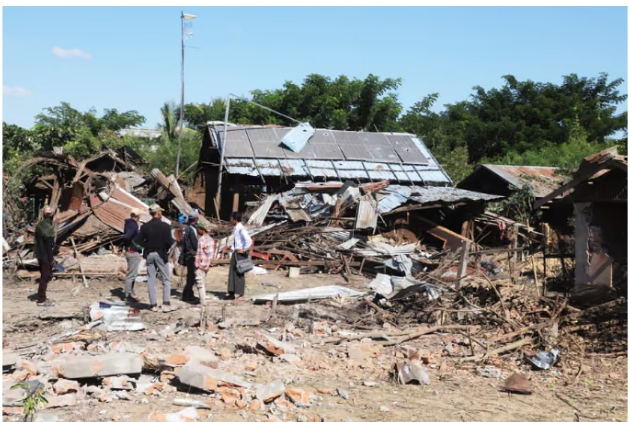
Across large parts of the country, conflict has intensified rather than subsided ahead of polling day. Entire regions remain contested by resistance groups and ethnic armed organizations.
“Voting papers cannot travel where bombs fall daily, and fear has replaced civic duty in these communities,” a humanitarian worker based near the border observed.
Military airstrikes and drone attacks have increased in frequency, hitting schools, clinics, and villages. This environment undermines claims of national stability promoted by the junta.
“It is impossible to talk about peace while hospitals and classrooms are reduced to rubble,” stated a health volunteer who recently fled a conflict zone.
Forced conscription has become another tool of control, with young people abducted from streets and homes to replenish shrinking army ranks. Many families now live in hiding.
“Our sons are not soldiers by choice; they are taken because the army is desperate,” said a parent whose child escaped across the border.
Urban centers such as Yangon appear calmer on the surface, but fear simmers beneath daily life. Residents report pressure from authorities to comply with voting instructions.
“They come to your door and make it clear that refusal carries consequences,” said a city resident speaking anonymously for safety reasons.
A newly enacted election protection law criminalizes criticism of the vote, with penalties ranging from long prison sentences to capital punishment. Hundreds have already been detained.
“This law is not about protecting elections; it is about silencing dissent before it can breathe,” warned a legal expert monitoring political arrests.
The structure of the ballot itself raises serious concerns. While dozens of parties are listed, most are linked directly or indirectly to the military establishment.
“Multiplicity of parties does not equal plurality of ideas when they answer to the same masters,” said an independent political researcher.
Only a handful of parties operate nationwide, with the military-backed Union Solidarity and Development Party dominating uncontested constituencies.
Genuine opposition is largely absent.
“What we see is choreography, not competition, designed to produce a predictable outcome,” noted a former diplomat familiar with Myanmar politics.
Large portions of the country have been excluded entirely from voting due to insecurity or resistance control. Analysts estimate nearly one-third of Myanmar will not participate.
“A national election without a nation is an empty ritual,” said an election monitoring specialist.
Ethnic minority regions, long marginalized by central authorities, are among the most affected by cancellations. Their exclusion deepens historic grievances.
“These communities have been denied both peace and a voice, reinforcing cycles of resentment,” explained an ethnic affairs scholar.
International reactions have been sharply divided. Western governments and the United Nations have dismissed the elections as illegitimate.
“No amount of procedural theater can disguise the absence of freedom and fairness,” said a UN official responding to the planned vote.
Read also: Zelensky’s Christmas message carries veiled wish for Putin’s end as Ukraine presses for peace on its terms
China, however, has taken a more pragmatic stance, viewing the elections as a stabilizing mechanism rather than a democratic milestone. Beijing’s influence remains decisive.
“For China, order matters more than ideology, especially along its borders,” commented a regional security analyst.
Beijing’s support has helped the junta regain territory lost to resistance forces, reshaping battlefield dynamics ahead of the elections.
“This backing has given the generals breathing space they would not otherwise have,” said a conflict researcher studying cross-border politics.
The military has also adapted its tactics, streamlining command structures and expanding drone warfare to maintain pressure on opponents.
“They are learning and adjusting, not retreating, despite years of resistance,” observed a defense analyst.
Rather than signaling compromise, the elections may mark a new phase of intensified repression once the junta claims renewed legitimacy.
“The vote is not an endpoint; it is a shield behind which further violence may unfold,” warned a Myanmar crisis adviser.
Some analysts suggest the military could pursue tactical ceasefires after the election, not for peace, but to redirect forces strategically.
“These deals would be temporary pauses, not steps toward reconciliation,” said a senior conflict mediator.
Civil society groups argue that real dialogue remains impossible while political prisoners fill Myanmar’s jails and emergency laws dominate governance.
“You cannot negotiate democracy with a gun pointed at society,” stated a long-time pro-democracy organizer.
For millions of displaced citizens and exiles, the elections feel distant and irrelevant compared to daily survival.

“Ballots mean nothing when your home is gone and your future uncertain,” said a displaced teacher now living in a refugee camp.
Myanmar Junta Elections therefore represent less a return to civilian rule than an attempt to rebrand military domination through controlled political theater.
“This is legitimacy manufactured, not earned, and history will remember the difference,” reflected a Southeast Asian historian.
As voting day approaches, uncertainty hangs over Myanmar’s future, with many fearing that international fatigue could allow the junta’s narrative to harden.
“If the world looks away, this performance risks becoming accepted reality,” cautioned a regional human rights observer.
About The Author


