In northern India, a simple declaration of faith has become a flashpoint for persecution. The India Muslims crackdown deepens as worship turns into a police matter.
When residents of Kanpur’s Syed Nagar lit a sign reading “I love Muhammad,” it glowed briefly before hostility engulfed the street. The celebration soon attracted Uttar Pradesh police.
“We only wished to honour the Prophet,” said a 28-year-old tailor now facing charges. “But they came like we’d broken the law,” he whispered fearfully.
The festive night, marking Eid Milad-un-Nabi, ended with confusion and threats. Officers filed cases accusing locals of disturbing communal harmony and provoking unrest against Hindu groups.
Community elder M.A. Khan recalled the shock. “They claimed we started a new tradition. But we’ve celebrated here for years. Why criminalise love for faith?” he asked.
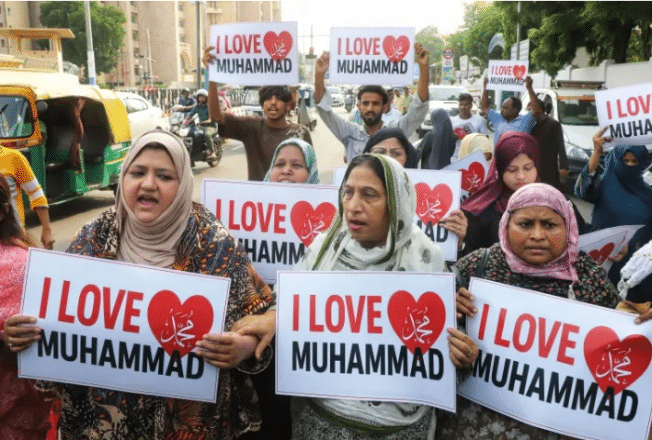
Lawyers insist the I love Muhammad protest was lawful. Yet the Uttar Pradesh police booked nine named Muslims and 15 unknown others. No Hindus were questioned despite clear provocation, residents say.
A Hindu activist, Mohit Bajpayee, defended the complaint. “We respect all religions,” he told reporters. “But they used a place reserved for our Ram Navami. That was wrong.”
The India Muslims crackdown widened when small scuffles in Kanpur echoed across Uttar Pradesh. Days later, Bareilly—home to millions of Barelvi Muslims—became the next centre of confrontation.
Maulana Tauqeer Raza Khan, a cleric from Bareilly’s famed Ittehad-e-Millat Council, condemned the Kanpur charges. “Faith is not a crime,” he declared, calling for peaceful demonstrations after Friday prayers.
Authorities swiftly denied permission. Rumours spread that the ban was false, and crowds gathered anyway. They carried posters reading “I love Muhammad” and demanded dignity under the constitution.
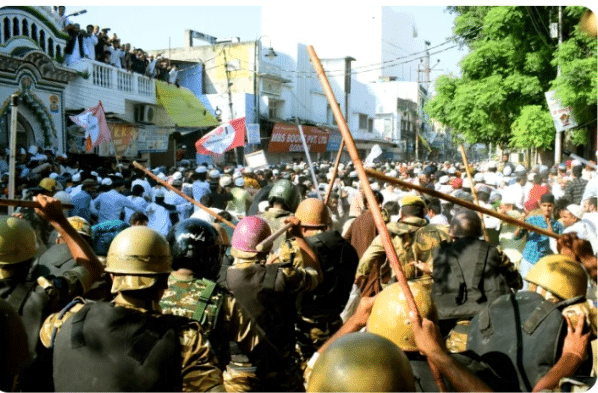
Witnesses said police blocked roads and pushed demonstrators into alleys. “We came with flowers, not stones,” one student recounted. “They beat us and called us traitors.”
When stones flew from unknown hands, officers responded with batons. Videos show chaos, tear gas, and arrests. The Uttar Pradesh police later accused protesters of rioting.
Before his arrest, Khan released a video message: “This India Muslims crackdown aims to silence devotion. Suppress faith, and you ignite resistance.” Hours later, he was detained.
Chief Minister Yogi Adityanath, known for his hardline rhetoric, mocked the cleric at a rally. “Some people need denting-painting to learn discipline,” he said, drawing laughter from party loyalists.
That “denting-painting” became literal. Bulldozers rolled into Bareilly the next morning, demolishing a banquet hall linked to one accused. Officials called it an illegal structure.
Rights activists saw intimidation. “Demolitions have become tools of fear,” said Sumaiya Rana, daughter of poet Munawwar Rana. “This government bulldozes faith under the guise of order.”
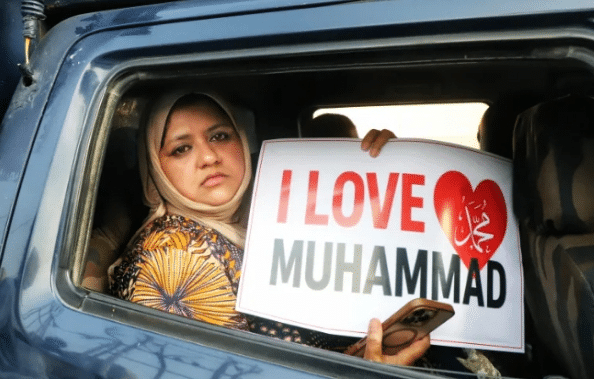
She led an I love Muhammad protest in Lucknow, where police briefly detained her group outside the state assembly. “They want Muslims invisible,” she told reporters afterward.
The India Muslims crackdown has spread beyond Uttar Pradesh, with rights monitors counting at least 22 FIRs and more than 2,500 Muslims named across several BJP-ruled states.
“The slogan was love, not violence,” said Nadeem Khan of the Association for Protection of Civil Rights. “Calling it provocative defies logic and mocks justice.”
Under Yogi Adityanath’s hardline rule, bulldozers and arrests often follow dissent. Courts have called the practice “extrajudicial,” yet demolitions continue as collective punishment.
For many, this reflects shrinking religious freedom in India. “If we can’t say we love our Prophet, what freedom remains?” asked S.Q.R. Ilyasi of the All India Muslim Personal Law Board.
Civil-liberties activist Vandana Mishra said double standards are clear. “Hindu groups chant loudly without restriction. But Muslim prayers trigger arrests. That’s selective democracy,” she remarked.
Opposition lawmakers denounced the Uttar Pradesh police response as partisan. “The constitution guarantees equality, yet bulldozers replace justice,” argued Mata Prasad Pandey of the Samajwadi Party.
A delegation from his party was barred from visiting victims in Bareilly. “The government speaks of peace while weaponising fear,” Pandey told journalists.
Lawyer Zia Jillani, representing several accused, said most are poor daily-wage earners. “Legal defence costs more than their monthly income. It’s punishment through poverty,” he explained.
He described clients too afraid to open shops. “When police label you anti-national, neighbours turn away. The India Muslims crackdown isolates families completely,” Jillani added.
Human-rights groups warn that collective punishment erodes faith in the state. “Each unjust demolition convinces minorities that courts no longer protect them,” Mishra said gravely.
Even some Hindus express unease. A retired teacher in Kanpur sighed, “Today it’s Muslims. Tomorrow, dissent itself will be a crime. That’s not my India.”
Adityanath’s supporters argue firm policing ensures order. “We prevent riots before they start,” a BJP spokesperson said. “Bulldozers teach discipline where lectures fail.”
Critics counter that this hardline approach deepens divides. “Fear can silence voices,” Rana replied, “but it can’t erase faith. Love for Muhammad lives in our hearts.”
Across northern towns, the I love Muhammad protest has become a symbol of defiance. Small groups hold candles at night, whispering prayers under watchful security cameras.
Social media hashtags echo resistance. “Even silence feels criminal,” one user posted, “yet silence is safer than saying ‘I love Muhammad’ aloud.”
Analysts note that the India Muslims crackdown coincides with election build-up. “Polarisation pays politically,” said sociologist Rashid Ansari. “Creating internal enemies distracts from unemployment and inflation.”
International observers have voiced concern about shrinking religious freedom in India. Human Rights Watch described the Uttar Pradesh demolitions as “state-sanctioned vengeance masquerading as urban regulation.”
Meanwhile, fear reshapes daily life. Parents warn children not to post religious messages online. “One emoji could cost a future,” joked a student darkly.
At night, Kanpur’s Syed Nagar remains dim. The “I love Muhammad” sign lies dismantled in a storage shed, its bulbs smashed, wires frayed, meaning intact.
“We will fix it one day,” said an old shopkeeper. “Not to provoke, but to remind the world that love is not illegal.”
The India Muslims crackdown continues as police expand investigations. Court hearings are slow, bail costly, hope fragile. Yet faith, residents say, still flickers like that broken sign.
As Adityanath defends his hardline rule, India’s minorities brace for more bulldozers. “We survive by prayer,” Rana whispered, “but even prayer now feels dangerous.”
The struggle reveals a wider question haunting democracy—can devotion coexist with dissent? In today’s India, even love for the Prophet invites punishment and peril.

About The Author