Nigeria’s military high command has unveiled a fresh security initiative aimed at confronting emerging terrorist threats in parts of the North-Central region.
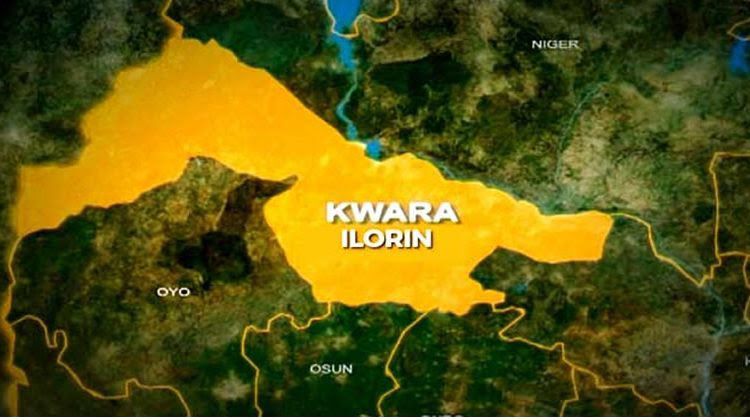
The new operation, codenamed Savanah Shield, is designed to reinforce stability in Kwara State and selected communities in neighbouring Niger State, where security concerns have intensified in recent months.
Chief of Defence Staff, General Olufemi Oluyede, disclosed the development during the 2026 Defence budget deliberations at the House of Representatives in Abuja.
Addressing lawmakers, he explained that the Armed Forces are recalibrating their counterterrorism operations to respond swiftly to shifting threats across different regions of the country.
According to him, while military offensives in the North-East have significantly weakened insurgent networks, pressure points remain in the North-West and North-Central zones.
He stressed that the establishment of Savanah Shield reflects a proactive effort to prevent further expansion of criminal and extremist elements into previously stable communities.
The planned Joint Special Task Force will bring together personnel drawn from various branches of the Armed Forces, supported by intelligence units and logistics teams.
A designated commander has already been appointed to oversee coordination and field operations.
Military authorities are currently redistributing assets and manpower to ensure the force begins work with adequate operational capacity.
General Oluyede noted that security interventions must be dynamic and adaptable.
He revealed that newly trained special forces had recently been deployed to parts of Benue and Plateau States to curb violent activities there.
The launch of Savanah Shield represents another layer in the broader national response strategy.
He acknowledged, however, that resource limitations remain a challenge. Despite this, the military leadership is prioritising strategic deployment and inter-agency cooperation to maximise available capacity.
He reiterated that achieving lasting Kwara security and stabilising neighbouring areas would require synergy between the military, the Nigeria Police Force, and the Nigeria Security and Civil Defence Corps.
Beyond institutional collaboration, the defence chief called on citizens to actively support intelligence gathering by reporting suspicious activities.
He cautioned against community members shielding criminal elements, emphasising that national safety depends on collective vigilance.
Earlier in the session, Chairman of the House Committee on Defence, Rep. Benson Babajimi, underscored the importance of aligning the Defence budget 2026 with measurable security outcomes.
He described security as the bedrock of national growth, arguing that economic development cannot thrive in an atmosphere of persistent violence and instability.
Babajimi commended troops for their sacrifices in ongoing counterterrorism operations, noting that many personnel operate under harsh and dangerous conditions.
Nonetheless, he maintained that budgetary increases must translate into visible improvements in community safety and operational efficiency.
He pointed out that modern security threats require more than conventional battlefield responses.
According to him, insecurity in Nigeria is often fuelled by complex socio-economic factors such as youth unemployment, poverty, weak governance structures, misinformation campaigns and ideological radicalisation.
To address these root causes, Babajimi advocated a “whole-of-government and whole-of-society” framework.
This approach, he said, should combine kinetic military action with non-kinetic measures including community engagement, peacebuilding initiatives, strategic communication and enhanced cyber defence capabilities.
The lawmaker further stressed the need for improved defence intelligence systems and modern border surveillance technology to disrupt cross-border criminal networks.
Strengthening procurement processes and eliminating project abandonment were also highlighted as priorities to ensure that funds allocated under the Defence budget 2026 are efficiently utilised.
Meanwhile, security analysts view the introduction of the Joint Special Task Force under the banner of Savanah Shield as a signal that the military is seeking to consolidate recent gains while preventing the spread of insecurity into new corridors.
Kwara State, historically considered relatively calm compared to some northern regions, has in recent times faced isolated security disturbances that raised public concern.
By positioning a coordinated force in the affected axis, authorities hope to reassure residents, deter armed groups and reinforce government presence.
Observers note that restoring confidence among local communities is as crucial as direct combat operations.
General Oluyede concluded his remarks by reaffirming the Armed Forces’ commitment to protecting Nigeria’s territorial integrity despite operational challenges.
He assured lawmakers that the military would continue refining strategies to address evolving threats.
As preparations for Savanah Shield move forward, attention will likely focus on how effectively the initiative integrates intelligence sharing, rapid response capacity and community cooperation.
Ireport247news
About The Author