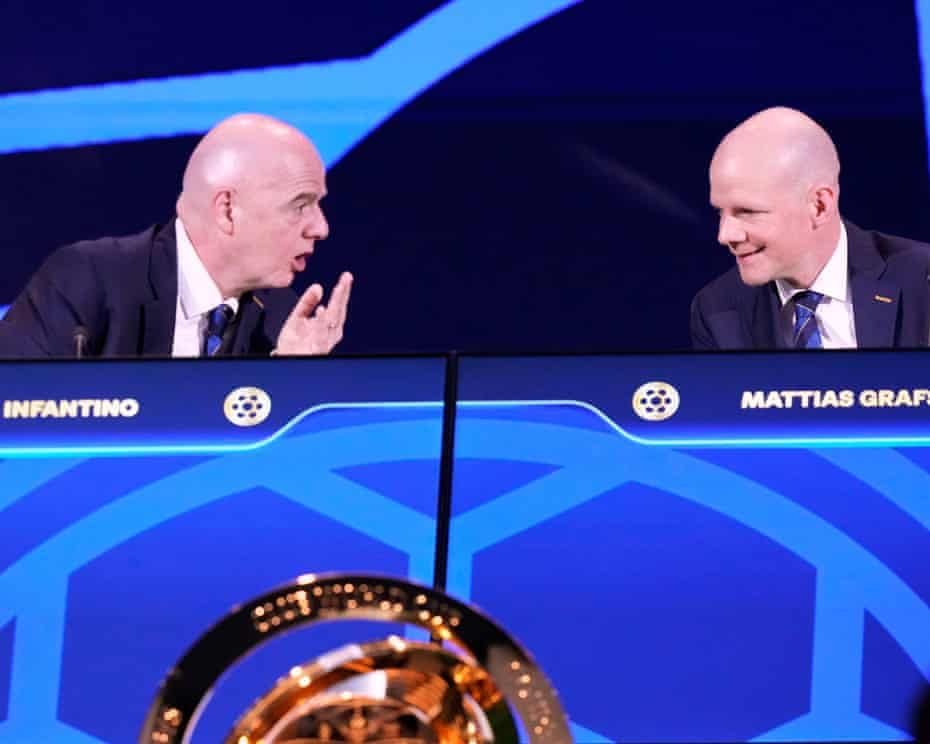
Mattias Grafström has emerged as a potential challenger to Gianni Infantino after African football leaders reportedly sounded out the FIFA general secretary about contesting next year’s presidential election.
The approach represents an intriguing development inside world football, particularly because Grafström has worked closely with African federations and previously showed reservations about Infantino’s controversial commercial plans.
Reports indicate that senior figures from Africa have contacted the Swedish official to assess whether he could become an alternative candidate as Infantino prepares to seek another term.
As many as 15 African federations are reportedly considering abandoning Infantino, despite the Confederation of African Football saying its executive committee unanimously reaffirmed support for the FIFA president.
That apparent contradiction highlights growing uncertainty within African football, where public declarations of loyalty may not fully reflect private discussions among federation presidents and influential administrators.
African Federations Explore an Alternative
Grafström attracts attention from Africa
Two African federation presidents reportedly spoke separately with Grafström last week, seeking to understand whether he would consider challenging Infantino during the next FIFA election.
Grafström is understood to have been surprised by the approaches and has not committed himself publicly, leaving open the possibility that discussions could develop further before nominations become clearer.
One African executive committee source suggested Grafström could appeal across football’s major regions because of his reputation for listening and his existing relationships with officials beyond Europe.
The source described him as someone who could potentially bring different continents together, although the official’s own position remains uncertain and no formal campaign has emerged.
That uncertainty is crucial because becoming a credible FIFA presidential challenger would require much more than dissatisfaction with Infantino. A candidate would need substantial regional alliances and practical proposals.
Grafström’s Complicated Relationship With Infantino
Grafström’s potential emergence is particularly interesting because he recently appeared to distance himself from Infantino’s FIFA Forward Enterprise proposal before subsequently expressing full support.
The proposed arrangement, which involved selling part of the World Cup’s commercial rights, was abandoned after attracting significant criticism and internal resistance within football’s governing structure.
In a staff memorandum, Grafström reportedly wrote that individuals and difficult moments eventually pass, language interpreted by some observers as reflecting discomfort with the direction of the proposal.
However, the Swedish administrator later signed a letter expressing full support for Infantino, before employees were informed that chief operating officer Kevin Lamour had been dismissed.
Lamour had strongly criticised the commercial proposal, making the episode an important backdrop to speculation about whether Grafström could eventually become an alternative to Infantino.
Africa Could Influence the FIFA Presidential Election
Africa’s 54 FIFA members make the continent strategically important in any contest for the presidency. An opponent would need 106 votes to defeat Infantino among 211 members.
Although CAF has historically been a strong base for Infantino, dissatisfaction has reportedly increased following the decision to stage the Africa Cup of Nations every four years.
Read also: ⚡ Usain Bolt set to play Sunday League football with star-studded veterans
Critics within African football have questioned how the decision was reached, with some believing the change was imposed without sufficient consultation across the continent’s football community.
Recent private discussions have reportedly exposed a difference between public loyalty and actual voting intentions, with only a small number of CAF executive committee members openly backing Infantino.
According to one participant, others remained silent because they preferred to wait and see how the political contest develops before declaring their positions publicly.
“The rest remained silent,” one person familiar with the discussions reportedly said, underscoring the uncertainty surrounding the continent’s eventual position in the election.
That silence could become significant if Grafström or another challenger succeeds in building a coalition that offers African federations stronger financial support and infrastructure development.
The Financial Question Facing Challengers
Any challenger to Infantino would need to convince African federations that an alternative administration could deliver tangible benefits rather than simply promise political change.
The FIFA Forward Enterprise proposal was reportedly expected to provide about $20 million annually to each association, creating a powerful benchmark for anyone seeking African support.
One African football source argued that prospective challengers should present something better, particularly a credible partnership capable of helping poorer countries develop football infrastructure and strengthen their associations.
“If he can bring all these people together,” the source suggested, Grafström could potentially attract meaningful backing across several football regions.
This means the election may ultimately become a contest over development, funding and influence rather than personality alone, with African federations seeking measurable commitments from every candidate.
What Happens Next
For now, Grafström remains a possible challenger rather than a declared candidate. His response to approaches from African leaders has reportedly been cautious, leaving the political situation fluid.
Infantino remains the established frontrunner, but growing private conversations suggest the next FIFA presidential election could become considerably more competitive if opponents coordinate their support.
The biggest question is whether Grafström can transform his international relationships into a genuine electoral coalition, while convincing federations that he offers a stronger future for global football.
Whatever happens, the latest developments demonstrate that FIFA’s next presidential contest is already attracting strategic manoeuvring, with Africa potentially positioned at the centre of the battle for power.
About The Author