The scene was sudden, intrusive, and shocking. The newly elected Mexican president, Claudia Sheinbaum, experienced what millions of Mexican women endure daily—sexual harassment in public, under indifferent eyes
As she walked through Mexico City’s historic district greeting citizens, a man stepped forward, wrapped his arm around her, and grabbed her chest in full public view.
The Mexican president incident, caught on camera, unfolded within seconds, but the images have stirred outrage, embarrassment, and renewed debate about gender-based violence and public security in Mexico.
Video footage shows the man approaching from behind, smiling as though greeting a celebrity, before crossing an unthinkable boundary. Security detail members reacted only after the assault.
Sheinbaum later confirmed she filed criminal charges, declaring, “If this happens to the president, what happens to all the young women in our country?” Her tone carried defiance.
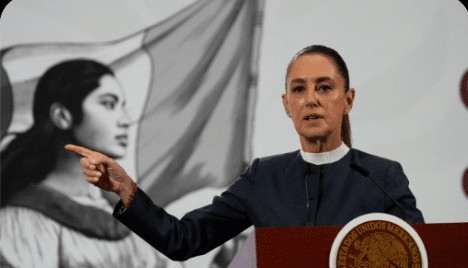
It was an unnerving question for a country where violence against women like that if the Mexican president has become normalized, and accountability for perpetrators remains uncertain, despite public campaigns and endless promises.
Mexico’s streets have long reflected a grim reality. Women live with the fear of catcalls, groping, and assault as constant hazards—now symbolized in the nation’s top office.
The symbolism is brutal and transformative. A president known for walking freely among citizens—without armored cars or barriers—became a victim of the very violence she vowed to confront.
Sheinbaum’s approachability had been her political strength, drawing admiration for closeness to the people. Now it fuels debate over how vulnerability intersects with accessibility in political leadership.
Observers note that Sheinbaum’s security team, criticized for delayed reaction, underscores a paradox of modern populism: proximity to citizens can also expose leaders to unpredictable harm.
Yet Sheinbaum refused retreat. “We cannot let fear win,” she said later. “No one should violate our body, our space, or our dignity.”
Her response resonated widely. Activists hailed her stance as rare leadership, merging personal courage with political resolve to push for a broader transformation of Mexico’s gender-violence laws.
In the hours following the attack, the man was identified, detained, and questioned. Authorities later confirmed he could face charges of sexual assault and harassment.
The president’s decision to press charges was both legal and symbolic. It projected institutional accountability, urging every woman to demand justice rather than resign to silence.
“This incident is not about me,” Sheinbaum told reporters. “It is about what so many women experience and what our society must refuse to normalize.”
Across social media, reactions spanned anger to disbelief. Hashtags like #JusticiaParaTodas trended within minutes, as women shared testimonies of daily harassment and state neglect.
For millions, the footage struck a deep cultural nerve. If even the president cannot walk safely, they asked, what chance does the average woman have?
Analysts interpreted the assault not as an isolated act but a vivid mirror of entrenched misogyny—an echo of systemic impunity spanning generations in Mexican public life.
Statistically, the picture is grim. About seventy percent of Mexican women above fifteen have faced harassment, and nearly eleven are killed every day, according to official data.
Feminist groups argue that decades of political rhetoric have done little to halt this pattern, turning gender violence into both a social crisis and an electoral fault line.
Sheinbaum’s case now shifts that conversation. By personalizing the issue at the presidential level, she forces political elites to confront their own inertia and moral discomfort.
“This is not a private scandal,” said human-rights lawyer Carla Rojas. “It is an institutional mirror showing how fragile women’s safety remains—even under democratic governments.”
The attack also revived debate about presidential security. Mexico’s leaders since López Obrador have minimized protection details, favoring informal interaction over militarized distance.
For Sheinbaum, that openness once symbolized humility. Today, critics say it exposes reckless vulnerability. Supporters counter that the assault’s blame lies not in accessibility, but in male aggression.
Public opinion remains divided. While some demand tighter protection, others insist the answer lies in changing behavior, not barricades, and enforcing accountability at every social level.
In an emotional press briefing, Sheinbaum, the enigmatic Mexican president reaffirmed her decision to continue public walkabouts, saying, “My safety should not require distance from the people—it requires respect from society.”
Her words captured a paradox at the heart of Mexican democracy—where leadership visibility collides with endemic insecurity and gendered violence becomes a political language of resistance.
The global reaction was swift. International outlets framed the episode as both personal violation and national metaphor for women’s struggles across Latin America’s patriarchal cultures.
Organizations like Amnesty International and UN Women expressed solidarity, urging Mexico to use the incident as a springboard for comprehensive policy against harassment and assault.
At home, feminist networks called for “Sheinbaum’s law”—a national statute standardizing harassment penalties across all thirty-two Mexican states, closing the loopholes shielding aggressors.
The Mexican president responded affirmatively. “We will not let this moment pass,” she declared. “It is time to turn indignation into justice, policy, and prevention.”
Political analysts see her statement as the blueprint for her next legislative push—transforming personal trauma into structural reform, and emotional outrage into legislative momentum.
Public empathy for Sheinbaum has been significant, even among critics of her Morena party. The assault humanized her presidency, exposing shared vulnerability beyond ideological boundaries.
Her opponents tread carefully. No major party openly exploited the incident, aware that political opportunism amid gender violence would backfire in a country weary of toxic machismo.
Still, conservative commentators questioned why the president’s team failed to act swiftly, raising institutional doubts about preparedness amid heightened risks for female leaders worldwide.
For Mexico, this moment transcends politics. It strikes at the intersection of gender, power, and civic safety—issues that will shape Sheinbaum’s legacy beyond economic or diplomatic achievement.
Observers predict that the president’s decision to publicly file charges will mark a precedent, signaling that harassment cases—regardless of victim’s status—merit equal legal seriousness.
Her composure after the assault contrasts with Mexico’s historic pattern of silencing victims. By speaking openly, she dismantles shame and replaces it with political responsibility.
International feminists view her reaction as pivotal—an elected woman transforming personal violation into public pedagogy, teaching through visibility, resilience, and legal follow-through.
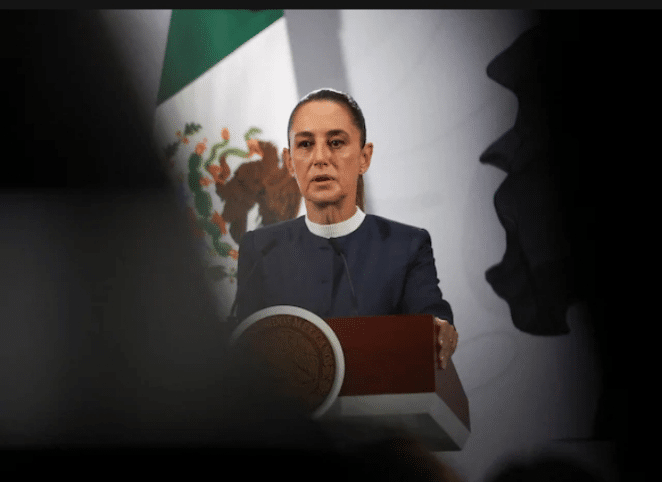
In diplomatic circles, the event prompted quiet reassessment of female leaders’ safety globally, underscoring how gendered threats blur lines between political risk and personal autonomy.
Mexico’s newspapers carried dual narratives: one of outrage and another of reflection—how a society normalizing street harassment might rediscover decency through the shock of presidential exposure.
Amid outrage, voices also called for institutional reform: stronger community policing, accessible complaint channels, and gender-training programs within national security services.
Sheinbaum’s administration now faces the test of converting symbolic anger into enforceable policy—a test every modern democracy encounters when gender equality collides with cultural inertia.
Experts argue the incident may redefine how Mexicans perceive leadership itself. A woman in power, violated yet resolute, embodies both fragility and strength—an unfiltered truth of politics.
The Mexican president calm demeanor afterward deepened that symbolism. “I will continue walking the streets,” she said. “Because those streets belong to all of us, not to fear.”
That declaration has since echoed through universities, newsrooms, and protests—a president reclaiming civic space as a collective right, rather than retreating behind fortified walls.
In that moment, the Mexican president reframed vulnerability as agency. By pressing charges, she reframed pain as governance—justice not as rhetoric but as personal and institutional act.
Sociologists suggest this may awaken a cultural reckoning: that harassment, often dismissed as “everyday,” reveals how patriarchy shapes not just violence but the very architecture of public life.
The assailant’s case proceeds through local courts. Legal experts predict conviction is likely, yet its symbolic aftermath may prove far weightier than any sentence imposed.
Beyond courtroom walls, this story becomes political text—a testament to the persistence of inequality and the possibility of reform through visible, dignified response from power.
In the coming weeks, Mexico will watch whether Sheinbaum’s justice ministry introduces nationwide reforms—a legal path that might outlast the outrage of one viral moment.
Ultimately, the assault against the president embodies the silent battles of countless women—fought in workplaces, buses, and streets—now finally voiced from the highest office.
If her presidency began as a story of historic ascent, it now evolves into something deeper: a confrontation between power, vulnerability, and the unyielding demand for safety.
Through trauma and courage, the Mexican president has reshaped Mexico’s national conversation. Her personal ordeal becomes a collective awakening—reminding the nation that no woman stands alone.
About The Author