The Lagos State Government has authorised a 13 per cent upward review of Lagos bus fares across all services operating under the Bus Reform Initiative (BRI), a move officials say is necessary to sustain public transportation amid mounting economic strain.
The adjustment, which takes effect from Monday, March 2, 2026, will apply to Bus Rapid Transit corridors as well as standard regulated routes managed under the state’s transport reform framework.
Authorities explained that the decision followed extensive consultations with licensed operators who warned that rising operational expenses were eroding their capacity to maintain reliable services.
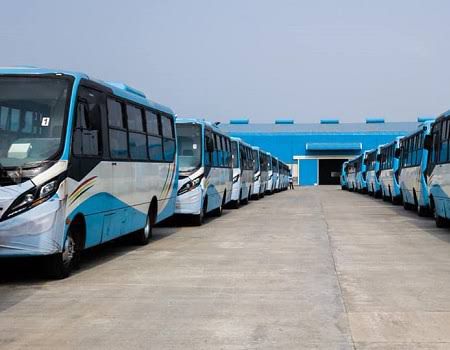
Announcing the development, the Lagos Metropolitan Area Transport Authority (LAMATA) stated that Governor Babajide Sanwo-Olu approved the fare review after transport stakeholders presented data showing persistent financial pressure on fleet operations.
According to the agency, the review aligns with the existing annual pricing mechanism designed to periodically evaluate transport costs and economic realities.
Officials stressed that the decision was not taken lightly. Over the past year, operators have reported sharp increases in the cost of spare parts, fuel, routine servicing, insurance, and staff wages.
The implementation of the new national minimum wage structure further compounded payroll obligations for Bus Operating Companies (BOCs), which manage daily transit services.
While commuters are expected to feel the impact of the new pricing structure, the government argued that maintaining artificially low fares could threaten the long-term stability of the system.
“The sustainability of regulated transit services is critical to mobility in a megacity like Lagos,” the statement noted, adding that service interruptions or fleet reductions would ultimately hurt passengers more severely.
Economic data appears to support the operators’ concerns. According to figures released by the National Bureau of Statistics, Nigeria’s inflation rate closed 2025 at 15.2 per cent.
Persistent inflation has driven up the prices of vehicle components, lubricants, tyres, and imported spare parts—many of which are priced in foreign currency.
These factors have directly influenced Lagos bus fares, as operators struggle to absorb rising input costs.
Transport analysts say the increase reflects broader macroeconomic realities rather than isolated policy choices.
In recent months, multiple sectors have adjusted prices to reflect higher production and service delivery costs.
Within the transport ecosystem, regulated operators argue that without a review of Lagos bus fares, fleet maintenance schedules could be compromised, leading to breakdowns, delays, and reduced safety standards.
Despite approving the increment, state officials reiterated their commitment to protecting commuters from excessive charges.
They emphasised that the 13 per cent review remains below prevailing inflation levels and was calculated to strike a balance between affordability and sustainability.
Regulatory oversight, authorities said, will remain firm to ensure that only the approved rates are charged across BRI routes.
Passengers interviewed at several bus terminals expressed mixed reactions.
While some acknowledged the rising cost of living and said adjustments were inevitable, others voiced concern about the cumulative burden of transport expenses on household budgets.
For many working residents who rely daily on mass transit, even modest increases in Lagos bus fares can significantly affect monthly spending.
Industry stakeholders, however, maintain that the adjustment is essential for operational continuity.
Representatives of Bus Operating Companies disclosed that maintenance costs have nearly doubled in certain categories over the past year.
They also pointed to higher electricity tariffs affecting depots, increased logistics costs, and insurance premiums tied to fluctuating economic indicators.
The Bus Reform Initiative, introduced to modernise and regulate urban transportation, was designed to provide structured routes, standardised buses, and improved commuter safety.
Under the framework, fares are periodically reviewed through a structured mechanism that considers inflation, exchange rates, labour costs, and fleet renewal needs.
The latest revision of Lagos bus fares, officials insist, follows this established process.
Transport policy observers note that Lagos, as Nigeria’s commercial nerve centre, depends heavily on efficient public mobility.
With millions commuting daily for work, school, and business, maintaining operational buses is central to economic productivity.
Authorities argue that failing to adjust pricing in response to economic realities could undermine the reliability gains achieved since the BRI’s implementation.
As the March 2 commencement date approaches, transport unions and operators are preparing to communicate the revised rates clearly to passengers.
Signage at terminals and onboard notices are expected to outline the updated fare structure to prevent confusion.
Enforcement teams will also monitor compliance to deter unauthorised increments beyond the approved 13 per cent.
Ultimately, the state government maintains that the decision reflects a pragmatic response to economic conditions rather than a revenue-driven policy.
Officials pledged continued investment in transport infrastructure, including bus fleet expansion and route optimisation, to improve efficiency and reduce long-term operational costs.
For commuters, the immediate reality is that Lagos bus fares will rise next month. For operators, the increase represents a financial lifeline intended to preserve service standards.
As inflationary pressures persist, stakeholders across the transport value chain agree on one point: sustaining affordable yet viable urban mobility remains one of the most delicate balancing acts in managing a rapidly growing city.
Ireport247news
About The Author