Tensions within the Labour Party (LP) intensified on Tuesday night as the Julius Abure-led faction announced it had reclaimed the party’s national secretariat in Abuja, barely 24 hours after the Nenadi Usman-led caretaker committee assumed control of the facility.
The development marks a fresh escalation in the ongoing leadership dispute that has gripped the party since 2023, highlighting the fragile nature of Nigeria’s internal party democracy.
The Abure faction, through National Publicity Secretary Obiora Ifoh, issued a statement confirming the reclamation of the secretariat. Photographs accompanying the statement showed banners and billboards bearing the images of Senator Nenadi Usman being removed from the premises.
“The Julius Abure-led leadership of the Labour Party has recovered the party’s national secretariat illegally occupied by the Abia State government and Nenadi Usman’s group earlier today,” the statement read.
Labour Party leadership dispute deepens
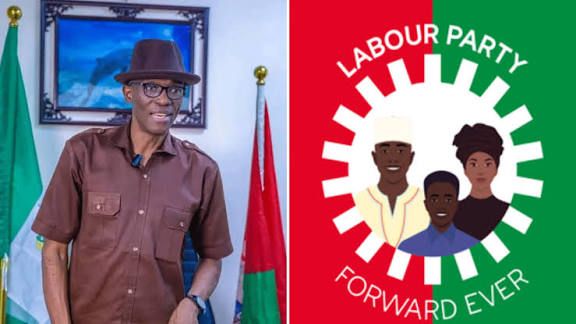
The ongoing Labour Party leadership crisis has seen factions contesting control of the party’s structure, electoral mandate, and secretariat facilities.
The Abure faction insists its actions are necessary to protect the lawful operations of the party, claiming that Usman’s takeover was both illegal and unauthorised.
“The party will take inventory of the losses and outright theft observed during the illegal invasion, after which formal charges will be pressed,” Ifoh said.
Meanwhile, the acting National Chairman, Senator Nenadi Usman, dismissed Abure’s claims and accused the faction of defying a subsisting court judgment. Speaking through her Senior Special Adviser on Media, Ken Asogwa, Usman said,
“There is a court judgment in place that confirms Abure has ceased to be the national chairman. The secretariat is where lawful party activities should be performed, and the actions of Abure’s faction represent a direct violation of this ruling.”
Legal and political implications
The latest move comes just a day after Usman and Abia State Deputy Governor Ikechukwu Emetu took control of the Labour Party national secretariat amid heavy security deployment.
Armed policemen were reported within and around the Utako headquarters during the takeover, ensuring a smooth handover of administrative control.
Banners and billboards displaying images of Abure and his executives were removed and replaced with those of Usman, reflecting a symbolic transfer of power within the party.
Political analysts argue that the dispute illustrates deeper weaknesses in internal party governance and legal enforcement mechanisms in Nigeria. The Labour Party crisis underscores how unresolved leadership tussles can disrupt party cohesion, delay internal processes, and diminish public confidence in political institutions.
Impact on party activities and members
Both factions have urged party members to remain calm while legal processes continue. The Abure faction assured members that operations would resume at the secretariat, apologising for any inconvenience caused during the takeover.
“We also warn that the party will no longer tolerate further attempts by some desperate politicians to impugn lawful activities,” Ifoh added.
Senator Usman’s faction, however, has vowed to contest the Abure-led reclamation in court. The caretaker committee’s leadership insists that the takeover of the secretariat was lawful, transparent, and executed in broad daylight, contrasting Abure’s nocturnal announcement of regained control.
The crisis follows a Federal High Court ruling in Abuja last month that declared Abure’s tenure as National Chairman had elapsed. The court ordered the Independent National Electoral Commission (INEC) to recognise a caretaker committee led by Usman pending a national convention.
Subsequently, INEC listed Usman as acting National Chairman on its official website, replacing Abure’s name and recognising the caretaker committee. Despite rejecting the judgment and filing an appeal, Abure continues to assert authority over the party, escalating tensions further.
Factions, security, and party unity
Observers note that the involvement of police and security operatives underscores the high stakes involved in the leadership tussle.
The presence of armed forces at the party’s Utako headquarters during Usman’s takeover, followed by Abure’s nocturnal reclamation, highlights the risk of confrontation and the potential for violence in unresolved internal disputes.
The Labour Party leadership crisis demonstrates that political parties in Nigeria must adopt stronger institutional frameworks to manage internal conflicts.
Analysts stress that until there is clarity on party leadership, policy direction, and procedural compliance, the LP risks losing credibility and alienating its members ahead of upcoming elections.
As both factions prepare for prolonged legal battles, party members, supporters, and political stakeholders await the appellate courts’ final determination on the rightful leadership of the Labour Party. Meanwhile, party activities continue under heightened scrutiny, reflecting the delicate balance between law, authority, and political ambition in Nigeria’s party politics.