Israeli attacks on Gaza and West Bank escalated on Tuesday, with airstrikes and artillery shelling targeting areas east of Khan Younis.
The surge in violence coincided with a White House meeting between Israeli Prime Minister Benjamin Netanyahu and US President Donald Trump, where discussions are expected to include Gaza and nuclear talks with Iran.
The seventh group of patients and wounded Palestinians returned to Gaza via the Rafah crossing, many reporting humiliating searches and delays by the Israeli army.
Meanwhile, Israeli raids in Hebron and other parts of the occupied West Bank continued, leaving several Palestinians suffocating from tear gas.
The Israeli government recently approved new land registration rules, making it easier for Israeli Jews to purchase property in the West Bank.
Palestinians fear these measures could formalize de facto annexation, further undermining their communities.
International representatives, including ambassadors from the Arab League and Organisation of Islamic Cooperation, condemned the decision as a violation of international law.
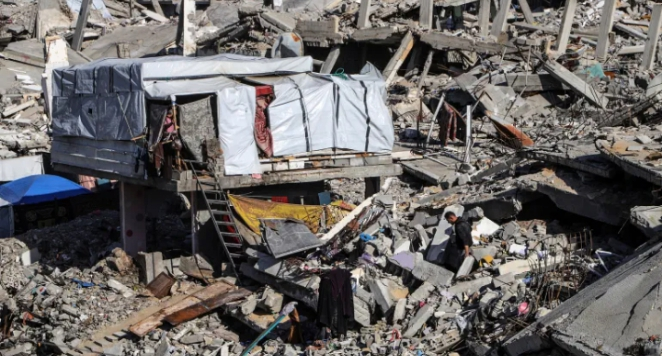
Education in Gaza remains severely disrupted. Most school buildings were destroyed or repurposed as shelters for displaced families, contributing to a worsening Gaza education crisis.
Students now struggle to maintain any routine, with daily life revolving around securing water, food, and heating fuel.
Reports also indicate continued attacks on Palestinian civilians. Two Palestinians were wounded by pepper spray in the northern Jordan Valley, and a child was shot in southern Gaza.
Humanitarian agencies warn that the ongoing violence and Israeli settlement expansion are creating “hopelessness and violence” across Palestinian communities.
Humanitarian organizations have called for immediate international intervention to prevent further civilian suffering.
Hospitals in Gaza are overwhelmed, shortages of medical supplies are severe, and families report that many displaced residents are living in overcrowded tents without adequate sanitation.
Aid agencies stress that without increased support, the health crisis may escalate, particularly for children and the elderly.
Global reactions to the escalation remain mixed. While some countries have condemned Israeli attacks on Gaza and West Bank, others have urged restraint on all sides.
The international community continues to debate measures to protect Palestinian civilians and prevent further annexation of the West Bank, highlighting the growing urgency of diplomatic engagement in the region.
The conflict has already resulted in extensive casualties, with tens of thousands of Palestinians killed and hundreds of thousands wounded since October 2023. In Israel, over a thousand people were killed during the October 7 attacks, and several hundred remain captive.
Human rights organizations have warned that the ongoing Israeli attacks on Gaza and West Bank are pushing the humanitarian situation to a breaking point.
Read also:Women fear Islamist surge as Jamaat e-Islami eyes historic gains in Bangladesh election
Many displaced families are now living in makeshift shelters without access to clean water, electricity, or medical care. Aid agencies are urging international support to prevent further civilian suffering, particularly among children and the elderly who are most vulnerable.
Meanwhile, diplomatic tensions are rising as countries debate responses to the escalation. Several governments have called for immediate restraint and for Israel to halt settlement expansion, while others emphasize dialogue and mediation.
Analysts note that the outcome of these diplomatic efforts, combined with the Trump-Netanyahu meeting, could shape regional stability and influence the broader Middle East peace process.
About The Author