The issue dominating royal and political discussion is that King Charles is ready to support police over Andrew allegations has become the central message coming from the monarchy following fresh scrutiny linked to newly released Epstein-related documents.
The statement signals a continuation of the royal household’s effort to distance the institution from ongoing legal and reputational risks while also emphasizing support for victims of abuse.
The development follows renewed global attention on historical relationships and communications between Andrew and individuals linked to criminal wrongdoing, placing pressure on authorities and public institutions to review potential misconduct thoroughly.
The latest developments centre on claims that confidential material connected to official overseas trade trips may have been shared during Andrew’s time working in a government-linked diplomatic trade role.
The controversy intensified after document releases reportedly revealed email exchanges from more than a decade ago. These documents appear to show communication between Andrew and Jeffrey Epstein after the financier’s criminal conviction in the United States.
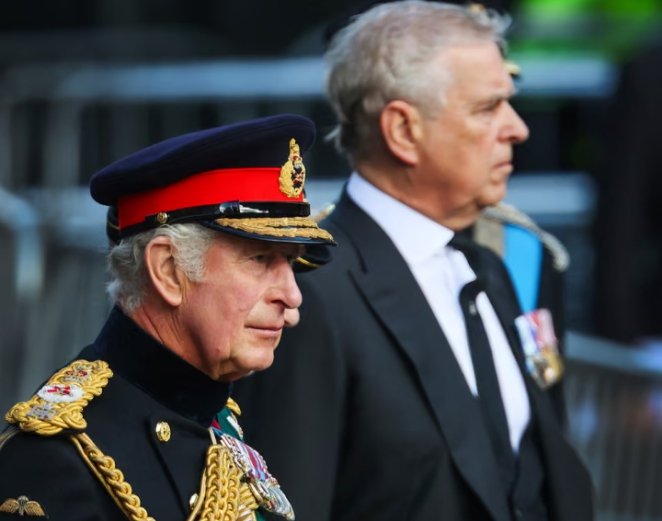
The allegations have raised questions about whether confidential information connected to international business or diplomacy was shared inappropriately.
A palace statement stressed the seriousness of the situation while avoiding direct commentary on the substance of the allegations. According to the statement, the king has shown “profound concern at allegations which continue to come to light.”
The wording reflects a careful legal and institutional position — acknowledging public anxiety while leaving factual determination to investigative authorities.
The same communication also indicated willingness to cooperate fully with law enforcement if required, reinforcing the idea that the monarchy intends to be seen as supportive of legal processes rather than obstructive.
The significance of King Charles ready to support police over Andrew allegations extends beyond immediate legal implications. It reflects how the monarchy has attempted to handle reputational crises in recent years.
Since ascending to the throne, Charles has consistently emphasized institutional stability and public trust. Observers say this approach includes demonstrating transparency and reinforcing the principle that legal authorities must operate independently of royal influence.
In practical terms, such messaging also seeks to reassure the public that historical allegations involving individual family members will not be shielded from scrutiny.
At the centre of the controversy are accusations that Andrew, while serving in a trade envoy role, may have forwarded information connected to overseas visits.
Trade envoys often receive commercially sensitive and politically sensitive intelligence designed to support international economic partnerships.
Government guidance typically stresses strict confidentiality rules and continuing obligations even after leaving such positions. This context explains why investigators are reportedly examining whether any information shared could have violated official confidentiality rules or national security obligations.
Another major dimension of the controversy is the timeline of communication. Some reported emails appear to show contact continuing after Andrew publicly claimed to have cut ties with Epstein.
This contradiction has become a focal point for critics, who argue it raises credibility questions. One reported email line read, “I would be very interested in your comments or ideas,” which critics say suggests ongoing dialogue at a time when distance had allegedly been established.
While a single sentence does not prove wrongdoing, such communications often become central pieces of evidence when investigators attempt to reconstruct historical relationships.
The broader context is shaped by massive document releases linked to investigations into Epstein’s activities and networks. Millions of pages of documents have reportedly been reviewed by journalists, lawyers, and investigators.
These releases have prompted new claims, new witness accounts, and renewed media attention on individuals who had professional or social contact with Epstein.
This explains why Epstein files royal investigation has become a persistent global headline topic, with public interest driven by questions of accountability, institutional responsibility, and justice for victims.
Another major part of the story is the response from other senior royal figures. William and Catherine have reportedly expressed concern about the continued emergence of new revelations.
Their reported position emphasizes focus on victims rather than institutional reputation. A spokesperson message reportedly stated their “thoughts remain focused on the victims.”
This wording reflects a broader shift in royal communication strategy — placing empathy and victim recognition at the centre of messaging during sensitive controversies.
The controversy also overlaps with diplomatic realities. William’s international visit schedule has continued despite the renewed scandal coverage, highlighting how global diplomacy and royal representation must proceed even amid domestic reputational crises.
This balancing act is not new for royal institutions worldwide. However, the intensity of digital media coverage and document transparency has made crisis management more complex than in previous decades.
The Prince Andrew trade envoy reports controversy has also sparked renewed debate about how governments select and monitor special representatives.
Trade envoys often operate in high-level networking environments involving business leaders, political figures, and investors.
Because of this access, governments typically impose strict confidentiality and ethical standards. If breaches occur, they can potentially affect diplomatic trust and economic negotiations.
This explains why investigators are reportedly reviewing whether any documents involved commercially sensitive market information or strategic government insights.
Public reaction has been shaped by a mixture of legal caution and emotional response. Advocacy groups focused on abuse victims have argued that institutional accountability is essential to maintaining public trust.
Meanwhile, some constitutional experts stress that allegations alone do not determine guilt and that investigations must follow evidence-based legal standards.
This tension reflects a broader global conversation about how societies handle historical abuse allegations involving powerful individuals.
The Royal family response to abuse allegations has evolved significantly compared to earlier decades. Recent public messaging has consistently emphasized victim recognition and support.
Royal communications often include reminders that sympathy lies with survivors of abuse rather than with institutional self-protection. This shift reflects lessons learned from previous controversies involving public institutions, religious organizations, and political bodies worldwide.
Another angle involves the historical nature of many allegations linked to the Epstein network. Investigators often face challenges when examining events that allegedly occurred years earlier. Evidence collection, witness memory reliability, and jurisdictional issues can complicate legal proceedings.
These realities mean that public discussion often moves faster than legal conclusions, creating long periods of uncertainty where institutions must respond carefully to protect both justice processes and reputational stability.
The story has also reignited debates about the long-term consequences of associations with controversial individuals. In elite global networks involving business, diplomacy, and politics, relationships often form before allegations or criminal convictions emerge.
However, once such connections become public knowledge, institutions often face retrospective scrutiny. This is one reason why William and Catherine concern over Epstein revelations reflects not only moral positioning but also recognition of long-term institutional reputation risks.
For the monarchy, the challenge extends beyond immediate crisis management. Public trust remains one of the monarchy’s most important intangible assets. Any perception that powerful figures receive special treatment could damage that trust.
By reinforcing that King Charles ready to support police over Andrew allegations, the palace appears to be prioritizing institutional survival through cooperation and transparency messaging.
The global nature of the story also matters. The Epstein case spans multiple countries, financial systems, and legal jurisdictions. This means document releases and investigations often involve international cooperation.
It also explains why allegations connected to diplomatic roles attract particularly intense scrutiny, because they intersect with national security, economic diplomacy, and political relationships.
Ultimately, the long-term outcome will depend on legal investigations, evidence evaluation, and potential court processes. Public opinion will likely continue evolving as new information emerges.
Read also: China rejects US claims of secret nuclear tests amid rising strategic tensions
For now, the monarchy appears focused on maintaining institutional distance from individual allegations while reinforcing commitment to law enforcement cooperation and victim recognition.
The coming months are likely to determine whether the allegations produce formal legal proceedings or remain part of ongoing investigative review. Either way, the issue will continue shaping public conversation about accountability, institutional responsibility, and historical justice.
As long as document releases and investigative reviews continue, King Charles ready to support police over Andrew allegations will likely remain a defining narrative in how the monarchy navigates one of its most serious modern reputational challenges.