China rejects US claims of secret nuclear tests, dismissing Washington’s accusations as fabricated, while escalating diplomatic tensions threaten global arms control stability and disarmament efforts worldwide.
China on Monday firmly denied allegations from the United States that it secretly conducted nuclear explosive tests, calling the claims baseless and politically motivated.
Beijing accused Washington of spreading misinformation to justify restarting its own nuclear weapons testing programme, a move that could undermine decades of arms control agreements.
The strong rebuttal followed comments made at the United Nations Conference on Disarmament in Geneva, a long-standing forum for global arms control negotiations.
Thomas DiNanno, the US under secretary of state for arms control, accused China of conducting covert nuclear tests, including an alleged test on June 22, 2020.
DiNanno further claimed that China was preparing for additional nuclear tests involving massive yields, raising concerns among international observers and security analysts.
Responding swiftly, China’s Ministry of Foreign Affairs issued a statement rejecting the accusations and condemning Washington’s remarks as “outright lies”.
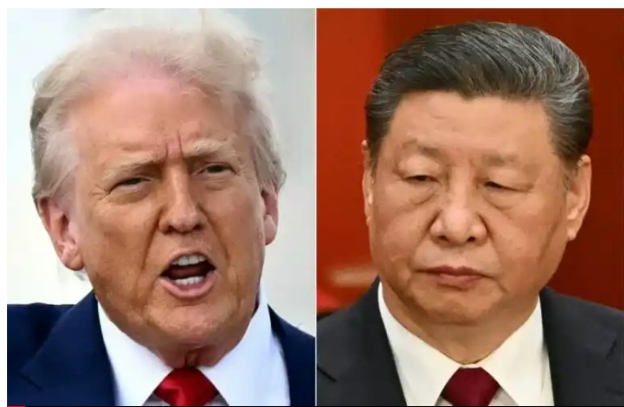
“The US allegations are completely groundless and are outright lies,” the ministry said in a statement released to Agence France-Presse on Monday.
China added that it “firmly opposes the US attempt to fabricate excuses for its own restarting of nuclear tests”, escalating the diplomatic confrontation.
Beijing also urged the United States to “immediately stop its irresponsible actions”, warning that such rhetoric risks destabilising the global nuclear order.
The dispute highlights growing strategic mistrust between the world’s two largest economies, whose rivalry increasingly extends into military and nuclear domains.
China rejects US claims of secret nuclear tests at a sensitive moment, as global arms control frameworks face uncertainty and weakening enforcement mechanisms.
Nuclear testing has been largely banned since the Cold War era, with most countries adhering to the Comprehensive Nuclear-Test-Ban Treaty, despite its incomplete ratification.
Although China signed the treaty in 1996, it has not ratified it, while the United States has signed but similarly failed to ratify the agreement.
Still, both countries have maintained moratoriums on nuclear explosive testing, making the latest accusations particularly significant and controversial.
China has consistently maintained that it adheres to a policy of no-first-use of nuclear weapons and supports gradual nuclear disarmament.
US officials, however, argue that China’s expanding nuclear arsenal contradicts its stated commitments and threatens strategic stability in the Asia-Pacific region.
At the Geneva conference, DiNanno linked the allegations to a broader US proposal for renewed nuclear arms talks involving China and Russia.
The proposal follows the expiration of the New Strategic Arms Reduction Treaty, known as New START, between Washington and Moscow last Thursday.
New START was the final remaining treaty limiting the number of deployed strategic nuclear warheads between the United States and Russia.
Its expiration has raised alarms among arms control advocates, who fear a new arms race without binding limits on nuclear weapons.
The United States has called for three-way negotiations to establish new limits on nuclear arsenals, reflecting China’s growing nuclear capabilities.
China, however, has rejected participating in such negotiations “at this stage”, citing disparities in nuclear stockpile sizes.
Beijing argues that its nuclear arsenal remains significantly smaller than those of the United States and Russia, making trilateral talks premature.
Analysts note that China’s reluctance reflects long-standing concerns about being pressured into agreements that could limit its strategic deterrence.
Meanwhile, US President Donald Trump has openly suggested a return to nuclear weapons testing under certain conditions.
In October, Trump said Washington would resume testing nuclear weapons “on an equal basis” with Moscow and Beijing, without providing specifics.
The statement raised international concern, as any resumption of nuclear testing by major powers could trigger similar actions elsewhere.
China’s rejection of US allegations is therefore closely tied to fears that Washington seeks justification for abandoning long-standing testing moratoriums.
Beijing insists that Washington’s claims lack evidence and undermine trust at a time when cooperation is urgently needed.
“The United States is shifting blame and creating false narratives to serve its own strategic objectives,” Chinese officials have repeatedly stated.
Russia has also criticised US rhetoric surrounding nuclear testing, warning that it could unravel decades of progress in arms reduction.
International observers worry that escalating accusations could weaken already fragile global non-proliferation norms.
The United Nations has repeatedly urged nuclear-armed states to exercise restraint and recommit to dialogue rather than confrontation.
The Conference on Disarmament has long been deadlocked, with major powers unable to agree on new treaties or verification mechanisms.
China rejects US claims of secret nuclear tests as part of a broader pattern of diplomatic friction over security, trade, and technology.
Relations between Washington and Beijing have deteriorated in recent years, marked by disputes over tariffs, Taiwan, and military activity.
Nuclear policy now joins a growing list of flashpoints complicating efforts to stabilise bilateral relations.
Experts warn that misinformation or misinterpretation in nuclear matters carries particularly dangerous consequences.
“Any erosion of trust between nuclear powers increases the risk of miscalculation,” one arms control analyst noted.
Despite the tensions, China continues to publicly support multilateral disarmament under the framework of the United Nations.
Beijing insists that nuclear-armed states with the largest arsenals must take the lead in reducing weapons stockpiles.
Washington counters that China’s rapid military modernisation necessitates its inclusion in future arms control agreements.
Read also: Iran arrests reformists amid post-protest crackdown
As rhetoric intensifies, diplomats fear that opportunities for compromise are narrowing.
The dispute underscores the fragile state of global nuclear governance in a rapidly changing geopolitical environment.
Without renewed dialogue, analysts warn that the world may enter a new era of unchecked nuclear competition.
For now, China’s categorical denial signals its unwillingness to accept US narratives or policy pressure.
China rejects US claims of secret nuclear tests, reinforcing its stance that responsibility for arms control failures lies elsewhere.