North Korean leader Kim Jong Un praised his country’s military for participating alongside Russia in the Ukraine war, calling the army “ever-victorious” and highlighting its prestige and global influence.
Speaking at the three-day plenary meeting of the Workers’ Party of Korea, Kim criticized officials for “wrong ideological viewpoints” and “inactive and irresponsible work attitudes,” emphasizing the need for strict internal discipline.
The state-run Korean Central News Agency (KCNA) reported that at least 600 North Korean soldiers have died in Ukraine, with thousands more injured, yet Kim described their sacrifice as heroic and commendable.
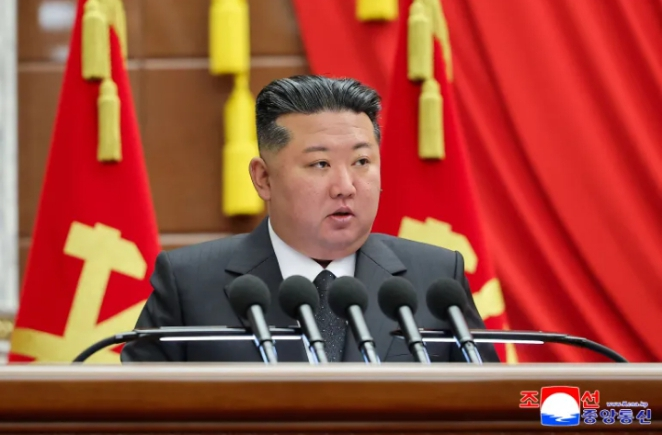
Kim stated that North Korea’s military deployment in support of Russia “demonstrated to the world the prestige of our army and state as the ever-victorious army and protector of justice.”
The North Korean leader also spoke of ongoing modernization efforts, emphasizing that adapting to global geopolitical and technological changes is critical to the country’s security and defensive capabilities.
South Korean President Lee Jae Myung has sought to ease tensions by removing border loudspeakers and banning anti-Pyongyang propaganda leaflets, though Kim publicly rejected dialogue and dismissed diplomatic overtures.
Kim warned that “evil practices” among officials must be eradicated, signaling a campaign to correct corruption and ideological deviation while consolidating authority ahead of the Ninth Party Congress, expected in early 2026.
Analysts argue that North Korea’s involvement in Ukraine strengthens its partnership with Russia, provides combat experience for troops, and demonstrates military competence and ideological loyalty on the international stage.
Experts noted that Pyongyang’s message combines military achievement abroad with internal control, projecting strength globally while discouraging inefficiency or disloyalty within the ruling party and government bureaucracy.
The Ninth Party Congress will likely codify Kim’s “two hostile states” stance toward Seoul, outline economic and military policy priorities, and further institutionalize North Korea’s strategic alignment with Russia and other allies.
International concern is mounting as North Korea’s direct involvement in Ukraine could exacerbate the conflict, prompting condemnation from Western governments for violating international norms and potentially escalating regional tensions.
By emphasizing overseas military operations alongside warnings to officials, Kim balances internal governance with global messaging, reinforcing both loyalty at home and the regime’s influence abroad, according to analysts.
Kim highlighted that modernization of the armed forces remains a central goal, asserting that technological upgrades, missile development, and tactical improvements are essential to defending the country against external threats.
North Korea’s military modernization and overseas engagement reflect a strategy to showcase strength, deter potential adversaries, and solidify the country’s standing as a capable and ideologically loyal state in the international arena.
Despite diplomatic attempts by South Korea, including overtures for dialogue and conflict reduction, Kim has maintained that Pyongyang has no interest in negotiations, emphasizing military and strategic priorities over diplomacy.
Reports indicate that North Korean soldiers deployed to Ukraine have gained experience in frontline combat and logistics, reinforcing Pyongyang’s capabilities while demonstrating loyalty to Russia, its long-standing strategic partner.
Kim’s warnings to officials highlight ongoing internal challenges, with “evil practices” referring to corruption, inefficiency, or ideological deviation, signaling a tightening of party discipline and centralization of authority.
Observers note that Kim’s public praise of soldiers is a calculated message, emphasizing North Korea’s ability to project power globally while maintaining strict governance internally, reinforcing the regime’s image.
The narrative of an “ever-victorious army” serves to boost domestic morale, intimidate potential dissenters, and provide propaganda value, portraying the North Korean military as both heroic abroad and disciplined at home.
Analysts also highlight that North Korea’s participation in the Ukraine conflict allows Pyongyang to test military tactics, supply chains, and operational readiness in a real-world environment without openly declaring war on other states.
The upcoming Ninth Party Congress will be pivotal in setting policy directions, including economic, military, and foreign strategies, potentially formalizing Kim’s hostile stance toward South Korea and reinforcing alliances with Russia.
By praising overseas troops and addressing internal corruption, Kim simultaneously conveys strength to foreign observers and loyalty demands to domestic officials, balancing external messaging with internal consolidation of power.
North Korea’s Ukraine engagement, combined with military modernization, internal discipline campaigns, and strategic positioning, demonstrates a multidimensional approach to security, projecting both hard power abroad and control at home.
The sacrifices of soldiers in Ukraine have been framed as heroic by Kim, reinforcing the narrative of a globally respected, ideologically loyal, and militarily capable regime, bolstering both legitimacy and national pride.
Experts argue that Pyongyang’s dual focus—military prestige abroad and strict governance at home—is a consistent pattern aimed at consolidating power, deterring dissent, and enhancing North Korea’s strategic profile globally.
Kim’s remarks reflect a broader strategy emphasizing military modernization, ideological loyalty, and alliance-building, particularly with Russia, ensuring North Korea’s relevance in ongoing conflicts and international negotiations.
The rejection of dialogue with South Korea, despite overtures from President Lee, underscores Pyongyang’s preference for strategic and military priorities over diplomatic engagement or conflict resolution with neighboring countries.
Observers conclude that North Korea’s military involvement in Ukraine is designed to strengthen alliances, gain combat experience, and project power, signaling the regime’s determination to remain a key player on the global stage.
North Korea’s approach demonstrates a careful balance between international influence, military capability, and domestic control, using overseas operations to enhance prestige while enforcing discipline within the government and ruling party.
Kim Jong Un’s statements and actions underscore a continued assertive posture, combining overseas military operations, domestic governance reforms, and international signaling to reinforce national security and strengthen Pyongyang’s strategic position.
North Korea’s engagement in Ukraine, coupled with internal warnings and military modernization, signals a comprehensive approach to power projection, discipline, and strategic alignment, reflecting Kim’s long-term governance philosophy.
The emphasis on an “ever-victorious army,” ideological loyalty, and modernization demonstrates Kim’s commitment to maintaining North Korea’s military and political relevance, securing internal authority, and asserting influence amid global conflicts.
By praising the soldiers abroad while cracking down on officials at home, Pyongyang reinforces loyalty, boosts morale, and signals to allies and adversaries alike its military and political capabilities.
North Korea’s dual approach of overseas engagement and internal enforcement projects strength and resilience, ensuring the regime’s continued prominence in regional security discussions and international strategic calculations.
Kim Jong Un’s Ukraine-related statements reflect a multidimensional strategy: assert military strength abroad, consolidate political authority at home, and reinforce North Korea’s strategic relevance on the global stage.
The upcoming Ninth Party Congress will be closely watched to determine how Pyongyang formalizes its policies, potentially codifying hostility toward Seoul while strengthening alliances with Russia and emphasizing military modernization.
Read also: Over 400 civilians killed in eastern DR Congo as regional peace efforts collapse
North Korea’s focus on the “ever-victorious army” highlights a consistent strategy of balancing domestic discipline, global military engagement, and ideological messaging to secure national interests and assert influence internationally.
The narrative of military heroism abroad, combined with strict internal governance, positions North Korea as a resilient, assertive, and strategically oriented state determined to maintain both domestic control and global relevance.