Fire-ravaged Lagos airport old terminal to be demolished
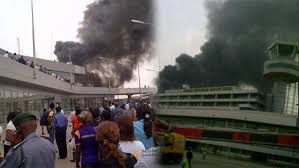
The Federal Government has confirmed that the fire-damaged old terminal of the Murtala Muhammed International Airport will be demolished following Monday’s devastating blaze, with authorities promising accelerated reconstruction and temporary operational adjustments.
The Minister of Aviation and Aerospace Development, Festus Keyamo, disclosed this after conducting an on-site assessment of the destruction caused by the inferno, which disrupted flight schedules and triggered a large-scale emergency response.

According to the minister, the affected terminal—Terminal 1 of the domestic wing—had already been earmarked for refurbishment prior to the incident. However, the extent of structural damage sustained in the fire has now made demolition the most viable option.
“The terminal was already scheduled for major upgrades. Given the level of damage, it will be pulled down,” Keyamo told journalists during his inspection visit.
Fire outbreak disrupts airport operations
The fire reportedly began around 3:00 p.m., sending thick plumes of smoke billowing from sections of the building and forcing the diversion of flights. Emergency responders, including aviation fire units and other agencies, battled the blaze for several hours before bringing it under control later in the evening.
Airport authorities confirmed that no fatalities were recorded. However, at least six individuals were hospitalised due to smoke inhalation and related injuries. Keyamo stated that those receiving treatment are responding positively and are in stable condition.
The incident caused operational uncertainty for airlines, particularly those operating from the old terminal. Passengers experienced delays and diversions as contingency measures were activated to maintain safety and continuity of service.
Temporary terminal to support operations
In response to the disruption, the minister announced that a temporary terminal facility—already under development—would be fast-tracked to accommodate airlines affected by the closure.
He explained that the interim structure is nearing completion and will serve as an operational hub for the limited number of carriers that previously used the damaged terminal. Aviation authorities are coordinating with airline operators to ensure a smooth transition and minimise inconvenience to travelers.
Industry stakeholders say the swift deployment of an alternative facility will be critical to preventing prolonged congestion at other terminals within the airport complex.
Safety and infrastructure concerns
The decision to demolish the old terminal has reignited discussions around infrastructure resilience and safety standards in Nigeria’s aviation sector. While the precise cause of the fire remains under investigation, aviation analysts argue that ageing infrastructure and electrical vulnerabilities must be comprehensively addressed in future upgrades.
The old terminal at Murtala Muhammed International Airport has long been considered overdue for modernization. Although periodic maintenance was conducted, calls for extensive structural rehabilitation had intensified in recent years due to increased passenger traffic and evolving safety requirements
Keyamo assured the public that a thorough investigation would determine the origin of the blaze and identify any systemic weaknesses. “We must ensure that whatever replaces this facility meets the highest standards of safety and efficiency,” he said.
Multi-agency emergency response
The scale of the fire necessitated coordination among multiple agencies, including aviation firefighters, state emergency services, and security personnel. The rapid mobilisation helped prevent the blaze from spreading to adjoining facilities and aircraft stands.
Eyewitnesses described scenes of panic as passengers and airport staff were evacuated from smoke-filled sections of the building. However, emergency protocols were reportedly activated promptly, limiting further casualties.
The Nigerian Civil Aviation Authority and the Federal Airports Authority of Nigeria are expected to issue technical reports detailing the response timeline, structural assessment, and next steps.
Implications for Nigeria’s aviation sector
The demolition of the fire-damaged terminal presents both challenges and opportunities for Nigeria’s aviation infrastructure. While short-term disruptions may affect passenger flow and airline scheduling, the planned reconstruction offers a chance to redesign the facility in line with international best practices.
Aviation experts note that modern terminals are increasingly designed with advanced fire suppression systems, automated detection networks, and enhanced evacuation protocols. Incorporating these features into the replacement structure could strengthen operational resilience.
The Lagos airport remains Nigeria’s busiest aviation gateway, handling a significant share of domestic and international passenger traffic. Ensuring minimal downtime is therefore critical to maintaining economic and commercial connectivity.
As investigations continue, the focus will remain on passenger safety, operational continuity, and transparent communication. The demolition plan signals a decisive response by authorities, but the long-term success of the rebuild will depend on strategic planning, funding allocation, and rigorous oversight.
For now, the Federal Government’s position is clear: the fire-ravaged facility will not be salvaged. Instead, it will make way for a new structure intended to align with modern aviation standards and restore confidence in one of West Africa’s most important transport hubs.
About The Author