

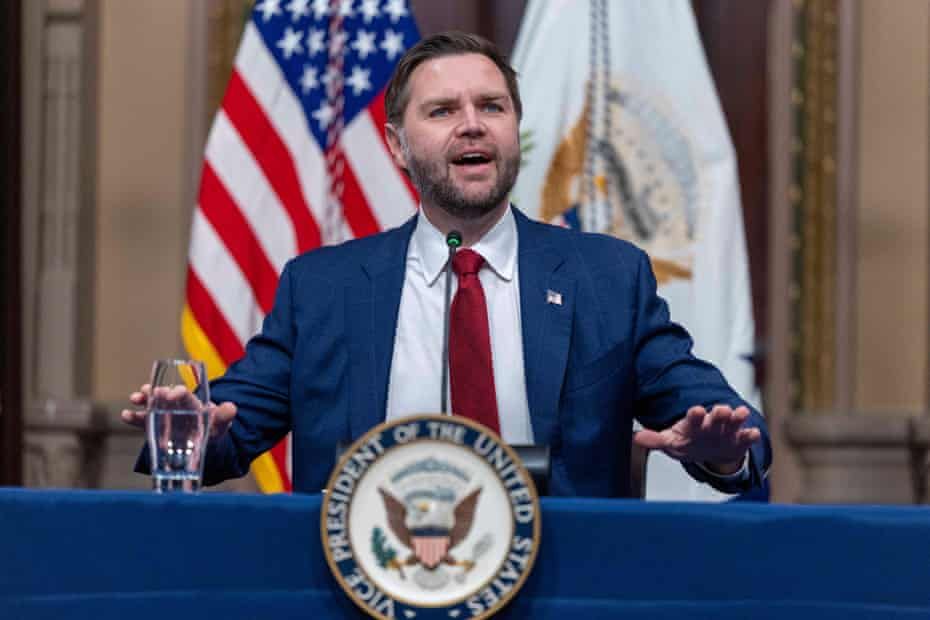
JD Vance aliens are demons claim sparked national discussion this weekend as the US vice-president suggested that some UFO sightings might involve spiritual entities rather than extraterrestrial life. Analysts noted the unusual framing within the context of US government transparency.
Vance appeared on a conservative podcast to explain his fascination with unidentified flying objects and why he personally believes some are not aliens but instead demonic beings. His comments came amid ongoing discussions of US military actions abroad.
The vice-president’s statements coincided with rising petrol prices and logistical disruptions across the country, partly because of a partial government shutdown. Citizens expressed frustration with delayed flights, showing that domestic issues intertwined with these unusual statements.
During the interview, the host asked Vance whether he had reviewed any government files related to UFO sightings, now referred to as unidentified anomalous phenomena. Vance admitted he had not had sufficient time to do so but promised to investigate thoroughly.
“I have not been able to spend enough time on this, but I am going to. Trust me, I’m obsessed with this,” Vance said, emphasizing both curiosity and his commitment to uncovering potential truths behind UFO phenomena.
The discussion expanded into religious territory, with Vance claiming that reports of celestial visitors should be interpreted through a spiritual lens. He explained that Christianity, his chosen faith, has always acknowledged the existence of both good and evil forces in the universe.
Vance further argued that some unusual aerial phenomena, described as UFOs by the media, might be spiritual in nature. He suggested that the modern tendency to label everything as alien distracts from potential moral or supernatural explanations.
Observers noted that his comments diverged sharply from standard political discourse, which typically focuses on foreign policy, economy, or national security. The vice-president’s emphasis on spiritual interpretation of UFOs generated widespread media attention.
In the past, both Donald Trump and Barack Obama had made statements regarding UFOs and extraterrestrial life. Trump, through his Truth Social account, encouraged agencies to identify and release government files about extraterrestrial matters and related phenomena.
Obama, by contrast, initially remarked that aliens might be real during a podcast interview but later clarified he had seen no evidence. The contrast between previous presidents and Vance’s religious framing sparked debate among political and scientific communities.
Vance explained that many reports of UFOs could involve “celestial beings who fly around, doing things humans cannot explain.” He reiterated that his interpretation leans toward spiritual understanding rather than extraterrestrial origin.
The vice-president noted that throughout history, civilizations have struggled to explain unknown phenomena. Modern culture often labels these occurrences as alien sightings, yet he argued a more cautious, faith-based perspective might offer additional insight.
Vance’s comments arrived as interest in government transparency concerning UFOs has increased. Several agencies, including the US Cybersecurity and Infrastructure Security Agency, registered official domains related to alien information, signaling potential forthcoming releases.
Experts in the field of ufology and theology have debated whether Vance’s statements help or hinder public understanding. Some applaud his attempt to merge faith and scientific inquiry, while others caution against conflating supernatural and extraterrestrial explanations.
The vice-president emphasized that he aims to “get to the bottom” of these phenomena and ensure that all relevant US government files are reviewed. This approach, he argued, balances curiosity with responsibility toward public knowledge.
Vance’s insistence on investigating UFOs spiritually also reflects a broader trend of religious leaders and political figures reconsidering how unexplained phenomena intersect with theology. This has sparked academic discussion and media commentary alike.
His statements about demonic presence in UFO sightings highlight an ongoing tension between scientific interpretations of unexplained events and religious perspectives. Many scientists remain skeptical, citing a lack of empirical evidence for supernatural claims.
Nonetheless, public fascination continues to grow. Social media platforms are filled with debate, with users discussing whether UFO reports are credible, the extent of government disclosure, and potential religious interpretations proposed by Vance.
Several media outlets noted that Vance’s focus on spiritual elements rather than political or military considerations diverges from typical vice-presidential messaging. This shift has both supporters and critics, reflecting a polarized public discourse.
The vice-president also remarked that one of the devil’s tricks is convincing people he never existed, connecting UFO phenomena to broader moral and theological concerns. This interpretation suggests that unseen forces might manipulate human perception of the unknown.
Vance’s approach to UFOs demonstrates a commitment to combining faith and investigation. By framing unidentified phenomena as potentially spiritual, he challenges the conventional assumption that UFOs must be extraterrestrial in origin, sparking debate among experts.
Amid political upheaval, ongoing military operations abroad, and public concern over US transparency, Vance’s comments have brought attention to lesser-discussed aspects of national security and extraterrestrial inquiry. Citizens are questioning what information the government may hold.
The release of government files, prompted by Trump’s prior requests, is anticipated by enthusiasts and researchers. Vance’s promise to investigate further suggests an alignment of political and religious scrutiny, potentially influencing future policy decisions on UFO research.
As Vance’s statements circulate, public dialogue continues about the implications of interpreting UFOs as spiritual phenomena. Debates center on morality, scientific evidence, and the responsibility of government to release information while maintaining national security.
Observers note that interest in UFOs spans multiple domains: military, scientific, religious, and political. Vance’s framing intersects with these areas, highlighting the challenges of interpreting unexplained phenomena in a society that values both faith and empirical evidence.
Vance’s insistence on spiritual considerations provides a unique perspective in the ongoing discussion about UFOs. By situating his interpretation within Christianity, he frames extraterrestrial or anomalous sightings as morally and theologically significant.
Political analysts suggest that this focus on spiritual elements may resonate with religious constituents while confusing secular observers. The balancing act between faith, government transparency, and scientific investigation is delicate and ongoing.
While Vance avoids definitive claims about extraterrestrial life, his insistence on considering demons as an alternative explanation invites wider reflection on the nature of unexplained phenomena. The conversation challenges conventional thinking about UFOs.
Government agencies preparing to release files must navigate public curiosity and national security. Vance’s comments underscore the importance of understanding both spiritual and material perspectives, ensuring that investigations remain thorough and credible.
As speculation grows, media coverage has intensified, highlighting Vance’s unusual framing of UFOs. Analysts suggest this approach could impact public perception, political discourse, and scientific research, emphasizing moral implications of unexplained phenomena.
Read also: Labour softens immigration reforms following MP criticism
The vice-president’s stance reminds the public that interpretations of anomalous sightings are complex, spanning science, religion, and policy. By advocating for spiritual investigation, Vance draws attention to dimensions often overlooked in conventional research.
Interest in extraterrestrial life and UFOs continues to surge. Vance’s integration of faith, politics, and government transparency offers a unique lens, encouraging both religious and secular audiences to reassess assumptions about unexplained aerial phenomena.
Public debate has extended to social media and podcasts, where Vance’s statements have been dissected extensively. Conversations often focus on ethical, religious, and scientific ramifications of labeling UFOs as demons versus aliens.
Vance’s comments may also influence policy regarding disclosure of government documents. How agencies handle the release of files could shape public trust in federal transparency, reflecting a balance between curiosity and national security.
In summary, JD Vance aliens demons claim has catalyzed national attention, merging politics, faith, and science into a discourse on unexplained phenomena. The conversation reflects broader societal questions about morality, transparency, and the unknown.
About The Author
