
Nigeria’s economic strategy is shifting toward stronger domestic financing as the Federal Government intensifies efforts to unlock local capital for sustainable growth.
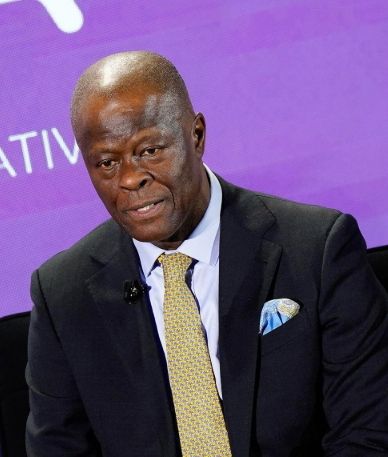
The Minister of Finance and Coordinating Minister of the Economy, Wale Edun, has emphasised the urgent need to harness internal resources to drive production, stimulate investments, and reduce poverty.
Edun local capital mobilisation strategy to power $1tn economy ambition
The Edun local capital mobilisation push is emerging as a central pillar of Nigeria’s economic transformation agenda, particularly as global financial conditions tighten and external funding becomes less predictable.
Speaking at an event hosted by the Islamic Development Bank, Edun noted that Nigeria must increasingly depend on domestic savings, private sector participation, and innovative financing models to achieve long-term growth.
According to him, the country is transitioning from a stabilisation phase to a growth-focused economic model under the administration of Bola Ahmed Tinubu, with emphasis on productivity and investment mobilisation.
“It is investments that increase productivity, grow the economy, create jobs, and ultimately reduce poverty,” Edun stated, underscoring the importance of channeling capital into sectors that generate measurable economic value.
Infrastructure investment at the core of growth strategy
A key component of the Edun local capital mobilisation agenda is large-scale investment in critical infrastructure. The minister highlighted the need for expanded funding in roads, rail networks, ports, and energy systems, noting that these sectors are essential for unlocking productivity across the economy.
He also stressed the importance of investing in social infrastructure, including healthcare, education, and social safety nets, particularly for vulnerable populations.
Analysts say that closing Nigeria’s infrastructure gap is critical to improving competitiveness, reducing the cost of doing business, and attracting both local and foreign investors.
Shift from public financing to private sector investment
The Edun local capital mobilisation strategy reflects a deliberate shift away from heavy reliance on government funding toward increased private sector participation.
Edun explained that building a $1 trillion economy would require mobilising capital at scale, leveraging private investments, and creating an enabling environment for businesses to thrive.
“Our mission is clear: to build an economy powered by private capital, innovation, and technology,” he said.
This approach aligns with global best practices, where governments act as facilitators of investment rather than sole financiers of development projects.
Digital systems enhancing financial inclusion
Another pillar of the Edun local capital mobilisation effort is the use of digital infrastructure to expand financial inclusion and improve transparency in public spending.
The minister revealed that over 100 million Nigerians are now integrated into the financial system through the National Identity Number (NIN) and digital payment platforms.
These systems, he noted, enable targeted delivery of social interventions, reduce leakages, and enhance accountability in government programmes.
Experts believe that strengthening digital financial systems could significantly increase participation in savings schemes and investment initiatives, thereby boosting domestic capital formation.
Strategic partnerships to unlock funding
Edun highlighted ongoing collaborations with development partners, particularly the Islamic Development Bank, under a new Country Engagement Framework designed to mobilise “capital with purpose.”
The framework focuses on key sectors such as agriculture, energy, digital infrastructure, and logistics, with the aim of driving job creation and economic diversification.
The Edun local capital mobilisation initiative also includes support for small and medium enterprises (SMEs), which are widely regarded as the backbone of Nigeria’s economy.
By creating a level playing field and improving access to finance, the government aims to empower SMEs to expand operations, generate employment, and contribute to GDP growth.
Encouraging mass savings and investment culture
A significant aspect of the Edun local capital mobilisation plan is the promotion of mass savings schemes that enable Nigerians to participate directly in funding national development.
The minister noted that encouraging a savings culture would not only provide individuals with investment returns but also create a sustainable pool of funds for infrastructure and industrial projects.
Financial analysts say that deepening the domestic savings base is essential for reducing reliance on external borrowing and enhancing economic resilience.
Economic growth as pathway to poverty reduction
Edun reiterated that sustained economic growth remains the most effective tool for lifting millions of Nigerians out of poverty.
The Edun local capital mobilisation framework is therefore designed to ensure that growth is inclusive, creating opportunities for employment, income generation, and improved living standards.
“It is from a growing economy that people can be lifted out of poverty,” he said, stressing the need for policies that prioritise productivity and shared prosperity.
Outlook for Nigeria’s economic trajectory
As Nigeria navigates a complex global economic environment, the success of the Edun local capital mobilisation strategy will depend on consistent policy implementation, investor confidence, and effective coordination between public and private sectors.
Economists note that while the strategy is ambitious, it is achievable if supported by strong institutions, transparent governance, and sustained reforms.
With a focus on infrastructure, digital inclusion, and private sector investment, Nigeria is positioning itself to build a more resilient and globally competitive economy.
If effectively executed, the mobilisation of domestic capital could mark a turning point in the country’s development trajectory—reducing dependence on external funding while unlocking the full potential of its productive sectors.
Read more news at ireport247news.com
About The Author
