The Japan bumping trend has sparked widespread debate after a viral video showed a young girl pushed to the ground by a passerby at a busy intersection in Tokyo. The incident has renewed attention on the troubling phenomenon known as butsukari otoko, where pedestrians deliberately bump into others in crowded public spaces.
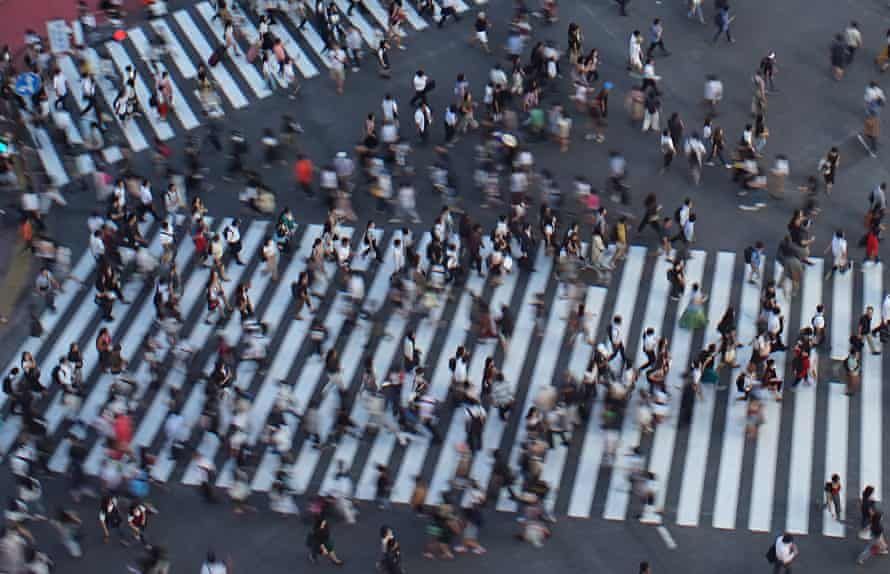
The footage, recorded at the famous scramble crossing in the district of Shibuya, initially appeared cheerful. A visiting girl was smiling and posing for photos when a masked woman suddenly shoved her from behind, knocking her to the ground before continuing to walk away.
Although the child was not injured, the disturbing clip quickly spread online, gaining more than a million views and prompting heated discussion about safety and social behavior in Japan’s crowded cities.
Many viewers condemned the attacker’s behavior, while others questioned the risks of stopping for photographs in the middle of busy pedestrian crossings.
The incident has been widely described as another example of the Japan bumping trend, a pattern of deliberate shoulder barging or pushing that has been reported across the country in recent years. Experts say the behavior often occurs in crowded train stations or busy pedestrian zones.
The phenomenon first gained widespread attention in 2018 after a video surfaced showing a man intentionally bumping into multiple women at the packed railway hub of Shinjuku Station. The station is widely known as one of the busiest transportation centers in the world.
In that earlier video, the man could be seen aggressively walking through crowds and targeting women with deliberate shoulder hits. The footage triggered public outrage and sparked discussions about harassment in Japan’s crowded public spaces.
Authorities have since recorded several similar incidents. In 2025, police in Fukuoka arrested a 59-year-old associate professor suspected of assaulting pedestrians by striking them with his bag as he walked through crowded streets.
The suspect faces potential penalties including up to two years in prison or a fine of 300,000 yen if convicted. Under Japanese law, cases involving injuries could lead to more severe punishment.
Other reported incidents have occurred near Tamachi Station, where authorities introduced pedestrian lanes separated by bollards after a woman was struck so violently she suffered broken ribs.
Despite the growing number of reports, the true scale of the Japan bumping trend remains unclear because official statistics on these incidents are not systematically collected. Many attackers disappear quickly into crowds, making identification difficult.
Some victims may also assume the collisions were accidental, especially in densely packed areas where physical contact between pedestrians is common during rush hours.
Researchers believe the phenomenon reflects deeper social pressures in modern Japan. According to sociologists, the behavior can be a way for individuals to vent frustration in a crowded urban environment where open confrontation is rare.
Professor Kiryu Masayuki, a criminal psychology specialist at Toyo University, has previously described the behavior as a “reflection of modern society,” pointing to tensions linked to changing gender roles and economic pressures.
“Old-fashioned ideas, such as the belief that men are superior to women, are still deeply rooted,” he explained in earlier interviews about the phenomenon.
At the same time, he said, economic uncertainty and changing expectations around masculinity have left some men feeling socially disoriented.
In this environment, deliberately bumping into women may become a low-risk way for frustrated individuals to release anger while avoiding serious confrontation.
However, the problem is not limited to male perpetrators. Videos circulating online show both men and women engaging in aggressive bumping behavior in crowded streets and stations.
One widely shared clip shows a woman striking a passerby with her handbag before turning back to argue with the person she had hit. The video drew criticism online and highlighted how the behavior can escalate into confrontation.
A nationwide survey conducted in 2024 involving more than 21,000 people found that about 14 percent of respondents said they had personally experienced a deliberate bumping incident.
Another 6 percent reported witnessing someone else being targeted, while about 5 percent said they had both experienced and observed such incidents.
The survey results suggested that while the Japan bumping trend may not affect most pedestrians, it is far from rare and may be more widespread than official reports indicate.
Japan’s recent tourism boom may also be contributing to tensions in crowded areas. Cities such as Kyoto, Osaka and Tokyo have experienced record numbers of visitors seeking iconic photos and social media content.
Popular attractions such as Shibuya’s famous crossing often become packed with tourists stopping to film videos or take pictures, sometimes slowing pedestrian flow.
For some local residents and commuters rushing to work, these interruptions can cause frustration in already crowded public spaces.

After the viral video of the girl being pushed, the embassy of China in Tokyo issued a safety advisory urging its citizens to remain cautious in crowded areas and avoid using smartphones while walking.
The warning advised travelers to keep a safe distance from others in busy locations and to stay alert to potential risks in dense pedestrian environments.
There is no indication the woman who shoved the girl knew her nationality. In the footage, the attacker appears to brush against several other pedestrians before pushing the child.
The girl’s mother later described the moment as shocking and frightening. She said she had accidentally recorded what she called a “terrifying scene” while filming her daughter at the crossing.
“It also made me realise that this kind of situation happens quite often in Japan,” she told reporters while discussing the incident.
The mother said the video triggered a wave of online criticism, with some people blaming her for allowing her daughter to stand in the middle of the busy crossing.
She acknowledged that stopping for photos might have slowed pedestrian traffic but insisted she had not violated any traffic rules.
“I admit I may have been careless about the flow of people,” she said. “But it wasn’t like I was ignoring traffic rules.”
She also noted that travel guidance available online encourages visitors to take photos at the famous intersection.
Tourism websites promoting travel to Tokyo often highlight the Shibuya crossing as one of the most photogenic locations in the city.
Some promotional guides even suggest standing within the crossing area to capture dramatic images of crowds moving in different directions.
Critics say such advice may unintentionally increase congestion and raise the risk of conflicts between visitors and commuters.
Urban safety experts argue that the Japan bumping trend should be taken seriously because even seemingly minor collisions can lead to injuries.
In densely populated cities where millions of people move through public spaces each day, a single aggressive shove can quickly escalate into a dangerous situation.
Some local authorities have begun introducing crowd-management measures in busy stations and pedestrian zones to reduce the likelihood of confrontations.
Measures such as clearly marked walking lanes, barriers, and improved monitoring could help reduce opportunities for deliberate bumping.
At the same time, social awareness campaigns may be needed to encourage respectful behavior in crowded public environments.
Read also:
US redeploys THAAD missile defence system from South Korea to Middle East amid Iran war concerns
Many observers say the viral video serves as a reminder that even countries known for orderly public behavior are not immune to social tensions.
As tourism continues to rise and cities grow more crowded, experts warn that understanding the causes of the Japan bumping trend will be essential to preventing similar incidents in the future.
About The Author