Jakarta world’s largest city becomes the defining headline of a new UN demographic assessment revealing unprecedented population patterns and reshaping global discussions about urbanisation, migration, resilience and long-term sustainability.
Jakarta’s rise to the top of the global rankings reflects decades of rapid expansion, internal migration, infrastructural pressure and economic dynamism, marking a pivotal demographic moment described by one researcher as “a shift decades in the making”.
The United Nations report calculates the population of Jakarta at 41.9 million people, a figure that startled analysts who expected Tokyo to retain the position for longer given its stability since 2000.
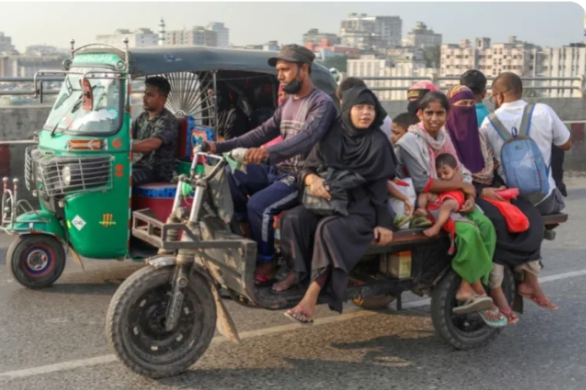
The report outlines Dhaka close behind at 36.6 million residents, with officials predicting Bangladesh’s capital could surpass all others by 2050, adding urgency to ongoing climate adaptation goals.
Tokyo now sits in third place with 33.4 million people, a relatively stable number that the UN says reflects controlled population management, slower migration and long-term demographic transitions.
Officials working on the World Urbanization Prospects 2025 report say the updated methodology now defines cities through contiguous density grids, resolving inconsistencies affecting previous rankings.
One economist involved in the analysis said the new approach “allows for clearer comparisons and more realistic assessments of human settlements,” giving policymakers a stronger evidence base for planning.
Asia dominates the rankings with nine of the top 10 mega-cities, including New Delhi, Shanghai, Guangzhou, Manila, Kolkata and Seoul, reaffirming the continent’s place as the centre of global urbanisation.
Cairo is the only non-Asian mega-city in the top tier with 32 million people, a development experts say underscores Africa’s rapidly shifting demographics and increasing urban concentration.
Sao Paulo remains the largest city in the Americas with 18.9 million people, though projections show Mexico City and New York continuing steady growth as migration patterns diversify.
Lagos’s expansion continues to capture global attention, with its designation as sub-Saharan Africa’s largest city reinforcing Nigeria’s role in shaping future continental economic and social trends.
Dhaka’s explosive rise is driven by rural-to-urban migration, climate displacement and economic pressures, with one activist noting “people move because survival demands it, not because they wish to”.
Flooding, rising sea levels and coastal erosion are accelerating population shifts in Bangladesh, deepening worries about infrastructure resilience and stressing already stretched services across the capital.
Jakarta is confronting similar climate threats, with predictions that a quarter of the city could be underwater by 2050 if mitigation and adaptation do not accelerate significantly.
“Everyone here feels the water rising year by year,” a Jakarta resident said earlier this year, capturing a growing public anxiety that shapes both local activism and national planning.
Indonesia’s government is advancing its plan to relocate the nation’s capital to Nusantara in Borneo, aiming to reduce environmental stress on Jakarta while creating a modern administrative hub.
Despite the relocation effort, the UN estimates Jakarta could still gain another 10 million residents by 2050, presenting immense challenges in infrastructure, housing, transportation and public health.
Public frustration over inequality, affordability and labour conditions continues to surface in Jakarta, reflected in protests earlier this year involving low-income workers, gig drivers and delivery riders.
One protester told local media, “The city grows and grows, but people like us feel left behind,” a sentiment amplified by stagnant wages and narrowing economic mobility.
The UN report highlights that Tehran faces a different crisis, warning that chronic water shortages and rationing threaten the stability of a city already strained by overpopulation.
Tehran’s population stands at nine million, but water scarcity is expected to create migration waves and heightened political pressure unless long-term structural reforms emerge.
The report’s reliance on dense grid mapping represents an effort to correct discrepancies in how nations define urban boundaries, ensuring more accurate cross-country comparisons.
Researchers emphasize that urban agglomerations should be understood as living, evolving systems shaped by human choices, environmental realities and political decisions rather than mere statistical categories.
The new definitions classify a city as a dense, contiguous cluster of one-square-kilometre cells hosting at least 50,000 residents, a standard intended to reflect modern urban morphology.
Policymakers argue the updated criteria help governments craft more targeted interventions, especially in regions where informal settlements often fall outside older census boundaries.
Urban climate vulnerability emerges repeatedly in the report, with Jakarta and Dhaka symbolizing the dangers of coastal subsidence, extreme rainfall and rising temperatures amid breakneck population growth.
Experts stress that mega-cities must adopt resilient planning strategies that prioritize people most affected by climate pressures, infrastructure overload and unequal access to essential services.
UN officials warn that demographic trends will increasingly intersect with climate emergencies, forcing governments to coordinate more aggressively across national and regional institutions.
Migration patterns highlighted in the report confirm that economic aspirations consistently drive movement, even when environmental threats create overlapping risks for millions of residents.
One development planner said, “People go where opportunities appear, and cities remain magnets no matter the dangers,” capturing a reality that transcends national borders.
As Jakarta world’s largest city becomes a global talking point, urban scholars predict intensified international interest in Southeast Asia’s social, economic and environmental transformations.
The report shows that global urbanisation is entering a new phase dominated by Asian mega-cities whose population sizes exceed those of many entire countries.
Analysts caution that without stronger global cooperation, the next decades may see deeper inequalities, mounting displacement and escalating infrastructural failures across the world’s largest cities.
However, the report also underscores opportunities for innovation, as city governments experiment with technology, participatory planning and climate adaptation to meet rising expectations.
Residents across the affected cities express both apprehension and pride, aware that living in a global mega-city offers unique opportunities but also exposes them to constant pressures.
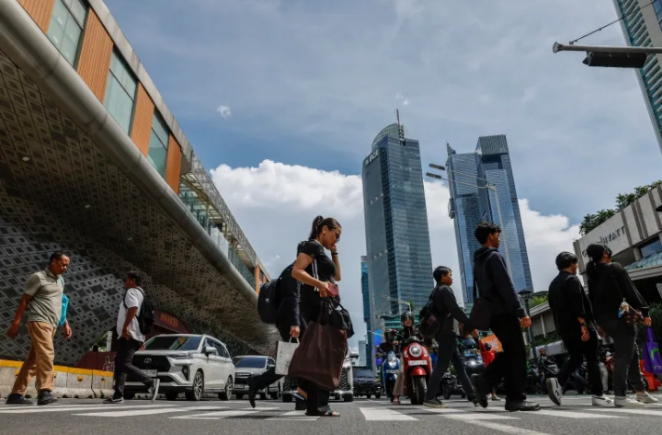
Urban demographers conclude that the story of this era is one of scale, movement and transformation, with Jakarta’s new status symbolising a broader shift in humanity’s settlement patterns.
Jakarta world’s largest city may be the headline, but the deeper narrative reflects economic ambition, climate vulnerability, social change and the relentless expansion of urban life.
About The Author