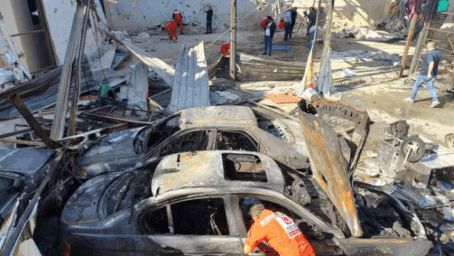
Israel’s alleged deployment of banned cluster munitions during its prolonged conflict in Lebanon has intensified international debate, prompting renewed scrutiny of modern warfare’s evolving legal and ethical challenges.
Israel’s recent operations in southern Lebanon have again raised questions regarding accountability in conflict zones where civilians remain increasingly vulnerable as regional tensions escalate without clear resolution.
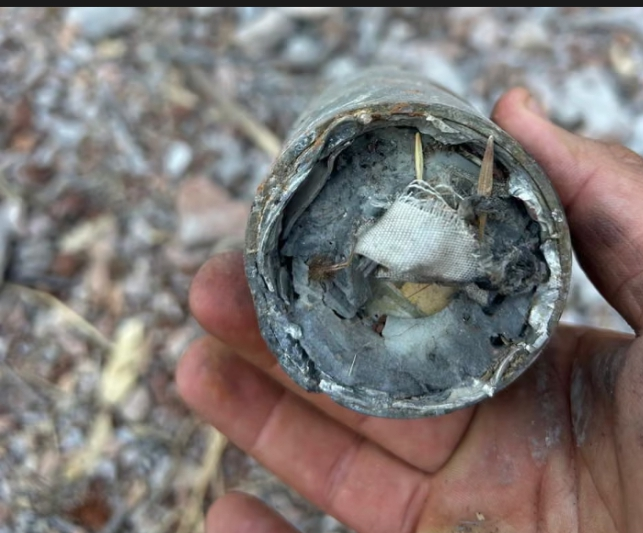
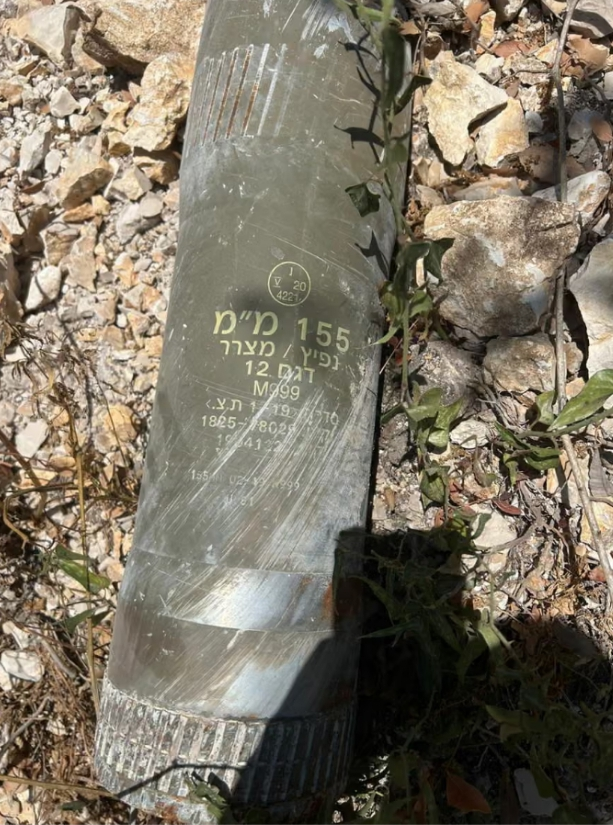
Independent arms experts analysing field photographs confirmed remnants matching two Israeli-developed cluster weapons, suggesting a significant technological evolution from munitions used during earlier Lebanon conflicts.
Specialists reviewing the evidence identified shards linked to new-generation artillery and missile systems, raising concerns about the sophistication and destructive potential of the weapons deployed.
The images reportedly came from three southern Lebanese valleys, historically known as Hezbollah strongholds, where dense forests conceal militants but also endanger civilians seeking refuge.
Experts noted that signature fragments from the Barak Eitan 155mm munition were unmistakable, marking the first documented appearance of this model in active battlefield conditions.
Photos further pointed to a 227mm Ra’am Eitan missile, a newer guided system whose destructive spread exceeds traditional cluster designs in range, accuracy and lethal fragmentation.
Arms analysts emphasised that the unique markings on the recovered tubes and bomblet casings matched identifiable characteristics shown in military manufacturing catalogues and technical defence archives.
Human rights researchers say the discovery underscores a widening gap between battlefield realities and international treaties meant to restrain indiscriminate weapons usage worldwide.
Lebanon’s population carries deep trauma from the 2006 conflict, when millions of cluster submunitions littered agricultural fields, residential communities and essential infrastructure across the nation’s southern districts.
That earlier war left an estimated one million unexploded devices that continue to kill and maim civilians, farmers and returning families nearly two decades after hostilities ended.

The latest findings rekindled fears among humanitarian groups who believe any renewed deployment could multiply the long-term socioeconomic toll experienced by Lebanon’s rural populations.
Researchers familiar with conflict-zone clearance operations warn that even highly advertised low-dud-rate weapons often fail unpredictably when deployed in rugged environments like Lebanon’s southern terrain.
Analysts argue that manufacturers’ claims rarely translate into accurate real-world performance, as climate, soil density and impact angles significantly alter expected explosion patterns.
Israel’s defence establishment maintains that all its weapons comply with international legal thresholds, asserting the military consistently seeks to minimise civilian casualties during operations.
Officials note that Israel never ratified global conventions banning such ordnance, which complicates diplomatic negotiations when alleged violations arise from prolonged cross-border confrontations.
Legal experts highlight that non-signatory states may still face scrutiny if munitions are used in ways that violate proportionality or target noncombatant areas without adequate justification.
However, determining legality requires detailed knowledge of operational circumstances, which remains challenging when evidence emerges only after shells detonate and forces withdraw.
Military strategists acknowledge that cluster weapons provide tactical advantages against widely dispersed fighters in rugged valleys where entrenched militants avoid detection.
Veterans of previous conflicts note similarities to US strategies in Vietnam, where dense jungles made conventional targeting unreliable and incentivised wide-area bombardments.
The Israeli-Lebanese border has become an arena for advanced military experimentation, with Hezbollah also modifying its arsenal using partnerships with allied regional powers.
Both sides have adopted rapid-response tactics involving drones, precision rockets and counter-surveillance tools, creating dangerous conditions for civilians caught near shifting frontlines.
Humanitarian organisations stress that conflict technology races often overshadow the human consequences, particularly when weapon remnants become long-term hazards in abandoned villages.
Lebanon’s south, known for fertile olive groves and family farms, struggles to recover after repeated bombardments leave behind explosive remnants invisible beneath disturbed soil.
Local communities must navigate unmarked danger zones, making routine tasks such as harvesting, shepherding or repairing homes potentially fatal for returning residents.
Municipal leaders in affected districts warn that another wave of unexploded ordnance could cripple their limited reconstruction capacity, already strained by national economic collapse.
International aid groups operating across the region report rising anxiety among displaced families fearing that renewed contamination will delay their return for generations.
Diplomatic observers believe the controversy could intensify regional tensions, complicating relations between Israel, Lebanon and multiple international stakeholders monitoring the evolving conflict.
Countries supporting disarmament frameworks may increase pressure on Israel, though geopolitical alliances often limit the effectiveness of collective diplomatic interventions.
Some analysts argue that highlighting advanced weapons deployment reflects broader global concerns about emerging military technologies that bypass existing treaty frameworks.
Others insist the issue demonstrates an urgent need to update international law to address modern smart-cluster devices that differ from earlier, less sophisticated models.
The revelations also reverberated through Israeli society, where debates continue regarding military transparency, ethical conduct and national security priorities amid ongoing threats.
Retired security officials argue that Hezbollah’s entrenched positions require decisive responses, though many citizens remain uneasy about weapons that pose lasting civilian dangers.
Defence contractors behind the munitions have remained largely silent, offering no detailed public explanation regarding deployment guidelines or intended operational contexts.
Lebanese officials condemned the alleged findings, claiming they demonstrate disregard for national sovereignty and worsen humanitarian conditions in already devastated border districts.
Hezbollah, meanwhile, framed the issue as proof of foreign aggression, using the claims to rally political support while preparing for potential escalations.
United Nations observers monitoring the fragile ceasefire expressed concern that such revelations could undermine diplomatic progress achieved since last year’s negotiations.
Regional conflict researchers say the controversy underscores the difficulty of maintaining ceasefires when both parties accuse each other of violating essential trust-building mechanisms.
Experts also caution that the presence of unexploded remnants restricts humanitarian access, delaying crucial aid deliveries to isolated communities dependent on outside assistance.
International advocacy groups renewed calls for global adherence to treaties restricting the use of weapons historically proven to harm civilians during and long after conflicts end.
They argued that past decades clearly demonstrate the enduring threat posed by unexploded submunitions, regardless of technological upgrades marketed by defence manufacturers.
As global attention shifts toward emerging conflicts elsewhere, Lebanon’s communities remain trapped in recurring cycles of destruction, displacement and slow reconstruction efforts.
Analysts warn that without accountability and sustained pressure, affected regions risk becoming permanent danger zones where development stagnates indefinitely.
The new allegations intensified discussions about modern warfare’s moral boundaries, with many urging reassessment of weapons deployed in densely populated or agriculturally dependent regions.
Civil society groups insist that preventing additional contamination must become a priority for all actors engaged in cross-border confrontations throughout the Middle East.
The revelations have also prompted renewed debate over whether international mechanisms can adequately respond when non-signatory nations deploy suspicious weapons outside treaty restrictions.
As investigations continue, humanitarian agencies urge the global community to prioritise clearance funding, legal reforms and consistent monitoring to protect civilians from future threats.
The mounting concern reflects broader fears that the world is witnessing a new era of conflict where technological advancements eclipse longstanding ethical constraints.
Without decisive action, observers fear Lebanon may once again endure decades of danger from lingering explosive remnants scattered across its ravaged southern landscapes.
For families awaiting a peaceful return to their ancestral lands, the shadow of past conflicts remains unbroken as new allegations deepen unresolved wounds.
The unfolding situation illustrates how modern battlefields increasingly blur distinctions between legal weaponry, permissible conduct and the lasting obligations owed to civilian populations.
As global scrutiny intensifies, Lebanon’s government faces the daunting task of advocating for accountability while struggling to restore basic stability nationwide.
Israel, meanwhile, must confront questions regarding transparency, proportionality and the ongoing humanitarian implications tied to its evolving military arsenal.
With international pressure mounting, experts agree the controversy will continue shaping debates about warfare norms, disarmament and safeguarding civilian lives across volatile regions.
About The Author