

West Bank displacement continues escalating as Palestinians endure unprecedented pressure from Israeli policies designed to remove communities, reshape territorial realities, and undermine long-standing claims protected under international humanitarian norms.
Israeli actions across the occupied territory have provoked widespread condemnation, with rights groups stressing that West Bank displacement reflects deliberate strategies intended to fracture Palestinian society and erode prospects for a negotiated political resolution.
Human Rights Watch recently warned that Israeli forces have executed sweeping operations across refugee camps, describing systematic expulsions as “the largest organised removal effort since 1967,” emphasising deteriorating regional stability.
Eyewitnesses recount chaotic scenes during military incursions, saying families fled without belongings as bulldozers advanced through narrow camp streets, leaving neighbourhoods unrecognisable after several days of intense operations.
Residents from Jenin, Nur Shams, and Tulkarem described sleepless nights filled with explosions, drone activity, and warnings from soldiers urging civilians to vacate designated military zones immediately to avoid escalating danger.
HRW noted that more than 32,000 Palestinians were forced out during operations described by Israel as necessary security measures, though critics argue the scale suggests objectives extending far beyond tactical concerns.
Local activists insist the campaign is inseparable from broader settlement expansion, arguing that West Bank displacement aligns with ideological ambitions among Israeli political factions committed to annexation.
Palestinian officials say the pattern reveals coordinated pressure to dismantle camps, destroy property, and create depopulated corridors enabling future settlement consolidation endorsed by ministers advocating permanent territorial absorption.
Area C communities report intensified demolitions, with Israel citing construction regulations that Palestinians describe as unattainable barriers designed to criminalise normal life, particularly homebuilding, agriculture, and infrastructure maintenance.
According to UN agencies, obtaining a building permit is “almost impossible,” leaving families vulnerable to demolition orders despite occupying ancestral lands predating Israel’s military administration.
East Jerusalem has witnessed similar trends, with hundreds left homeless after municipal authorities ordered technical enforcement actions Palestinians consider politically motivated to shift demographic balances citywide.
Israel’s government faces little external pressure despite mounting legal assessments describing its operations as potential breaches of international humanitarian law, particularly prohibitions on forcibly transferring protected populations.
B’Tselem director Yuli Novak recently declared, “We see the abandonment of Palestinian lives in full view,” warning that unchecked aggression accelerates regional deterioration and entrenches cycles of retaliation.
Novak emphasised that without meaningful diplomatic intervention, the architecture enabling West Bank displacement will strengthen, reinforcing unilateral policies threatening long-term prospects for coexistence.
Analysts argue Israeli ministers increasingly treat international law as discretionary, relying on parliamentary decisions and domestic judicial rulings to justify actions with profound humanitarian and geopolitical consequences.
Finance Minister Bezalel Smotrich openly states his mission involves preventing any Palestinian state, often boasting about “establishing facts on the ground” to secure permanent Israeli jurisdiction across contested lands.
Smotrich’s advocacy for annexation reflects ideological currents shaping national policy, illustrated by legislative attempts to extend Israeli sovereignty over the entire occupied territory without negotiations.
His promotion of the E1 settlement project underscores strategic intentions to divide Palestinian communities, effectively severing geographic continuity required for meaningful political self-determination.
More than 700,000 Israeli settlers currently reside across West Bank and East Jerusalem settlements, forming demographic dynamics increasingly difficult to reverse through traditional diplomatic frameworks.
Palestinians argue the presence of such large populations signals calculated entrenchment rather than temporary administration, reinforcing fears that displacement campaigns aim to secure irreversible territorial outcomes.
Israel frequently justifies removal actions by claiming security concerns or enforcing planning regulations, though critics contend these rationales obscure systematic efforts targeting Palestinian presence itself.
The military’s “Iron Wall” operation in refugee camps was explained as a necessary anti-resistance measure, yet residents remain barred from returning months later despite diminishing security threats.
Campaign aftermath reveals destroyed buildings, crushed livelihoods, and shattered communities, leaving former residents navigating bureaucratic labyrinths in search of answers regarding future resettlement.
Israel’s Supreme Court has rejected all petitions challenging demolitions, reinforcing the impression among Palestinians that legal structures are calibrated to validate predetermined outcomes favouring state priorities.
Settler violence has surged alongside official demolitions, creating a multi-layered pressure environment Palestinians describe as designed to force them from agricultural lands, villages, and urban districts.
OCHA recorded more than 260 settler attacks in a single month, noting the frequency has reached unprecedented levels since systematic data collection began nearly two decades ago.
Farmers harvesting olives—an economic and cultural backbone—report assaults, orchard destruction, and coordinated harassment that escalate annually, particularly during politically charged periods.
PFU representatives say settler attacks are “deliberate efforts to undermine rural sustainability,” warning that ongoing intimidation threatens entire agricultural systems underpinning community resilience.
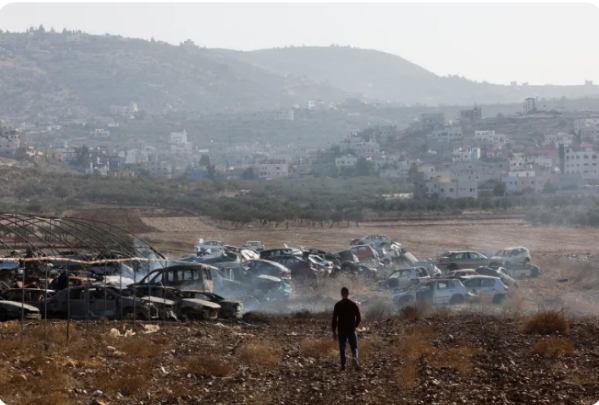
Witnesses recount soldiers standing nearby as settlers vandalised trees, burned vehicles, or assaulted farmers, highlighting allegations of tacit state endorsement of extremist violence.
A Palestinian named Yahya Dalal described returning to find his village’s vehicles torched, saying, “They want us to fear daily life itself until leaving becomes our only choice.”
Residents argue these attacks work synchronously with demolitions, movement restrictions, land seizures, and settlement growth, intensifying an atmosphere described widely as structural coercion.
Experts warn the cumulative effect produces social fragmentation, economic collapse, and accelerating migration patterns, reshaping demographics in ways benefitting broader Israeli strategic ambitions.
International organisations repeatedly caution that without accountability, the machinery enabling West Bank displacement will deepen, solidifying territorial arrangements critics label irreversible apartheid frameworks.
US and EU statements occasionally express concern, yet Palestinians say such remarks lack concrete policy changes capable of countering settlement expansion or reversing displacement trajectories.
Regional leaders warn the conflict’s geographic shift from Gaza to the West Bank risks destabilising neighbouring states, particularly Jordan, which hosts large Palestinian populations.
Analysts say expanding displacement could ignite broader unrest, with implications for security cooperation, border governance, refugee movements, and rising political polarisation across the region.
Many Palestinians emphasise that resisting displacement has become an existential priority, with communities vowing to remain despite increasing risks associated with resisting settlement encroachment.
Activists claim global passivity emboldens extremist elements within Israel’s political establishment, enabling policies that gradually erase Palestinian presence while avoiding significant diplomatic consequences.
International law experts argue the situation demands urgent intervention, warning that patterns of removals, violence, and territorial restructuring meet criteria associated with potential ethnic cleansing.
Israel rejects such descriptions, stating all operations align with legal security frameworks, although critics counter that the scale and nature of actions contradict stated objectives.
Diplomats privately acknowledge that absent sustained international intervention, long-term peace initiatives may become futile as realities on the ground supersede diplomatic blueprints.
For displaced families, survival has become a daily negotiation marked by uncertainty, trauma, and deepening frustration with a world seemingly unwilling to confront worsening injustices.
Psychologists describe rising community anxiety triggered by demolition threats, unpredictable violence, and economic hardship, creating generational mental health burdens that may endure for decades.
Parents express fear that children raised amid constant instability will inherit cycles of despair limiting educational, economic, and social opportunities necessary for community recovery.
Observers say the silent tragedy of displacement lies not only in destroyed homes but also in eroded dignity, cultural fragmentation, and disrupted intergenerational continuity.
Researchers tracking migration patterns warn increasing numbers of Palestinians consider leaving permanently, fearing future waves of destruction will target remaining communities.
Humanitarian workers describe aid challenges as expanding displacement outpaces available resources, leaving thousands relying on overstretched networks already burdened by repeated crises.
Political analysts argue Israeli leadership’s long-term strategy hinges on shifting facts so decisively that negotiations eventually become irrelevant, legitimising territorial claims through irreversible demographic engineering.
Palestinians counter that no amount of displacement will erase historical connections to land embedded deeply in cultural identity, collective memory, and spiritual heritage.
Many insist justice will ultimately prevail, citing past liberation movements that overcame formidable structures through perseverance, international solidarity, and moral resilience.
Still, despair grows as communities navigate harsh realities without substantive support from world powers capable of enforcing humanitarian standards or curbing settlement expansion.
Globally, public opinion increasingly recognises the human cost of displacement, though political calculations often hinder meaningful government actions capable of reversing worsening trends.
Advocates stress that sustained pressure, transparency, and legal accountability remain critical tools for defending Palestinian rights amid escalating threats to territorial integrity.

As political tensions heighten across the region, the fate of the West Bank remains central to determining whether future years bring reconciliation or entrenched conflict.
Communities insist the world must acknowledge the consequences of West Bank displacement before irreversible damage cements a future defined by fragmentation, inequality, and perpetual instability.
