
Israeli-backed Palestinian militias against Hamas in Gaza have intensified operations, launching raids, assassinations, and ambush missions inside Hamas-controlled areas. Analysts say the groups are becoming increasingly active and better equipped.
These pro-Israel Palestinian militias operate mainly in eastern areas of the Gaza Strip under Israeli control since the October ceasefire. Reports indicate they have received logistical assistance and weapons support from Israel.
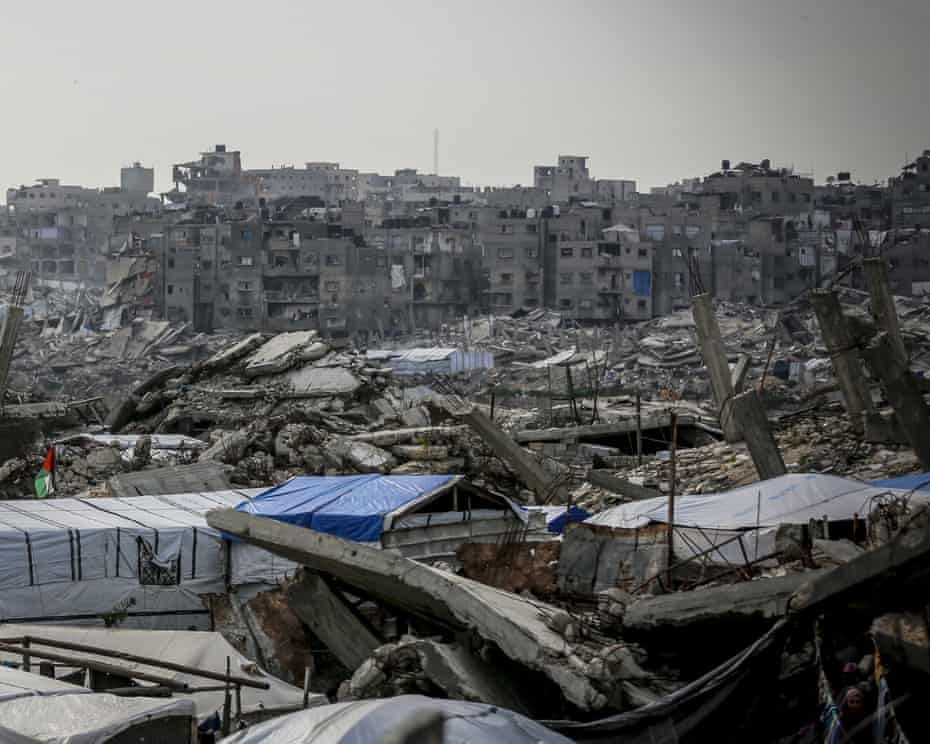
Despite regional escalation involving Israel and Iran, Israeli strikes across Gaza have continued. Bombings have averaged roughly ten attacks daily during the last five months, maintaining pressure across the already devastated territory.
Health officials reported that six Palestinians, including two women and a young girl, died during Israeli airstrikes and tank shelling in Gaza City on Sunday.
Officials say these were among the deadliest incidents in Gaza since Israel and the United States began their offensive against Iran earlier this year.
According to health authorities, at least 16 Palestinians have been killed in Gaza by Israeli airstrikes since the Iran conflict erupted on 28 February.
Among the most prominent pro-Israel Palestinian militias is the Popular Forces group operating near the ruins of Rafah in southern Gaza.

Another major faction is the Strike Force Against Terror, based east of Khan Younis. Both groups have reportedly launched raids deep inside Hamas-controlled territory in recent weeks.
Israel has reportedly assigned militia members security duties inside zones it controls within Gaza, expanding their role beyond simple local defense or intelligence gathering.
Armed fighters from the Popular Forces were deployed to the Rafah crossing with Egypt after the crossing partially reopened last month.
Shortly afterward, the UN human rights office warned about alleged abuse of Palestinian returnees passing through Israeli-controlled zones.
Officials described “a pattern of ill-treatment, abuse and humiliation” involving Israeli forces and armed Palestinian groups believed to be supported by the Israeli military.
A third militia known as the Ashraf al-Mansi group operates in northern Gaza and recently sent fighters across the so-called “yellow line.”
The yellow line currently divides territories controlled by Hamas from areas held by Israeli forces and allied militias.
The group’s fighters reportedly attempted to ambush Hamas patrols in Gaza City and possibly assassinate senior Hamas commanders.
Hamas officials said their forces foiled the mission after clashes erupted in the Nasser neighborhood of Gaza City.
Earlier fighting also occurred near Jabaliya, on the eastern outskirts of Gaza City, where militia fighters clashed with Hamas militants.
Conflict monitoring organization ACLED says militia activity against Hamas has expanded significantly since the October ceasefire agreement.
Nasser Khdour of ACLED explained that the militias are growing stronger militarily and recruiting new fighters.
“The militias are recruiting and becoming more active against Hamas, especially in Rafah,” Khdour said.
“They seem to be getting more leverage. The Popular Forces now have more capabilities and are more experienced,” he added.
Khdour also said Hamas has begun launching counterattacks targeting areas where the militias are based.
“Hamas is launching a counteroffensive, focusing on borders and positions where militias operate. That is one reason why the violence has gone up,” he said.
The growing influence of pro-Israel Palestinian militias complicates plans for a broader international stabilization mission in Gaza.
A US-brokered ceasefire aimed at demilitarizing Gaza formally entered its second phase earlier this year.
However, progress toward long-term political arrangements has stalled amid the widening regional conflict involving Iran.
Hamas still controls most of Gaza’s coastal territory, where nearly the entire population of roughly 2.3 million residents now lives.
Hamas leaders have signaled reluctance to fully disarm under international proposals.
Meanwhile, Israel has indicated it intends to maintain control over more than half of the Gaza Strip for security reasons.
Militia fighters have also been deployed to attack Hamas positions believed to exist within tunnel complexes near Rafah.
In January, Popular Forces fighters released video footage showing their leader Ghassan al-Duhaini alongside a captured Hamas commander.
The footage appeared to show the injured militant stripped and interrogated by militia fighters.
During the video, al-Duhaini slapped the prisoner and issued a warning to Hamas leadership.
“Your terrorism is over,” al-Duhaini said in the footage.
“We’ll fight with force and won’t allow anyone to sabotage efforts for peace,” he added.
He also threatened to execute the captured militant, according to observers who reviewed the video.
Although the militias remain relatively small, their fighters are increasingly involved in raids inside Hamas-controlled territory.
Analysts estimate the combined strength of these pro-Israel militias is only a few hundred fighters.
Another militia faction known as the Popular Army reportedly contains around thirty fighters.
Despite its limited numbers, the group has already conducted targeted attacks against Hamas security forces.
In one recent operation, members of the Popular Army reportedly assassinated a senior officer in a Hamas police unit responsible for tracking collaborators.
Reports indicate the attackers escaped toward Israeli-controlled territory after the assassination.
Hamas militants pursued them briefly before abandoning the chase after Israeli drones targeted the pursuing fighters.
Such incidents highlight the complex coordination between Israeli military operations and militia activities inside Gaza.
In early February, Hamas claimed it had thwarted an attack by Strike Force fighters inside the city of Khan Younis.
Hamas officials said their forces killed 11 militia members during the clash.
However, the militia denied suffering losses and instead claimed its raid killed six Hamas fighters.
Independent observers could not verify either claim, leaving the exact outcome uncertain.
On the same day, Hamas police reportedly ambushed another group of Israeli-supported militants in Gaza City.
Local sources said three fighters may have been killed while their weapons were confiscated.

Hamas leaders appear increasingly alarmed by the militia campaign.
Last month, the group released a statement promising to eliminate the pro-Israel Palestinian militias operating in Gaza.
Hamas officials also announced arrests of individuals suspected of collaborating with the militia groups.
Spokespeople warned the fighters would face “death and annihilation” if they continued cooperating with Israel.
Data compiled by ACLED reveals that Israeli attacks in Gaza increased after the October ceasefire.
Approximately 265 Israeli attacks occurred during the month immediately following the agreement.
The monthly total later climbed to about 350 strikes, bringing the cumulative number to 1,664 by mid-March.
Israeli officials insist the strikes are retaliation against Hamas attacks or infiltration attempts across the yellow line.
However, many strikes target individuals far from the immediate site of any ceasefire violation.
Analysts say this suggests a broader strategic campaign aimed at weakening Hamas structures across Gaza.
In one incident on 24 February, members of a militia shot and killed two Palestinian men collecting wood near Beit Lahiya.
The victims had reportedly approached the yellow line separating zones of control.
According to Palestinian health authorities, more than 600 people have been killed in Gaza since the ceasefire began.
The total death toll from the Gaza war now exceeds 72,000, with civilians representing the majority of casualties.
Regional security experts warn the growing influence of militias could further destabilize Gaza.
Tahani Mustafa, an international relations lecturer at King’s College London, said the militias risk worsening the situation.
“The problem is that these gangs have been implicated in criminality,” Mustafa said.
“They are also operating with an occupying force responsible for mass devastation and starvation,” she added.
Mustafa warned the militias could unintentionally strengthen Hamas politically.
“They have given Hamas an inadvertent popularity boost,” she said.
“Not because people support Hamas ideology, but because there is no alternative political authority.”
Meanwhile, Hamas has largely stayed out of the wider regional war involving Israel and Iran.
The group has limited its involvement to political statements condemning Israeli and American military actions.
Hamas recently welcomed the appointment of Mojtaba Khamenei as Iran’s new supreme leader.
The group expressed hope that Iran’s leadership would help defeat what it called “Israeli-US aggression.”
Analysts say Hamas appears cautious about opening another major front while its authority inside Gaza remains under pressure.
However, the expanding militia campaign suggests the internal conflict within Gaza may intensify further in the coming months.
About The Author