Israeli airstrikes target Hezbollah facilities in latest escalation, raising fears of renewed conflict in southern Lebanon.
Israeli warplanes carried out multiple airstrikes across southern Lebanon, targeting Hezbollah-linked locations in a near-daily pattern. The military claims the strikes aim to prevent attacks on Israel.
The raids hit hills, valleys, and compounds in Jezzine and Zahrani districts, including al-Aaichiyeh, al-Zrariyeh, Ansar, and Jabal al-Rafie. Civilian areas were reportedly avoided during operations.
The Israeli military said it struck a Radwan Force training facility, claiming it was used to plan attacks on civilians and Israeli forces, framing the strikes as preventive defense.
Reporting from Beirut described Lebanon’s ceasefire as “one-sided,” highlighting Israel’s continued near-daily strikes. The attacks mostly avoid densely populated towns and villages across southern Lebanon.
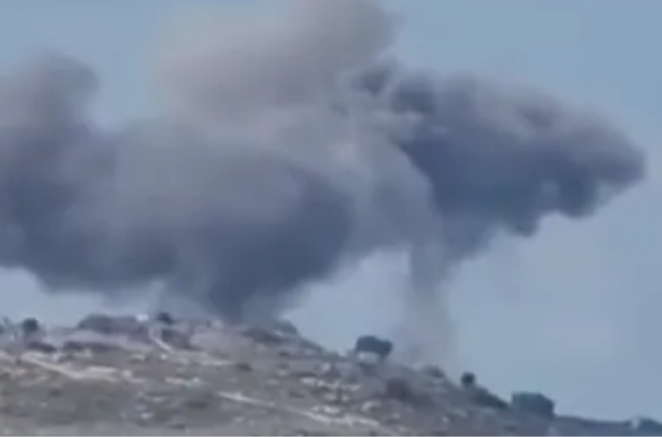
“These operations in hills and valleys, often conducted at night, are consistent with Israel’s pattern of sustained pressure,” it was noted, reflecting the repeated military activity over weeks.
The strikes also targeted rocket-launching sites and other military infrastructure believed by Israel to store Hezbollah’s strategic weapons, including drones, missiles, and long-range munitions.
Hezbollah refuses to disarm, claiming that surrendering weapons would compromise Lebanon’s sovereignty. The group insists its arsenal is essential for defending territory against Israeli aggression.
“Hezbollah does not have the upper hand, and Israel enjoys air superiority,” the report explained, underlining Israel’s ability to strike strategic locations with minimal risk of retaliation.
Tensions rose further after Israel killed Hezbollah’s top military commander, Haytham Ali Tabatabai, in Beirut’s southern suburbs. Hezbollah has not responded directly but promised retaliation “at the right time.”
Lebanon and Israel recently sent civilian envoys to a ceasefire monitoring committee, marking decades of limited diplomatic engagement aimed at reducing military escalation.
Hezbollah leader Naim Qassem criticized Lebanon’s participation, calling it a “free concession” to Israel. The group maintains its position against disarmament under ongoing bombardment.
Lebanese officials have expressed frustration over Israel’s attacks, stressing that negotiations with Israel are intended to prevent war and manage military pressure more effectively.
President Joseph Aoun emphasized diplomacy as a tool to stop attacks, while Prime Minister Nawaf Salam called for stricter monitoring of Israeli violations and Hezbollah infrastructure.
The United Nations has condemned the strikes, reporting at least 127 civilian deaths, including children, since the ceasefire started. Officials warn such attacks may constitute war crimes.
Reporting shows Israel’s campaign aims to pressure Hezbollah into relinquishing its strategic capabilities, but the group continues to resist, asserting that surrender is unacceptable under current conditions.
Civilians remain under threat despite Israel avoiding population centers. Homes, roads, and infrastructure have been damaged, creating a fragile humanitarian situation amid ongoing military operations.
Israel insists its strikes are defensive, aimed at preventing Hezbollah attacks. The military describes its campaign as necessary to ensure long-term security along the northern border.
The airstrikes follow repeated violations in the past weeks, reinforcing Israel’s policy of preemptive action while maintaining pressure on Hezbollah to disarm in line with its security objectives.
Hezbollah maintains that it will not surrender weapons while Israeli forces operate in Lebanese territory. The group frames its arsenal as essential to defending Lebanese sovereignty and citizens.
UN officials have repeatedly called for restraint from both sides, warning that continued strikes and countermeasures risk escalating the conflict into full-scale war.
Diplomatic efforts between Lebanon and Israel remain fragile, with civilian envoys meeting to monitor ceasefire adherence. Yet repeated airstrikes challenge the effectiveness of peace talks.
Experts say that while Israel maintains military superiority, continued bombardment may provoke wider regional tensions, potentially drawing neighboring countries into the conflict if Hezbollah retaliates.
Residents in southern Lebanon continue to live under uncertainty, with fear of sudden strikes affecting daily life. Schools, businesses, and public services operate under ongoing security threats.
Local leaders have appealed for international mediation, stressing that repeated Israeli attacks threaten both civilian safety and the delicate political balance in Lebanon.
Analysts warn that without credible verification mechanisms and clear enforcement of ceasefire terms, Israel’s strikes and Hezbollah’s resistance may result in cyclical escalation, undermining regional stability.
Read also: Von der Leyen slams Trump as Europe rejects US interference in upcoming elections
Military analysts highlight that Israel’s strategy relies on precision strikes to minimize civilian casualties, but critics argue that repeated violations of ceasefire agreements risk delegitimizing diplomatic efforts.
Hezbollah’s refusal to disarm is framed as defending Lebanon’s sovereignty, while Israel portrays its actions as necessary to prevent attacks. Both sides remain locked in a strategic stalemate.
International observers emphasize the importance of dialogue, restraint, and humanitarian access. Continued airstrikes undermine trust between parties and complicate efforts to implement a sustainable ceasefire framework.
Lebanon’s government continues to negotiate cautiously, balancing internal political pressures with the need to protect civilians and maintain national stability amid Israeli air operations.
The ongoing bombardment highlights the fragility of the current ceasefire, demonstrating that military escalation and diplomacy coexist uneasily in southern Lebanon’s volatile environment.
Observers warn that without sustained international oversight, repeated Israeli airstrikes could escalate tensions further, destabilize border regions, and increase the risk of broader regional conflict.
Residents describe life under frequent strikes as tense and unpredictable. Many have limited access to basic services, reflecting the humanitarian cost of ongoing military operations in southern Lebanon.
Despite repeated strikes, Hezbollah maintains strategic patience. The group’s leadership emphasizes that disarmament is impossible while Israeli forces continue military operations across Lebanese territory.
The international community continues to call for adherence to the ceasefire, urging Israel and Hezbollah to avoid provocations and ensure protection for civilians in affected regions.
Peace efforts remain fragile, with diplomats warning that further violations could derail negotiations. Israel’s insistence on preemptive strikes and Hezbollah’s refusal to disarm perpetuate a cycle of tension.
Experts suggest that long-term stability in southern Lebanon depends on credible monitoring, enforcement of ceasefire terms, and constructive dialogue between Israel, Lebanon, and Hezbollah to prevent renewed conflict.
The situation in southern Lebanon underscores the complexities of regional security. Israel seeks to protect itself, Hezbollah seeks to maintain influence, and civilians bear the heaviest burden of ongoing violence.
About The Author