

Iran ready for war has become the central message from Tehran as authorities face intensifying nationwide protests and mounting pressure from the United States and its allies.
The Iran ready for war declaration was delivered by foreign minister Abbas Araghchi, who warned adversaries against miscalculation while insisting Tehran is not actively seeking conflict.
Speaking before foreign ambassadors, Araghchi said Iran is prepared for any military scenario even as it remains open to negotiations grounded in equality and mutual respect.
Iran ready for war rhetoric comes amid one of the most serious waves of domestic unrest the Islamic Republic has experienced in recent years.

Protests initially erupted in Tehran following a sharp economic downturn, rapidly spreading nationwide as frustration over inflation and political restrictions deepened across society.
Demonstrations have continued despite a prolonged internet blackout, making independent verification difficult and limiting the flow of information from within Iran.
Human rights groups say the Iran protest crackdown has intensified, with security forces using lethal force, mass arrests, and televised confessions to deter further demonstrations.
At least one protester has reportedly been sentenced to death, raising alarm among international rights organisations monitoring the unfolding Iran ready for war standoff.
State media has defended harsh measures, portraying protests as violent acts encouraged by foreign powers seeking to destabilise the country.
Iranian officials have consistently accused the United States and Israel of exploiting internal unrest to justify external intervention against Tehran.
President Masoud Pezeshkian has urged citizens to join pro-government rallies, describing them as national resistance marches against foreign-backed destabilisation efforts.
Iran ready for war messaging has been reinforced by official claims that protests are now under total control across the country.
Despite such assurances, reports indicate continued clashes, funerals for both civilians and security forces, and mounting public anger.
The Iran ready for war posture has triggered strong international reactions, particularly from European leaders condemning violence against protesters.
Germany’s chancellor described the use of force against demonstrators as disproportionate and a sign of weakness rather than strength.
China has urged restraint and respect for sovereignty, opposing any military intervention while calling for stability within Iran.
Diplomatic channels between Tehran and Washington remain open, according to Iran’s foreign ministry spokesperson Esmaeil Baghaei.
Baghaei confirmed that messages are exchanged through intermediaries, notably Switzerland, which represents US interests in Iran.
However, the Iran ready for war stance coincides with increasingly sharp rhetoric from US President Donald Trump.
Trump has publicly stated that his administration is weighing US military options against Iran, including cyberattacks and direct strikes.
The US president warned that Washington may act before any planned meeting if Iranian authorities continue to kill protesters.
Trump’s comments followed reports that military planners are examining a range of scenarios in response to the unrest.
Analysts caution that military intervention could strengthen Tehran’s narrative that protests are part of a foreign conspiracy.
Iran ready for war statements also reflect lessons drawn from last year’s brief but devastating conflict with Israel.
During that confrontation, more than a thousand people were killed, leaving deep scars on Iran’s military and civilian infrastructure.
Araghchi said Iran is now better prepared than during that conflict, reinforcing the deterrent tone of his remarks.
At the same time, he stressed that negotiations remain possible if conducted fairly and without unilateral pressure.
Iran ready for war messaging thus walks a fine line between deterrence and diplomacy.
The country’s economic crisis continues to fuel public anger, worsened by renewed international sanctions.
Sanctions have sharply devalued the rial, driven inflation higher, and increased hardship for ordinary Iranians.
Many protesters cite rising food prices and unemployment as key drivers of the ongoing unrest.
The Iran ready for war stance has not eased fears that further escalation could destabilise the wider Middle East.
Regional allies of Washington have reportedly urged restraint, concerned about spillover effects of any conflict.
Population density in Tehran makes targeted military action particularly risky, raising fears of civilian casualties.
Previous airstrikes demonstrated how quickly nationalism can surge following foreign attacks.
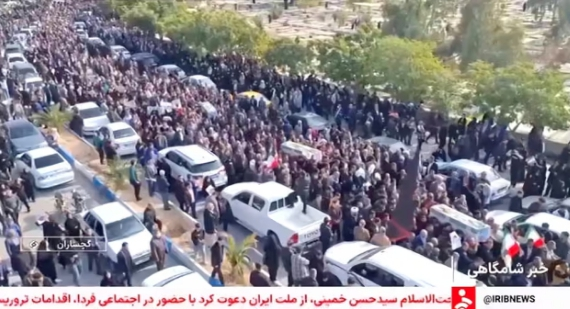
Iran ready for war messaging appears designed to deter intervention while consolidating domestic authority.
Yet continued executions, arrests, and violence risk deepening internal resistance rather than suppressing it.
As protests enter their second week, the crisis shows no sign of immediate resolution.
Read also: British Skier in His 50s Killed in Avalanche at La Plagne, French Alps
Iran ready for war remains both a warning to adversaries and a reflection of the regime’s fragile position.
Whether diplomacy prevails or confrontation escalates may determine Iran’s political trajectory for years to come.
About The Author


