

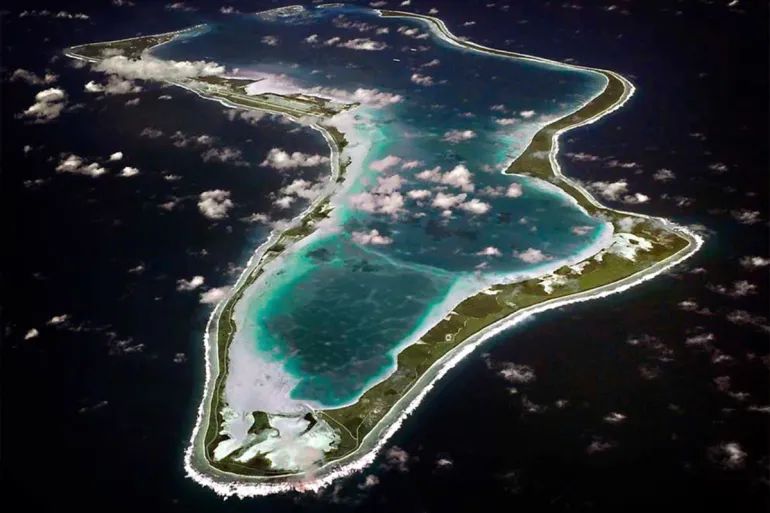
Iran false flag attack denial has intensified geopolitical tensions as Iran strongly rejected accusations that it launched missiles toward the joint US-UK military base on Diego Garcia island.
Iran false flag attack denial was reiterated by foreign ministry spokesman Esmaeil Baghaei, who described the allegations as “disinformation” and firmly denied any involvement in the reported incident.
Officials in Iran argued that the accusations follow a pattern of misinformation, suggesting they are part of broader attempts to justify escalation in the ongoing regional conflict.
The controversy emerged after Western media reports claimed missiles were launched toward Diego Garcia, a strategic base used by both the United States and the United Kingdom.
However, those reports indicated that the projectiles failed to hit the base, raising further questions about the accuracy and origin of the alleged missile launch.
NATO Secretary-General Mark Rutte added uncertainty by stating the alliance could not confirm whether the missiles were of Iranian origin.
Baghaei responded by saying that even international actors declining to verify the claims “speaks volumes” about what he described as unreliable narratives surrounding the alleged attack.
The denial comes amid a broader escalation involving the United States and Israel, both of which have accused Iran of expanding its military activities across the region.
Donald Trump has defended recent military actions, urging public support and framing them as necessary steps to ensure global stability.
At the same time, Iranian officials have continued to emphasize limits on their missile programme, aiming to counter perceptions that they pose a long-range threat.
Foreign Minister Abbas Araghchi previously stated, “We intentionally limited ourselves” to ranges below 2,000 kilometers to avoid alarming other nations.
Analysts note that if Iran were capable of launching missiles over 4,000 kilometers, it would significantly alter the strategic balance, potentially putting distant regions within reach.
Such capabilities could extend to parts of Europe, including major capitals, heightening concerns among Western allies about future threats.
Despite these fears, officials in the United Kingdom have said there is no clear evidence that Iran currently possesses or intends to deploy such long-range weapons.
The Diego Garcia base remains a crucial hub for military operations, supporting missions ranging from conflicts in Asia to operations in the Middle East.
With approximately 2,500 personnel stationed there, the base plays a vital role in projecting military power and maintaining strategic presence.
The allegation of an attack on such a facility therefore carries significant implications, even if the claims remain unverified.
Iran has countered by accusing its adversaries of staging or exaggerating incidents to create justification for continued military pressure.
Officials described the situation as a “false flag attack,” suggesting that the narrative may have been constructed to shift blame and influence international opinion.
Meanwhile, Israel has maintained that Iran’s missile and nuclear programmes represent a long-standing threat to regional and global security.
Israeli military leadership has claimed that the alleged missiles were advanced systems capable of traveling vast distances, though these assertions remain disputed.
The disagreement underscores the deep mistrust between the involved parties, with each side presenting conflicting accounts of the same event.
In Washington, policymakers continue to weigh their response, balancing military strategy with diplomatic considerations as tensions persist.
The situation has also drawn attention to the role of information warfare, where competing narratives shape public perception as much as physical actions.
Experts warn that misinformation or unverified claims can quickly escalate already volatile situations, increasing the risk of unintended conflict.
The broader conflict has already seen multiple flashpoints, including strikes, counterstrikes, and heightened rhetoric from all sides.
Against this backdrop, the Diego Garcia allegations represent another layer of complexity in an already tense geopolitical environment.
Iran insists that it remains open to defending itself while rejecting what it calls baseless accusations designed to provoke further confrontation.
Western allies, however, continue to monitor developments closely, wary of any signs that the conflict could expand beyond its current scope.
The uncertainty surrounding the alleged missile attack highlights the challenges of verifying information in modern warfare.
As global powers remain divided over the incident, the risk of escalation persists, driven by suspicion, competing interests, and strategic calculations.
Ultimately, the Iran false flag attack denial reflects deeper divisions that extend beyond a single incident, touching on long-standing rivalries and unresolved tensions.
Diplomatic channels remain critical, yet fragile, as stakeholders attempt to navigate a crisis shaped by both military actions and contested narratives.
Read also:Benjamin Netanyahu hopes destroying Iranian ‘Axis of Evil’ will rehabilitate his image
Whether the truth behind the Diego Garcia claims emerges or remains disputed, the political and strategic consequences are already being felt.
For now, the Iran false flag attack denial continues to dominate headlines, underscoring the fragile balance between confrontation and diplomacy in a rapidly evolving conflict.
About The Author
