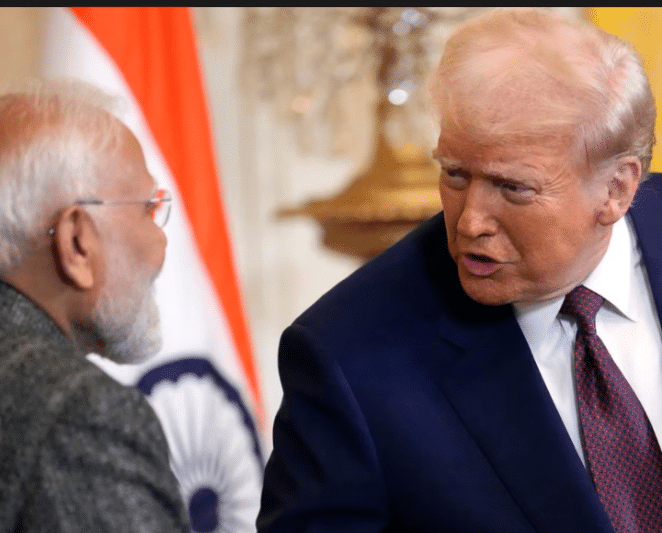
India has publicly cast doubt on recent statements by US President Donald Trump, who claimed Prime Minister Narendra Modi agreed to halt purchases of Russian oil.
Trump asserted that Modi assured him India would soon end Russian oil imports, describing the process as “ongoing but nearing completion,” amid rising tensions over global energy policy.
However, Indian officials contradicted Trump’s claims, emphasizing there was “no telephonic conversation between PM Modi and US President Trump yesterday,” challenging the narrative presented by Washington in a rare rebuke.
India has maintained a strong, decades-long relationship with Russia, particularly in energy and defense, making any unilateral halt of Russian oil purchases unlikely or politically sensitive at this time.
The country has become one of the largest buyers of Russian oil since Moscow’s invasion of Ukraine, securing discounted energy supplies crucial for its fast-growing industrial and consumer economy.
These purchases have increasingly become a point of contention with the United States, which has criticized India for indirectly financing Russian military operations against Ukraine, raising diplomatic tensions in recent months.
Trump previously imposed high tariffs on India in August, citing its continued Russian oil imports, adding a 25% levy atop existing import duties, escalating trade tensions and prompting intense negotiation sessions.
Indian officials have repeatedly stressed that their energy policies prioritize domestic consumer needs, diversification of energy sources, and long-term security rather than adhering to external pressure from the US administration.
Despite US pressure, India’s defense and trade ties with Russia remain strong, with Moscow serving as its largest arms supplier, making energy policy a sensitive area for diplomatic maneuvering between the countries.
Trump’s public praise for Modi, describing him as a “great man” who “loves Trump,” contrasts sharply with prior criticism over energy and trade, reflecting the complicated dynamics of US-India relations.
The White House has increasingly framed India’s energy dealings as contributing to Russian aggression in Ukraine, portraying Delhi as indirectly supporting President Vladimir Putin’s military campaign in the region.
Analysts note that India’s reliance on discounted Russian oil has significantly lowered national energy costs, reinforcing its position as the world’s second-largest importer of Russian crude after China, and stabilizing domestic fuel prices.
Trade discussions between India and the US continue, but Indian officials insist these talks prioritize domestic stability, economic growth, and securing energy amid a volatile global oil market shaped by sanctions and war in Europe.
Observers warn that any attempt to force India to reduce Russian oil purchases could harm US-India relations, potentially undermining strategic partnerships in technology, defense, and regional security cooperation across South Asia.
The dispute highlights the delicate balance Modi must maintain, ensuring energy security while navigating pressure from Washington, as India seeks to protect national interests without alienating either major global power.
US officials have repeatedly expressed frustration over Delhi’s refusal to reduce Russian oil imports, arguing that continued purchases effectively provide financial support to Moscow during its military operations in Ukraine.
India, however, maintains that it cannot allow any foreign government to dictate its energy procurement strategy, citing the imperative to protect millions of domestic consumers from rising fuel costs and economic instability.
“India’s energy policies are based on national interest,” an Indian official said. “We will continue to diversify our sources, but external pressure will not determine our strategy or partnerships with Russia.”
While Trump’s statements suggest a personal rapport with Modi, underlying tensions over trade, tariffs, and energy policy demonstrate that the US-India relationship remains complicated, influenced by global geopolitics and economic considerations.
Russia remains a crucial strategic partner for India, not only in energy but also in military technology, nuclear cooperation, and geopolitical alignment, further complicating the prospects for a sudden cessation of oil imports.
Experts note that energy security is central to India’s growth strategy, and discounted Russian oil has provided a competitive advantage that the country is reluctant to abandon despite US diplomatic efforts.
The broader context of global energy markets also factors into India’s position, as rising fuel costs, sanctions on Russia, and uncertainty in supply chains make energy diversification both necessary and politically sensitive.
Trump has indicated he intends to extend pressure on other major energy importers, including China, to reduce Russian oil purchases, signaling a broader US strategy to economically isolate Moscow while attempting to enforce geopolitical objectives.
India’s careful navigation of these pressures demonstrates its desire to maintain strategic autonomy, balancing relations with both Western powers and Russia while safeguarding its domestic energy and economic interests.
Observers suggest that while rhetoric from Washington may continue to escalate, India is unlikely to make immediate concessions, reflecting a broader pattern of independent foreign policy that has characterized Modi’s government.
The ongoing dispute underscores the complex interdependence of global energy markets, geopolitics, and national interests, highlighting that diplomacy and trade negotiations often require careful calibration to avoid unintended consequences.
India’s position also signals to other emerging economies that national interests, especially regarding energy security, may take precedence over external pressure from global powers, setting a precedent in international diplomacy.
As the US-India dialogue continues, both sides face the challenge of reconciling energy security, trade relations, and geopolitical alignment without undermining a partnership that is strategically vital for both countries.
Some analysts warn that continued US pressure could push India closer to Russia, creating long-term strategic complications for Washington in Asia, particularly regarding Indo-Pacific security and cooperation frameworks.
India’s energy strategy also includes expanding domestic refining capacity, negotiating with Middle Eastern suppliers, and investing in renewable energy, demonstrating a multi-pronged approach to national energy security beyond Russian oil.
Trump’s administration has indicated that tariffs and diplomatic pressure will continue until Delhi makes concrete commitments, but Indian policymakers maintain that energy decisions will remain autonomous, reflecting sovereign policy prerogatives.
Experts argue that India’s ability to leverage discounted Russian oil imports strengthens its negotiating power on the global stage, allowing Delhi to balance relations with major powers while securing domestic economic benefits.
With global energy prices remaining volatile, India’s insistence on controlling its oil imports underscores the broader challenge of balancing domestic economic stability with the pressures of international diplomacy.
Some US commentators describe India’s stance as a test of American influence in Asia, emphasizing the limitations of economic coercion when applied to countries with strong alternative trade relationships.
Meanwhile, Indian leaders emphasize that Moscow’s oil continues to play a stabilizing role in national energy planning, allowing the country to mitigate inflationary pressures that could affect millions of households.
Observers note that Modi’s government has skillfully navigated prior crises, maintaining partnerships with both the US and Russia while prioritizing domestic energy needs and economic resilience over external expectations.
The broader geopolitical implications of India’s continued Russian oil imports could shape future negotiations over energy, defense, and trade, potentially influencing global power alignments for years to come.
For Washington, India’s position represents both a challenge and an opportunity to engage in dialogue, offering incentives for energy diversification while respecting Delhi’s sovereign prerogatives in managing its national economy.
About The Author