

The pricing strategy of the Dangote Refinery has once again stirred debate in Nigeria’s downstream oil sector, as fuel importers allege that Dangote petrol is being sold to international traders at a lower rate than to domestic buyers.
The revelation has heightened tension among industry players, with some groups accusing the refinery of stifling competition while projecting itself as the sole saviour of the local market.
According to the Depot and Petroleum Products Marketers Association of Nigeria (DAPPMAN) and the Petroleum Products Retail Outlet Owners Association of Nigeria (PETROAN), petrol sold by the refinery in Lomé, Togo, is priced about N65 cheaper per litre than what Nigerian marketers pay.
This allegation, industry insiders say, could worsen the already fragile relationship between the refinery and local distributors.
DAPPMAN’s Executive Secretary, Olufemi Adewole, revealed that some of its members had bought Dangote petrol indirectly from international traders in Togo at prices more favourable than those offered locally.
According to him, this pricing disparity places Nigerian marketers at a disadvantage and, in some cases, makes importation a more viable option than domestic sourcing.
“Dangote sells to international traders at N65 lower than what he is selling to us.
Some of our members have bought from those traders and still found it cheaper to bring into Nigeria,” Adewole said.
He added that repeated requests for direct allocations from the refinery had been unsuccessful, while conditions attached to sales were often unprofitable.
Officials at the Dangote Refinery dismissed the allegations, suggesting that DAPPMAN could be behind recent criticism by the Nigerian Union of Petroleum and Natural Gas Workers (NUPENG).
The union had earlier accused the refinery of anti-union practices, threatening to embark on industrial action.
A spokesman for the refinery laughed off the claims, stating that its new free fuel delivery scheme set to begin on Monday would prove its commitment to reducing pump prices nationwide.
He also questioned when marketers began sourcing petrol from Togo, hinting that they traditionally bought from Russia and Malta.
For DAPPMAN and PETROAN, the issue is not only about pricing but also about market fairness. PETROAN President, Billy Gillis-Harry, backed DAPPMAN’s claims, confirming that Dangote petrol is indeed cheaper abroad than at home.
“The statement is true. We don’t want to say everything yet, but one day we will,” he said, suggesting there are deeper grievances within the sector.
Adewole also accused Dangote of using strategic price cuts to disrupt the market.
He explained that reductions often coincided with the arrival of importers’ cargoes, creating shocks that undermined competition.
“This practice imposes financial strain on marketers already working with tight margins,” he argued.
The refinery recently announced that it would reduce the depot price of Dangote petrol to N841 per litre in Lagos and the South-West, and N851 in Abuja, Edo, and Kwara.
The company further promised “free delivery” as part of its logistics relief programme.
However, DAPPMAN insists that the so-called free delivery is misleading.
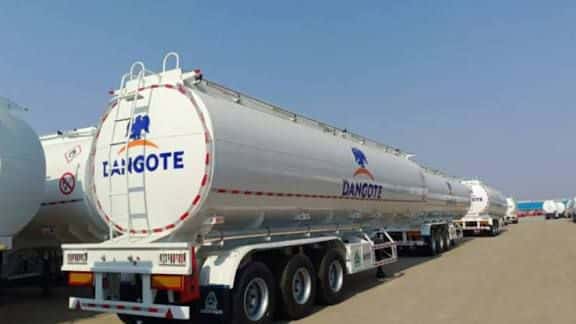
According to the group, marketers are required to lift at least 25 per cent of their allocation directly from the refinery using Dangote-owned trucks, incurring additional commercial costs.
“This arrangement limits flexibility, adds to expenses, and undermines the supposed relief being offered,” Adewole said.
While many Nigerians perceive the refinery as a game-changer for the nation’s fuel crisis, Adewole cautioned against portraying it as the sole solution.
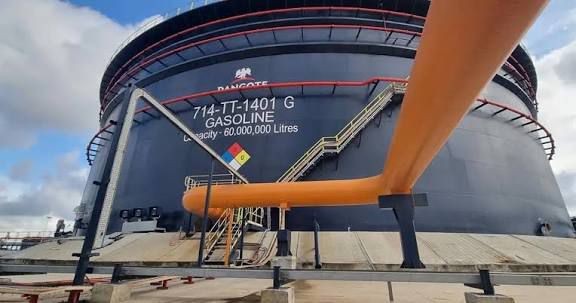
He explained that the refinery currently supplies about 30 to 35 per cent of national demand, with the balance still covered by imports.
“The narrative that Nigeria’s downstream stability rests solely on Dangote is dismissive of the wider ecosystem,” he warned.
DAPPMAN maintains that other marketers remain crucial to ensuring steady supply under the oversight of the Nigerian Midstream and Downstream Petroleum Regulatory Authority (NMDPRA).
The controversy also has global undertones.
For years, Nigeria has battled a paradox: being Africa’s largest crude oil producer but heavily reliant on imports for refined products.
The commissioning of the Dangote Refinery in 2023 was heralded as a turning point.
However, the current allegations risk undermining public trust in the project.
Industry analysts say if Dangote petrol continues to be cheaper abroad, Nigeria could face fuel diversion risks, smuggling challenges, and further pressure on local pump prices.
Moreover, concerns over anti-competitive practices could invite regulatory scrutiny.
Analysts argue that without transparency and fair pricing, the refinery could inadvertently recreate the very market distortions it was meant to solve.
Despite the criticism, the refinery is moving ahead with new initiatives.
On Monday, it will roll out compressed natural gas (CNG)-powered trucks to support its direct delivery scheme, with depot prices expected to drop further to N820 per litre.
The company insists that this will translate to lower pump prices across key states, reinforcing its role as a stabiliser in the market.
The battle over Dangote petrol pricing highlights the delicate balance Nigeria must strike in its downstream sector.
On one hand, there is the need to protect consumers with affordable fuel; on the other, the survival of independent marketers who distribute across the country is equally vital.
As stakeholders trade accusations, ordinary Nigerians remain the most affected.

Price volatility, supply disruptions, and labour unrest could all emerge if the rift between Dangote, marketers, and unions escalates.
For now, the refinery’s next moves and the government’s willingness to ensure a level playing field, will determine whether the Dangote Refinery becomes a true national asset or just another flashpoint in Nigeria’s fuel crisis.
About The Author

