
The International Monetary Fund (IMF) has excluded Nigeria from its latest list of Africa’s fastest-growing economies, despite recent improvements in the nation’s fiscal management, oil output, and foreign exchange reforms.
The IMF named Benin Republic, Côte d’Ivoire, Ethiopia, Rwanda, and Uganda among the continent’s top performers, underscoring the progress of smaller economies in sustaining reforms and macroeconomic stability.
IMF Highlights Africa’s Growth Leaders
During the presentation of Sub-Saharan Africa’s Regional Economic Outlook, the IMF’s African Department Director, Abebe Selassie, said that these five countries have emerged as some of the fastest-growing in the world due to fiscal prudence, reform consistency, and investment in infrastructure.
According to him, the region’s economic growth is projected to stabilise at 4.1% in 2025, with expectations of a modest uptick in 2026.
“Benin, Côte d’Ivoire, Ethiopia, Rwanda, and Uganda are among the world’s top-performing economies, driven by macroeconomic reforms and sound fiscal policies,” Selassie said.
However, despite an improved growth projection of 3.9% for Nigeria in 2025, the IMF noted that the country’s expansion remains below its potential.
Nigeria’s economic trajectory, according to the Fund, is being hampered by structural constraints such as inflationary pressures, weak electricity supply, and low non-oil revenue generation.
Nigeria’s Growth Still Below Potential
Although Nigeria’s growth forecast was revised upward from 3.4% to 3.9%, the IMF maintained that this pace is insufficient to classify it among the continent’s fastest-growing economies.
Data from the National Bureau of Statistics (NBS) showed that Nigeria’s GDP grew by 4.23% in Q2 2025, up from 3.48% in the same period last year—signaling gradual recovery in both oil and non-oil sectors.
Despite this progress, Selassie said the nation must deepen structural reforms, modernise its tax system, and enhance public finance transparency to unlock faster, inclusive growth.
“We still have quite a few resource-intensive countries, including Nigeria, facing challenges with only modest per capita income gains,” he stated.
Rising Debt and Financial Risks
The IMF also raised concerns about Nigeria’s growing domestic debt, warning that heavy government borrowing from local banks poses financial stability risks.
As external funding becomes less accessible, many African governments—including Nigeria—have turned to domestic lenders, creating a “sovereign-bank nexus” that threatens banking sector resilience.
Selassie cautioned that about half of Sub-Saharan Africa’s public debt is now held by domestic financial institutions.
“While this has helped sustain spending levels, it has also exposed banks to potential distress in high-debt countries,” he said.
The IMF called on governments to strengthen regulatory oversight, build capital buffers, and align fiscal plans with sustainable debt levels.
Policy Reforms and Fiscal Outlook
The IMF’s Fiscal Affairs Department praised Nigeria’s recent efforts in tax reform and expenditure efficiency, describing the nation’s fiscal stance as “neutral” — supporting monetary policy without stifling growth.
Davide Furceri, IMF Division Chief, noted that simplifying tax codes, cutting inefficiencies, and easing burdens on low-income earners have been steps in the right direction.
“Nigeria has done quite a lot in the past few years,” Furceri said.
“Reforms in tax administration and digitalisation are helping improve efficiency and compliance.”
The IMF also encouraged Nigeria to channel more spending into social protection to cushion vulnerable groups and promote inclusive development.
Exchange Rate and Monetary Policy Gains
The IMF’s Director of Monetary and Capital Markets, Tobias Adrian, commended Nigeria’s monetary tightening and flexible exchange rate policy, saying these measures have improved policy credibility and strengthened external buffers.
“Exchange rate flexibility can help economies like Nigeria adjust to external shocks. The recent policy actions have enhanced stability and reduced inflationary pressures,” Adrian noted.
Supporting this view, IMF Assistant Director Jason Wu said Nigeria’s revenue collection and FX reserve management have both improved.
Inflation has dropped from over 30% last year to about 23%, reflecting a more coordinated policy approach.
Call for Sustained Discipline
Despite these positives, the IMF warned that external risks — including capital flow volatility, declining oil prices, and reduced global aid — could challenge the region’s recovery.
Wu advised African governments to consolidate fiscal discipline, improve debt management, and deepen structural reforms to withstand future shocks.
Selassie also urged African nations to tackle illicit financial flows through reforms that address trade misinvoicing, tax evasion, and corruption-related leakages.
“Boosting growth and transparency remains the most sustainable way to manage debt and reduce vulnerability,” he said.
IMF Commends Nigeria’s Reform Direction
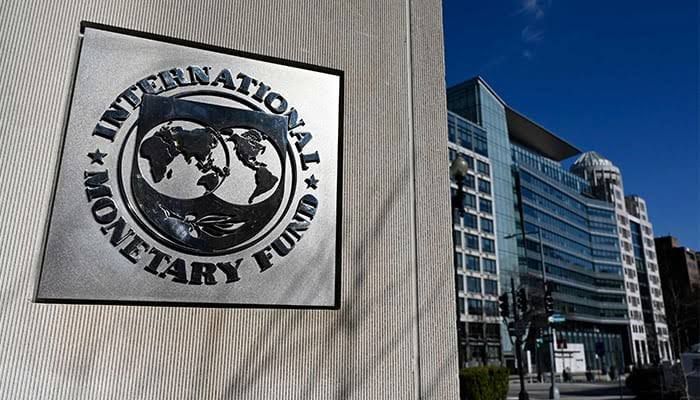
The IMF concluded that while Nigeria is not among Africa’s fastest-growing economies yet, its policy trajectory is encouraging, with signs of easing inflation, greater FX transparency, and stronger fiscal coordination.
“The country’s reforms are broadly positive,” Selassie said, adding that with continued commitment to revenue mobilisation, energy reform, and infrastructure investment, Nigeria could soon regain its position as a regional growth leader.
About The Author