Tanzania post-election protests have intensified after the exclusion of major opposition parties, with the Chadema party claiming nearly 700 deaths in cities across the country this week.
Chadema spokesperson John Kitoka said the tally included 350 fatalities in Dar-es-Salaam and over 200 in Mwanza, reflecting the widespread unrest driving the ongoing Tanzanian opposition violence.
The Tanzanian government has not released official casualty figures, stating security forces are restoring order after isolated incidents, amid continuing post-election protests in urban and rural areas.
UN human rights spokesperson Seif Magango said credible sources indicated at least ten deaths, urging authorities to avoid disproportionate force against demonstrators, highlighting the dangers of ongoing Tanzanian opposition violence.
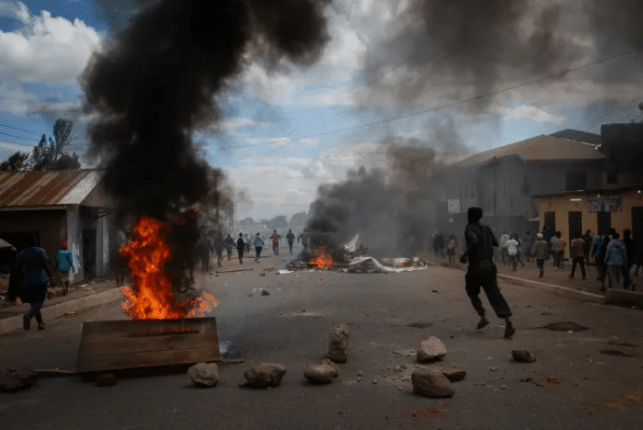
Demonstrations erupted in Dar-es-Salaam on Wednesday after chaotic elections that barred the two main opposition parties, fueling anger over electoral restrictions and increasing Chadema party casualties.
Several vehicles, petrol stations, and police stations were set ablaze as protesters expressed frustration, highlighting how post-election protests have become a symbol of broader democratic concerns.
For the third consecutive day, the government deployed the military to control crowds, shut down the internet, and enforce curfews, escalating tensions surrounding the Tanzanian opposition violence nationwide.
Curfew violations in Mbagala, Gongo la Mboto, and Kiluvya were met with tear gas and gunfire, demonstrating the government’s hardline stance against citizens engaging in post-election protests.
President Samia Suluhu Hassan, in power since 2021, has faced growing criticism for what the UN calls escalating attacks and harassment of opposition members, central to Tanzanian opposition violence.
Minor opposition figures competed after Chadema and ACT-Wazalendo candidates were disqualified, causing widespread unrest and contributing to reported Chadema party casualties and heightened political instability across Tanzania.
Human Rights Watch documented assaults, harassment, abductions, and restrictions on media and civil society organizations, emphasizing the risks of political participation during ongoing post-election protests in Tanzania.
International observers warned that restricting opposition participation threatens the credibility of elections, signaling growing concerns over President Samia Suluhu Hassan’s approach to governance and public dissent.
Protesters in Dar-es-Salaam demanded that the electoral commission halt result announcements, while authorities sought to maintain control, underscoring the scale of Tanzanian opposition violence on city streets.
In Zanzibar, CCM retained the presidency with 78.8 percent of the vote, yet opposition parties alleged massive fraud, highlighting tensions between mainland post-election protests and the Zanzibar election results.
The Chadema party vowed to reveal its next steps after condemning Zanzibar election results, claiming irregularities that deepen national concerns over Chadema party casualties and electoral transparency.
Government restrictions include postponed university and college reopenings, as military and police forces remain deployed to control Tanzanian opposition violence and quell disruptions caused by ongoing protests.
Army chief Jacob John Mkunda said the military would assist security agencies in restoring order, reinforcing government commitment to suppress the post-election protests and maintain national stability.
Public outrage has grown following reports of arrests and harassment of opposition leaders, including Tundu Lissu, contributing to Chadema party casualties and fueling widespread Tanzanian opposition violence.
Observers note that barring opposition candidates undermined voter choice, intensifying protests and bringing international scrutiny to President Samia Suluhu Hassan’s handling of election-related unrest.
Protesters set fire to buildings and vehicles in multiple cities, reflecting deep frustration with political exclusion and the continuing escalation of Tanzania post-election protests across the country.
Human Rights Watch warned that continued repression of dissent and media threatens democratic processes, emphasizing the risks of Tanzanian opposition violence extending beyond major urban centers.
Chadema party members visited hospitals to verify casualties, confirming their tally, while the government maintains silence on the number of Chadema party casualties across the nation.
Protesters continue to demand electoral reforms, illustrating the persistence of Tanzania post-election protests and the broader struggle for transparent and credible democratic processes in the country.
UN human rights experts have condemned politically motivated abductions and torture, reinforcing concerns about the ongoing Tanzanian opposition violence affecting citizens’ safety and civil liberties.
International attention has focused on Tanzania, comparing its unrest to Ivory Coast and Cameroon, where long-serving leaders faced resistance, highlighting the regional relevance of Tanzania post-election protests.
Curfews and security crackdowns have not deterred citizens from demonstrating, showing the strength of Tanzanian opposition violence and the public’s determination for political change.
State television continued to broadcast CCM’s election victories, despite nationwide protests, reflecting the contrast between official narratives and the realities of Tanzania post-election protests.
President Samia Suluhu Hassan came to power after her predecessor’s death, but her administration’s restrictive measures against opposition parties have heightened Chadema party casualties and international criticism.
The Independent National Electoral Commission’s disqualification of main opposition candidates fueled unrest, contributing directly to the widespread Tanzania post-election protests in major urban and regional areas.
Local and international media coverage has highlighted protesters’ demands, illustrating the interplay of Chadema party casualties, government responses, and the persistence of Tanzanian opposition violence.
Minor opposition participation has done little to ease tensions, with voters and activists criticizing the lack of fair competition and the continuation of Tanzania post-election protests.
Military presence in Dar-es-Salaam and other regions underscores government intent to suppress dissent, intensifying public awareness of Chadema party casualties and Tanzanian opposition violence.

Analysts warn that limiting media coverage and civic participation deepens distrust in electoral institutions, prolonging Tanzania post-election protests and highlighting the risks facing opposition parties.
Protests spread to Mwanza and other cities, showing that unrest is not limited to Dar-es-Salaam and reflecting the nationwide impact of Tanzanian opposition violence.
Government claims of restoring order contrast with eyewitness reports of violent crackdowns, emphasizing the contested nature of Chadema party casualties and Tanzania post-election protests.
Social media shutdowns further fueled frustration, demonstrating how technology restrictions intersect with Tanzanian opposition violence and the population’s efforts to communicate.
International human rights groups continue to monitor the situation, warning that ongoing repression will exacerbate Chadema party casualties and intensify Tanzania post-election protests.
The Zanzibar election results added to tensions, with opposition groups alleging fraud, showing the disconnect between mainland Tanzania post-election protests and the controlled outcomes in semi-autonomous regions.
Military deployment has not prevented continued demonstrations, underscoring the resilience of protesters and the ongoing reality of Tanzanian opposition violence across multiple regions.
Calls for electoral reform remain central, with citizens demanding accountability from President Samia Suluhu Hassan while Chadema party casualties rise amid Tanzania post-election protests.
Observers note similarities with other African elections, highlighting risks of violence and unrest if opposition participation remains restricted, intensifying Tanzanian opposition violence.
Protesters’ defiance of curfews demonstrates public commitment to democratic principles, despite rising Chadema party casualties and persistent Tanzania post-election protests.
International pressure on the Tanzanian government has increased, emphasizing transparency, accountability, and an end to repression amid the escalation of Tanzanian opposition violence.
The continuation of protests signals that citizens will not accept unfair elections, illustrating how Tanzania post-election protests reflect deeper societal grievances and political frustrations.
Human Rights Watch and UN experts call for immediate reforms, reiterating concerns over Chadema party casualties and the persistent nature of Tanzanian opposition violence.
Protesters have vowed to continue demonstrating until demands for free and fair elections are met, ensuring Tanzania post-election protests remain a central political issue.
Political analysts warn that ignoring grievances could destabilize the country, emphasizing the importance of addressing Chadema party casualties and the causes of Tanzanian opposition violence.
Curfews, military deployments, and internet blackouts have only partially suppressed protests, highlighting the resilience of Tanzania post-election protests and the public’s determination for reform.
In conclusion, the situation in Tanzania underscores the risks of political exclusion, with Chadema party casualties mounting and Tanzanian opposition violence highlighting the urgent need for electoral reforms.
About The Author