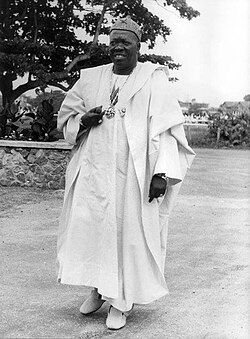
His Royal Majesty, Ọba Bolarinwa Bamigbade Adeni Olagunju, MBE, fondly remembered as Ribihun II, was one of the most illustrious monarchs to ever sit on the throne of Owa Otan Ayegbaju. His reign, spanning from January 1925 to February 27, 1962, marked an era of peace, modernization, and enduring legacy that still resonates across generations.
Otan-Ayegbaju is an historic town in Yorubaland founded about 800 years ago by descendants of Oduduwa, Olasooye Otinsokun Osiloye the 16th child of Oduduwa who migrated from Ifẹ. It is the headquarters of Boluwaduro Local Government Area. Nearby towns are Eripa, Iresi, Igbajo, Oke-irun and Oyan.
Born around 1880 into the Olaruka Ruling House, Ọba Olagunju was a direct descendant of Owa Otinsokun Ribihun I (who reigned from 1881 to 1906). His mother, Ige Atoke Otinsokun, was a virtuous and generous woman from the Arolu Compound in Otan Ayegbaju, a woman known for her kindness, warmth, and uncommon hospitality.

Ascending the throne at about 45 years of age, Ọba Olagunju Ribihun II became the 19th Owa of Otan Ayegbaju, located in present-day Boluwaduro Local Government Area of Osun State. His 37-year reign was defined by progressiveness, visionary leadership, and firm commitment to the welfare of his people.
A Monarch of Wisdom, Courage, and Mystical Power
Before his ascension, Ọba Olagunju was already widely known as a traditional medical practitioner of extraordinary repute. His healing powers and deep understanding of Yoruba traditional medicine earned him the title of a “Babaláwo”, both a healer and a seer. He was consulted by the high and mighty across Yorubaland, from Abeokuta to Ijebu-Ode, Akure, Ekiti, and Ondo.
His combination of healing wisdom and spiritual insight made him both respected and feared. Even among his peers, he was regarded as a man of mystical strength.
The reigning Ooni of Ife, Oba Adesoji Aderemi, once attested to Olagunju’s influence in a letter dated 22nd December 1949, reaffirming his support for Owa Ribihun II’s opposition to the wearing of crowns by lesser chiefs (“bales”) under his domain.
Ooni Aderemi’s letter, written from Ile-Ife, acknowledged Olagunju’s authority and expressed admiration for his courage in defending Yoruba tradition and royal hierarchy. This singular event reflected the reverence other kings had for him — a monarch who commanded respect both spiritually and politically.
A Leader of Stability and Administrative Foresight
Ọba Olagunju Ribihun II was not merely a traditional ruler; he was an astute administrator and reformer. Before his coronation, Otan faced internal strife due to the high-handedness of colonial sanitary inspectors from Ibadan, leading to unrest and the temporary displacement of some indigenes. Upon ascending the throne, Ọba Olagunju swiftly restored peace through diplomacy, tact, and firm leadership, ensuring harmony returned to his community.
His reign witnessed monumental administrative transformations. He played a central role in the establishment of the Ifelodun District Council, a local administrative structure that enhanced governance and development. For this vision, he was honoured as the “Father of Ifelodun District Council”, credited as its principal architect upon its foundation in 1940.
Among his other significant administrative achievements were:
- The opening of the Otan Ayegbaju Customary Court in 1925, where he served as its first President.
- Renaming of Otan Koto to Otan Ayegbaju in 1941 — a symbolic act that replaced a name he considered diminishing with one representing peace, unity, and honour.
- Establishment of a postal agency in Otan Ayegbaju in June 1943, connecting the town more effectively to the outside world.
- Recognition of Owa Olagunju as a First-Class Oba in the Osogbo Division.
- His membership of the Osun Division Customary Court of Appeal in 1952.
- His instrumental role in ensuring that the only Government Rest House in Osogbo District was located in Otan Ayegbaju during his reign.
A Visionary Recognized at Home and Abroad
The impact of Ọba Olagunju’s reign extended far beyond the boundaries of Otan Ayegbaju. His brilliance and commitment to progress earned him respect among British colonial authorities and traditional councils alike. In recognition of his outstanding leadership and service, Her Majesty Queen Elizabeth II of England appointed him a Member of the Most Excellent Order of the British Empire (MBE) in January 1957.
This rare and prestigious honour placed him among a select few Yoruba monarchs — including His Imperial Majesty, Sir Adesoji Aderemi (Ooni of Ife) and His Majesty, Sir Olateru Olagbegi II (Olowo of Owo) — who received such royal distinction from the British Crown.
A Builder of Grandeur: The Majestic Owa’s Palace
One of Ọba Olagunju Ribihun II’s most visible achievements was the construction of a magnificent royal palace in Otan Ayegbaju. This architectural masterpiece stood as a symbol of royal dignity, artistic brilliance, and cultural heritage.
The palace was not just a home for the monarch — it was the heart of governance and culture, hosting dignitaries, missionaries, and government officials from far and near. Visitors admired its elegance, traditional artistry, and the warmth of its hospitality. Sadly, this grand edifice was later destroyed by fire, but its memory lives on as a lasting testament to the king’s legacy of refinement and vision.
Champion of Education and Social Progress
Long before education became widespread in rural communities, Ọba Olagunju recognized its power to transform society. He encouraged parents to send their children — both boys and girls — to school, emphasizing that “education is the true crown of progress.”
He supported missionary initiatives, donated land for school construction, and sometimes opened parts of his palace for classes when resources were limited.
These efforts positioned Otan Ayegbaju as a growing educational centre within Osun and the old Western Region, producing scholars and professionals who carried forward his enlightened legacy.
A Monarch of Integrity and the People
Ọba Olagunju Ribihun II was deeply loved for his fairness, kindness, and accessibility. Despite being feared by some for his mystical power, he ruled with compassion and humility. His words carried wisdom, and his decisions were guided by justice and the collective good of his people.
Colonial officers and political administrators often sought his counsel, acknowledging his intelligence and deep knowledge of Yoruba history and governance. Historian Alademomi Kenyo, in “The Progenitor of Yoruba Race,” described Owa Ribihun II as “one of the best-known crowned natural rulers in the Ibadan Division, a man of sound intellect, though not lettered, yet remarkably wise and historically grounded.”
Enduring Legacy
Ọba Olagunju Ribihun II earned numerous traditional appellations that reflected his character and achievements, such as:
Adeni Ariwajoye, Oba Atuluto bi eni tefasa, Oba Atayero bi Agogo, Onilukofe Kotu, and Odundun Oba tii sọ ilu derọ, each a poetic praise of his resilience, wisdom, and the prosperity of his reign.
He was blessed with 28 wives and 70 children, leaving behind a large royal lineage that continues to honour his memory.
Read more – His Royal Highness Prince Ade Olagunju
Even decades after his passing in 1962, Ọba Olagunju Ribihun II remains a towering symbol of leadership, enlightenment, and cultural pride. His era marked the golden age of Otan Ayegbaju — an era of peace, progress, and prestige.
His memory endures not only in the hearts of his descendants and subjects but also in the history of Yorubaland, where he is forever remembered as a king who ruled with courage, wisdom, and divine purpose.
“The crown may perish, the palace may fall, but the legacy of a great king endures forever.”
— In Honour of HRM Ọba Bolarinwa Bamigbade Adeni Olagunju, MBE Ribihun II (1925–1962)
About The Author