The Hong Kong high-rise fire has plunged the city into mourning as residents confront devastation, unanswered questions, and a desperate search for missing loved ones amid smouldering ruins.
Firefighters battled towering flames through the night, struggling against overwhelming firefighting challenges as smoke choked the Tai Po district and fears intensified for hundreds of missing residents across the charred housing blocks.
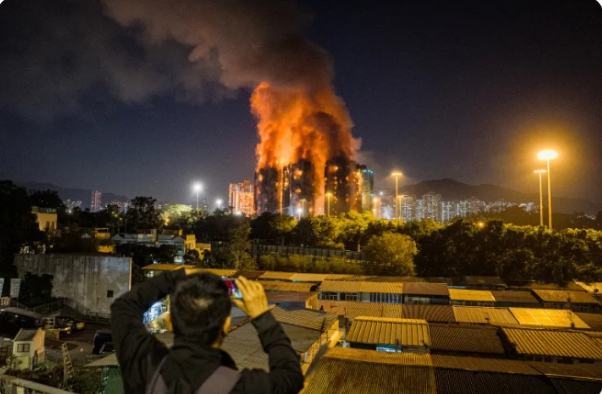
Officials say the Hong Kong high-rise fire has now claimed at least fifty-five lives, with responders bracing for higher numbers as rescue operations push into upper floors.
The catastrophe erupted after flames raced across bamboo structures used during renovation, igniting urgent debates around bamboo scaffolding safety and long-standing construction practices in densely populated neighbourhoods.
Witnesses described the Tai Po blaze as “apocalyptic,” saying heat radiated across courtyards while burning debris drifted through corridors, trapping families and blocking escape routes within minutes.
Residents recounted harrowing escapes, from smashing interior windows to crawling through dark smoke, with some saying they survived only because neighbours knocked on doors shouting frantic warnings.
In the first hours of disaster, families were split apart in stairwells filled with black smoke, fueling rising numbers of missing residents desperately sought by volunteers, police, and community groups.
One displaced resident said, “Everything happened so fast. The smoke was everywhere. We screamed for help because nobody heard a fire alarm ringing.”
Another survivor, his eyes still reddened, told reporters, “I thought it was a kitchen accident. Suddenly the walls were glowing orange. It felt impossible to breathe.”
Momentum of the flames shocked even veteran responders, who confronted extreme temperatures that made upper-floor access nearly impossible, intensifying core firefighting challenges throughout the day.
A firefighter described the scene as “one of the most complex operations we’ve ever undertaken,” referencing narrow access routes and falling panels from scaffolded exterior walls.
Authorities now believe the Hong Kong high-rise fire spread explosively when bamboo frames and green netting ignited, creating vertical channels that allowed flames to leap between buildings rapidly.
Experts say such rapid propagation raises “urgent and unavoidable questions” about bamboo scaffolding safety, particularly in buildings undergoing large-scale renovations near occupied apartments.
Investigators later alleged that portions of the protective mesh installed by a contracted firm failed to meet required fire standards, deepening public anger across Hong Kong.
Police detained three employees of the construction company, accusing them of gross negligence that contributed to the severity of the Tai Po blaze, prompting calls for stronger regulatory oversight.
Residents say windows had been sealed with foam during maintenance work, trapping heat and smoke inside. “They blocked our only escape,” a survivor lamented near a temporary shelter.
Chief Executive John Lee confirmed citywide inspections of all estates undergoing repair work, promising “absolute transparency” as structural and safety assessments expand across multiple districts.
While government officials stress ongoing rescue priorities, families of missing residents have grown increasingly anxious, clustered at shelters with photos and identification documents.
One man, waiting for word about his wife, said, “She tried to escape but couldn’t see anything. She went back inside. Now I can’t reach her at all.”
A grieving mother holding her daughter’s graduation photo pleaded with responders, saying, “Please find her. She’s strong. She would fight to survive. We’re praying.”
Taiwan’s president expressed condolences, noting that the scale of the Tai Po blaze shocked international observers who watched the city struggle with the unprecedented tragedy.
China’s Xi Jinping also issued a message urging “all-out efforts” to aid survivors and families, reinforcing Beijing’s close monitoring of the devastating scenes unfolding in Hong Kong.
As the fire continued burning into the next afternoon, thick plumes hovered above the high-rise complex, making visibility difficult and raising ongoing respiratory concerns for frontline responders.
Volunteers delivered food, water, and blankets to displaced residents, forming long lines outside schools and community centres converted into emergency shelters.
Animal rescue teams responded too, searching for trapped pets using oxygenated carriers, reuniting some owners with surviving cats, dogs, and turtles rescued from the smoky apartments.
Nearby residents described the sky turning orange as flames climbed exterior scaffolds. “We saw sparks shooting upward like fireworks, except everything was falling on people’s homes.”
The Hong Kong high-rise fire has become the deadliest since 1962, an incident many residents only knew from history books until this week’s catastrophe revived painful comparisons.
Experts warn that the incident highlights structural vulnerabilities across ageing estates, especially those built decades ago and now reliant on traditional renovation methods.
High-density living amplified risks during the Tai Po blaze, with thousands of residents sharing limited exit routes, many of which quickly became impassable once smoke filled the corridors.
The disaster also energized criticism of slow-moving safety reforms, with activists arguing that regulators have long ignored community concerns over bamboo scaffolding safety.
Even after firefighters contained major flames, smouldering heat pockets prevented teams from entering several upper floors, reinforcing persistent firefighting challenges facing ongoing recovery efforts.
Authorities report multiple apartments still inaccessible due to instability from melted support beams and dangerously weakened exterior walls.
“Temperatures inside are still extraordinary,” a rescue official noted. “Our teams rotate constantly to avoid heat exhaustion and smoke exposure.”
Drone footage from fire services showed collapsed sections of façade, shredded netting hanging from twisted bamboo poles, and shattered windows spanning several connected towers.
The number of missing residents remains agonizingly high, fueling fears among families who describe sleepless nights and emotional exhaustion while awaiting official lists.
Health workers stationed at shelters treat dehydration, chest irritation, and shock among evacuees, many of whom fled with nothing but the clothes they wore.
Dozens of elderly residents were carried out by neighbours in a human chain, a moment described by one witness as “a small miracle in a night of horrors.”
Community leaders called for long-term housing support for displaced families, warning that many units may remain uninhabitable for months or longer.
Economic fallout is expected as well, with several major firms donating millions for relief efforts, including Anta Group, Xiaomi, Tencent, and ByteDance.
For survivors, the emotional toll is only beginning. “Our home is gone,” one woman whispered at a shelter. “But I’m still searching for my friends. That’s all that matters now.”
The Hong Kong high-rise fire has left the city confronting painful lessons about preparedness, construction oversight, and the fragility of everyday life in crowded urban spaces.
Residents say recovery will require accountability and compassion in equal measure, reflecting a collective grief still unfolding across the city.
Many cling to hope as rescue teams ascend the remaining floors, praying for signs of life despite the staggering destruction carved by the flames.
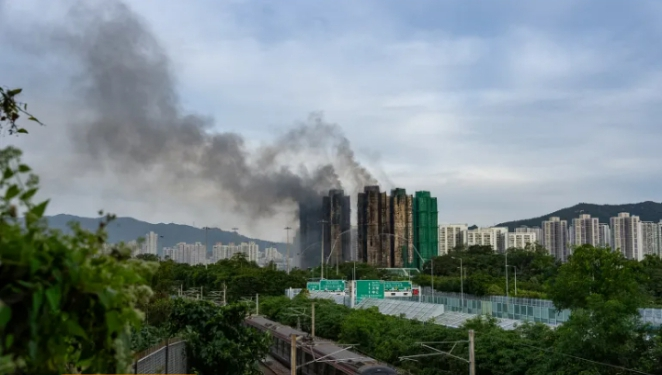
With the last pockets of the Tai Po blaze cooling, investigators and families alike demand clarity, closure, and reforms to prevent another tragedy from repeating.
As smoke slowly fades over the skyline, one truth remains: Hong Kong has endured a trauma that will shape its policies, architecture, and memory for generations.
About The Author