

Greenland has recorded its warmest January since modern measurements began, a climate milestone that is rapidly reshaping the Arctic island’s economic future and geopolitical relevance.
As temperatures rise at a pace far exceeding the global average, Greenland’s long-established fishing economy is facing mounting pressure, while prospects for mineral extraction and infrastructure development are gaining renewed attention.
Preliminary data from the Danish Meteorological Institute (DMI) show that average temperatures in Nuuk hovered above freezing in January, an unprecedented outcome for a month historically defined by deep Arctic cold.
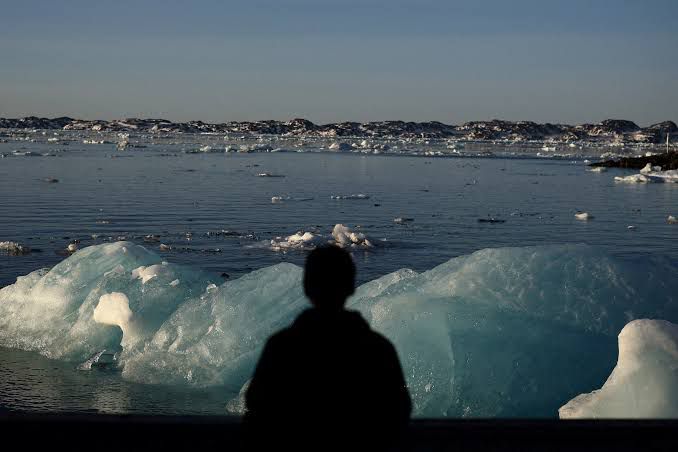
The shift is more than a statistical anomaly; it reflects a structural climate transformation that is already influencing livelihoods, investment decisions and international strategic calculations.
How Greenland temperature record climate change is reshaping the island
The Greenland temperature record climate change phenomenon is unfolding at an alarming speed. Scientists say the island is warming at roughly four times the global average, a trend that is altering sea ice patterns, ecosystems and the reliability of traditional transport routes.
In Nuuk, January temperatures averaged around 0.2 degrees Celsius, far above the long-term historical norm of nearly minus eight degrees.
According to climate researchers, this accelerated warming reduces the extent and thickness of winter sea ice, which has long served as a natural highway for communities and industries along Greenland’s rugged coastline.
“The signal is unmistakable,” said climate experts monitoring Arctic data. “Greenland is no longer warming gradually; it is undergoing rapid transformation that will have economic and social consequences.”
The Greenland temperature record climate change trend also highlights the Arctic’s growing vulnerability, with implications that stretch well beyond the island itself. Melting ice contributes to global sea-level rise and disrupts weather patterns across Europe and North America.
Fishing under pressure
Fishing remains the backbone of Greenland’s economy, accounting for nearly a quarter of gross domestic product and providing employment for roughly one in seven workers. Shrimp, halibut and cod dominate exports, sustaining public finances and coastal communities.
However, warming seas are threatening the delicate balance that supports these fisheries. Rising water temperatures can alter fish migration routes, breeding cycles and ecosystem stability. While some species may move northward, others could decline or disappear from traditional fishing grounds altogether.
Industry stakeholders say the uncertainty is already affecting planning and investment. Vessels designed for icy conditions may struggle to adapt, while processing facilities dependent on predictable supply chains face new risks.
Experts caution that the full economic impact of Greenland temperature record climate change on fisheries will only become clear over time, but early indicators suggest that adaptation will be costly and uneven.
Minerals emerge as strategic opportunity
As fishing faces headwinds, Greenland’s vast mineral potential is attracting growing interest. Geological surveys indicate the presence of numerous critical raw materials essential for clean energy technologies, defence systems and advanced manufacturing.
These include rare earth elements, graphite and other minerals deemed strategically important by Western governments seeking to reduce dependence on external suppliers. In a warming climate, the costs associated with extraction and shipping could fall, making previously marginal projects commercially viable.
Supporters argue that Greenland temperature record climate change, while environmentally alarming, could paradoxically lower logistical barriers to mining by shortening ice seasons and improving access to remote sites.
Yet challenges remain significant. Regulatory complexity, environmental safeguards and opposition from indigenous communities have historically slowed mining development.
Greenland’s political leadership must now balance economic diversification with environmental stewardship and social consent.
Tourism and daily life disrupted
The effects of warming are already being felt beyond heavy industry. Tourism operators, particularly those offering snowmobile, ski and ice-based excursions, report growing difficulty in delivering services during what was once peak winter season.
In Nuuk and other towns, inconsistent snow cover has forced businesses to cancel or redesign activities, undermining revenue and employment. Residents say traditional rhythms tied to ice and snow are becoming less predictable, complicating travel and cultural practices.
Such disruptions underscore how Greenland temperature record climate change is not a distant threat but a present-day reality reshaping daily life.
Geopolitics intensifies
Climate transformation has also heightened Greenland’s geopolitical profile. The island’s strategic location between North America and Europe, combined with its resource potential, has drawn renewed interest from global powers.
U.S. President Donald Trump has repeatedly argued that Greenland is vital to American security interests, citing its proximity to Arctic shipping lanes and missile defence routes. While Denmark retains sovereignty, Greenland’s autonomous government is increasingly navigating a complex landscape of external interest and internal self-determination
As ice retreats, new maritime routes could emerge, further elevating Greenland’s strategic importance in global trade and security planning.
Despite the apparent opportunities in minerals and infrastructure, Greenland’s transition away from fishing will not be straightforward. Mining projects require long lead times, substantial capital and stable policy frameworks.
Meanwhile, climate volatility threatens existing economic pillars faster than alternatives can be fully developed.
Economists warn that without careful planning, the benefits of climate-driven change could be unevenly distributed, exacerbating social inequality and environmental degradation.
For Greenland’s leaders, the challenge lies in steering the island through a period defined by Greenland temperature record climate change, ensuring resilience rather than dependence on a single new extractive industry.

A bellwether for the Arctic
Ultimately, Greenland’s experience serves as a stark indicator of how climate change is rewriting economic and geopolitical realities across the Arctic. What happens on the world’s largest island will likely foreshadow similar shifts elsewhere in the polar north.
As record temperatures redraw Greenland’s economic map, the choices made today will shape whether warming becomes a catalyst for sustainable development or a force of destabilisation in one of the planet’s most fragile regions.
About The Author


