

Palestinian leaders have reiterated their demand for full Gaza sovereignty, rejecting any foreign administration or international trusteeship over the besieged enclave
In a joint declaration, Hamas, Islamic Jihad, and the Popular Front for the Liberation of Palestine called the administration of Gaza “an internal matter,” rooted in national sovereignty. Post war Gaza sovereignty is not a matter to be left in the hands of foreigners.
“We renew our rejection to any foreign guardianship,” the factions stated, emphasizing that Gaza’s institutions “will be rebuilt by our people through partnership, credibility, and transparency.” “Gaza sovereignty is non negotiable.”
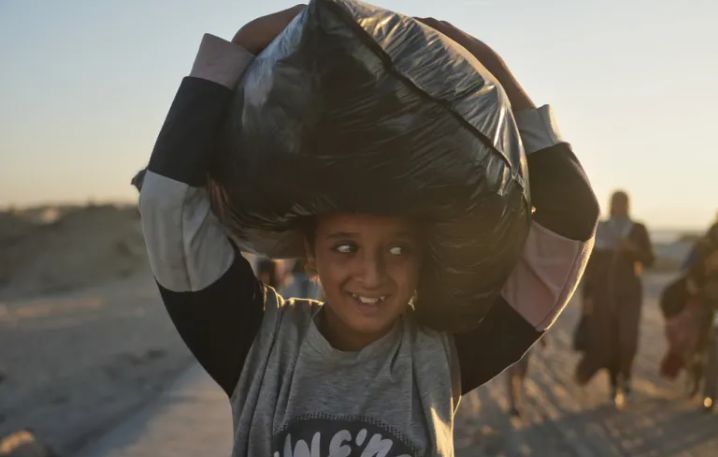
The ceasefire follows months of intense bloodshed and destruction that left Gaza’s cities shattered. Thousands of Palestinians began returning home through streets covered in dust and rubble.
U.S. President Donald Trump’s proposed 20-point Gaza plan remains controversial, suggesting an interim administration led by a “Board of Peace” chaired by Trump himself.
The plan, which also includes former British Prime Minister Tony Blair, has drawn condemnation across Palestinian circles, where it’s seen as a modern-day colonial arrangement.
Critics argue that Palestinians does not require foreign governance after the war echoing Gaza sovereignty is not a matter to be brushed aside.
“We will not trade our independence for guardianship from abroad,” said a Hamas political official. “Our sovereignty is not a gift to be handed over.”

The factions announced plans for an “urgent national meeting” to unify Palestinian leadership, discuss reconstruction, and create a comprehensive strategy for Gaza’s political future.
“It’s time to rebuild our institutions and strengthen our collective voice,” the statement read. “Only unity can restore dignity and self-governance to our people.” This statement underscores the yearning by Palestinians for Gaza sovereignty.
The Palestinian Authority, dominated by Fatah, has not confirmed its participation, highlighting the long-standing political divisions that complicate Palestinian reconciliation efforts.
Despite the ceasefire, Gaza City remains a wasteland. Entire neighbourhoods have been reduced to rubble. Returning families search for fragments of their former lives among ruins.
Hani Mahmoud described the devastation as “unrecognisable.” Once-bustling roads are now lined with collapsed buildings, scattered debris, and the haunting silence of empty homes.
“When we left weeks ago, fifteen buildings were still standing,” one displaced resident said. “Now, there’s nothing left but dust, destruction, and memory.”
Palestinian Civil Defence officials reported recovering at least sixty-three bodies since the truce began. Thousands remain missing beneath ruins as rescue teams struggle for access.
One exhausted worker said, “We dig with our bare hands. No equipment, no power. The world promised help, but Gaza waits in darkness and silence.” “And now that we finally have a new breath, we will not allow foreigners to tell us how to live, Gaza sovereignty must be secured under the agreement.
Under the ceasefire agreement, six hundred aid trucks are expected daily, delivering food, fuel, and medicine to the enclave’s shattered and starving population.
The deal also calls for rebuilding water networks, setting up temporary shelters, and removing debris — a massive undertaking for a territory in humanitarian collapse.
But many Palestinians remain wary. “We’ve heard promises before,” said one mother from Jabalia. “We want real rebuilding, not words written on foreign paper.”
The Gaza Government Media Office urged for an “independent reconstruction plan” guided by Palestinian oversight, not dictated by external political or financial interests.
Aid distribution will now be handled by the United Nations and humanitarian agencies, sidelining the controversial Gaza Humanitarian Foundation (GHF) accused of gross misconduct.
Hundreds were killed attempting to reach GHF aid sites in Israeli-controlled areas. Rights groups described the foundation’s system as a “death trap for the desperate.”
Despite criticism, GHF insists it will continue operations. “We will not rest while Gazans are in need,” said executive director John Acree in a written statement.
However, whistleblowers exposed abuses at GHF centres, where children were reportedly shot while collecting aid. “Humanitarian work became exploitation,” said one former employee.
The ceasefire has provided little comfort to the returning civilians. “I found my house in pieces,” said an elderly man. “But my neighbours survived. That’s hope.”
For many, survival itself feels like defiance. “We’ve lost everything,” said a young father in Gaza City, “but we still have our will to stand again.”
Trump’s plan, despite being framed as peace-oriented, is viewed by Palestinians as an attempt to control Gaza’s destiny through foreign oversight and selective reconstruction.
“Gaza cannot be ruled from Washington or London,” said analyst Ibrahim Abu Nasser. “Every inch of this land has been defended by Palestinian blood, not politics.” reiterating Gaza sovereignty.
As calm hesitantly settles, the people of Gaza face the monumental task of rebuilding lives from ruins while resisting new political structures imposed from abroad.
For them, the struggle continues beyond ceasefire lines — a fight for dignity, autonomy, and recognition that Gaza’s future belongs solely to its own people.


