Palestinian families began returning to northern Gaza City on Friday, navigating rubble-strewn streets, as Israeli air and helicopter attacks continued despite the signing of the first phase of a ceasefire deal.
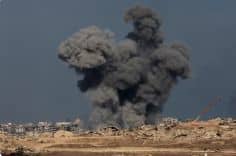
Smoke billowed across the skyline, evidence of overnight bombardments east of the city. Al-Ahli Hospital confirmed the recovery of seven bodies, highlighting the deadly cost of continued strikes even as peace talks advance.
Displaced residents from southern Gaza cautiously moved northward, their hope tempered by the roar of Israeli fighter jets and ongoing drone surveillance. Families waited anxiously for confirmation that the final Israeli units had withdrawn.
“They are waiting for the last Israeli tank to leave the region to enter the territory,” said Tareq Abu Azzoum, reporting from Nuseirat in central Gaza. Civilians remain reluctant to fully return until security is guaranteed.
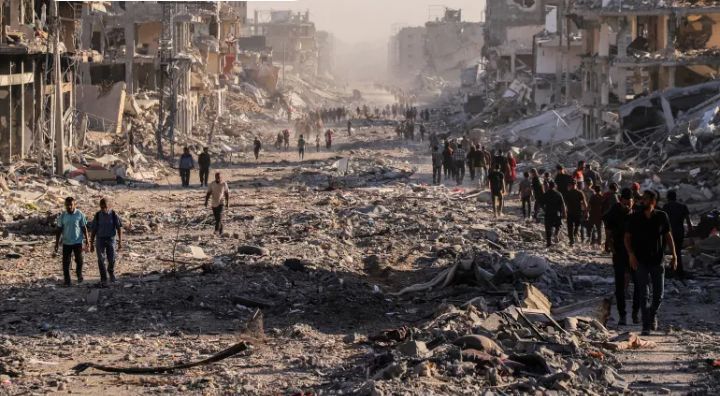
The northern corridor, once heavily patrolled by Israeli forces, remained tense. Civil defense officials urged families to avoid border zones, warning that lingering shelling and unexploded ordnance continue to pose life-threatening risks.
In southern Gaza, Khan Younis experienced sporadic airstrikes and tank shelling. Although no casualties were initially reported, local residents expressed fear that continued attacks could undermine fragile hopes for lasting peace.
Despite ongoing violence, the ceasefire agreement, ratified late Thursday, is expected to halt large-scale fighting within 24 hours. The first phase includes prisoner exchanges and the partial withdrawal of Israeli forces from key Gaza zones.
Hamas officials confirmed that the organization had received guarantees from international mediators, including the United States, that the ceasefire’s initial stage signals an end to the broader conflict. Khalil al-Hayya emphasized, “The war in Gaza has ended completely.”
The agreement also allows roughly 600 aid trucks to enter Gaza daily. Traffic will circulate freely along main corridors, easing humanitarian access and reconnecting divided communities after years of blockade and conflict.
Gaza residents previously displaced to Egypt will be permitted to return through the Rafah crossing, marking the first opportunity for many to see homes destroyed or occupied since the escalation began in October 2023.
Children, traumatized by years of violence, cautiously explored temporary shelters and partially damaged homes. Local educators noted that mental health support remains critical as schools reopen under fragile conditions, often amid unstable infrastructure.
Many parents described mixed emotions as they returned. Ahmed al-Hissi, accompanied by his three grandchildren, reflected, “We are relieved to come home, but fear lingers. Every explosion reminds us of what we have lost.”
The partial Israeli withdrawal highlights the fragile nature of the truce. Observers warn that any misstep, including continued air patrols or unmapped military activity, could reignite hostilities and undermine trust between civilians and authorities.
International mediators remain engaged, emphasizing monitoring and enforcement mechanisms. The 72-hour timeline for Hamas to release captives underscores the delicate sequencing intended to prevent renewed violence.
Local hospitals, still overwhelmed, continue treating injuries from past attacks and minor casualties from ongoing skirmishes. Medical staff report shortages of critical supplies, further stressing the need for unhindered aid access to sustain the ceasefire.
Israeli authorities have pledged to maintain phased troop withdrawals, but the timing remains uncertain. Analysts warn that delays could cause confusion and hamper the orderly resettlement of returning families.
Civilians continue documenting damage and displacement, sending images and reports through social media channels. These firsthand accounts are critical in shaping humanitarian responses and highlighting areas in urgent need of reconstruction and aid.
For residents of the Netzarim Corridor, the return represents a cautious reclaiming of normalcy. Yet the fear of mines, unexploded ordnance, and sporadic shelling keeps many families from fully resuming daily life.
Peace remains tenuous. Analysts note that while the ceasefire’s first phase is a significant diplomatic step, broader political resolutions regarding borders, security guarantees, and long-term governance are still unresolved.
Community leaders are urging patience, emphasizing that rebuilding trust and infrastructure will require sustained international engagement and consistent adherence to agreements by all parties involved.
As Gaza slowly awakens from weeks of displacement, families hope the temporary calm will extend. Civilians weigh the joy of returning home against the trauma etched by years of relentless conflict and uncertainty.
Emergency services have prepared contingency plans in case attacks resume. Civil defense teams patrol neighborhoods, clear debris, and mark hazardous areas to minimize civilian casualties during this delicate transition period.
The international community continues to monitor developments, stressing humanitarian aid and protective measures for civilians. Observers highlight the importance of transparency and accountability to maintain both peace and safety in Gaza.
Residents remain cautiously optimistic. As one mother noted while returning to her partially destroyed home, “We pray this time, it will be different. We pray our children can grow up without fear of war.”
Rebuilding efforts are set to begin as soon as the ceasefire is fully implemented. Aid organizations are preparing food, medical supplies, and educational materials, hoping to restore essential services disrupted by the conflict.
While the first phase of the ceasefire brings relief, uncertainty persists. Families and humanitarian actors alike acknowledge that patience, vigilance, and international support are essential to prevent the fragile peace from unraveling.
About The Author