El Mencho killed in a dramatic miltary operation has unleashed nationwide unrest, exposing Mexico’s fragile security balance and reigniting debate over cartel power and state authority.
Mexican defence officials confirmed elite forces eliminated the fugitive drug lord during a raid in Jalisco, describing the mission as “precise, intelligence-driven, and unavoidable under hostile fire.”
Born Nemesio Rubén Oseguera Cervantes, the cartel leader transformed organised crime through fear, discipline, and paramilitary tactics that reshaped Mexico’s criminal landscape over two decades.
Authorities said the operation occurred near Tapalpa, where soldiers encountered heavy resistance, prompting aerial support and coordinated ground manoeuvres to neutralise multiple armed accomplices.
A defence ministry spokesperson stated, “Our forces were attacked first and responded proportionately, prioritising civilian safety while dismantling a critical criminal command structure.”
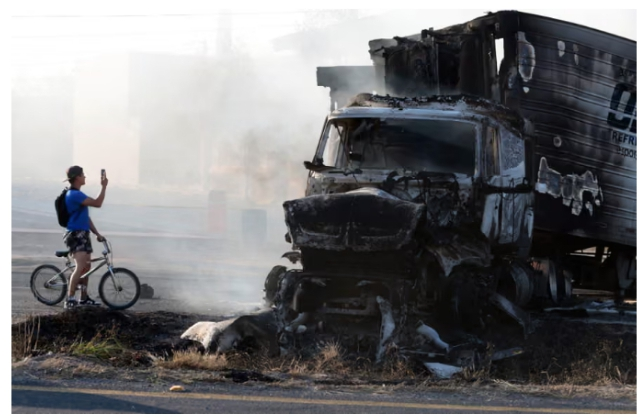
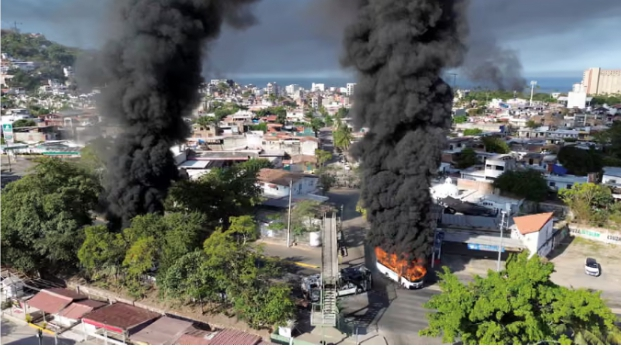
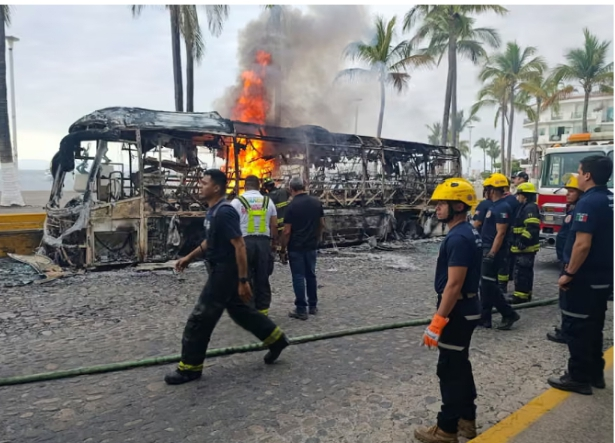
Within hours, violent reprisals erupted across several states, with burning vehicles, armed roadblocks, and attacks on infrastructure signalling the cartel’s remaining operational reach.
Jalisco, Guanajuato, Michoacán, and Guerrero witnessed coordinated disruptions, underscoring how deeply cartel networks remain embedded despite leadership decapitation strategies.
Security analysts described the chaos as “textbook retaliation,” designed to demonstrate strength, intimidate authorities, and maintain loyalty among fragmented regional cells.
The deceased leader commanded the Jalisco New Generation Cartel, widely regarded as Mexico’s most militarised criminal organisation.
Unlike older trafficking syndicates, CJNG relied on open confrontation, propaganda videos, and battlefield weaponry, blurring lines between organised crime and insurgent behaviour.
Mexican officials acknowledged the group’s capacity for violence but framed the killing as a “historic blow” against cartel dominance nationwide.
“This man represented extreme cruelty and destabilisation,” said a senior federal security official. “Removing him disrupts coordination, financing, and strategic planning.”
Scenes of panic unfolded in Guadalajara, where airport evacuations and suspended transport services reflected widespread fear of reprisals.
Residents described empty streets and shuttered businesses as authorities urged civilians to remain indoors until security forces restored order.
Videos circulated online showing armed men torching petrol stations and commandeering vehicles, images that quickly spread alarm beyond Mexico’s borders.
Airlines cancelled dozens of flights, while tourism officials warned travellers to avoid affected regions until stability returned.
The United States had long sought the cartel leader’s capture, offering multimillion-dollar rewards and designating him a major fentanyl trafficker.
A US official commented, “This operation represents meaningful cooperation and demonstrates the shared commitment to dismantling transnational criminal organisations.”
American intelligence reportedly provided “complementary information,” though Mexican authorities stressed operational control remained exclusively national.
The killing renewed debate over bilateral security cooperation and sovereignty, a sensitive topic amid heightened political scrutiny.
Mexico’s president, Claudia Sheinbaum, urged calm, emphasising coordination among federal and state governments.
“We must remain united, informed, and resilient,” she said. “Our institutions are responding decisively to protect the population.”
Critics argue cartel leadership removals often trigger violent power struggles, potentially increasing short-term instability rather than reducing crime.
Previous takedowns, including rival syndicate figures, produced similar waves of retaliation without permanently weakening trafficking operations.
Supporters counter that eliminating top commanders disrupts logistics, funding streams, and internal cohesion over time.
Security expert Alejandro Hope noted, “There is no single solution, but sustained pressure matters. Cartels fear fragmentation more than confrontation.”
The fallen leader’s rise from police officer to global trafficker symbolised systemic corruption challenges facing Mexican law enforcement institutions.
Investigators linked his organisation to extortion, fuel theft, migrant smuggling, and targeted assassinations of officials and journalists.
Despite international notoriety, he maintained mystique by avoiding public appearances, relying on layered security and loyal enforcers.
His death leaves a dangerous vacuum, with analysts predicting violent succession struggles among lieutenants and rival groups.
Local governors deployed additional troops, while national guard units secured highways, ports, and energy facilities.
Schools closed across several states as families sheltered indoors amid uncertainty and conflicting information.
Canadian and European governments issued travel advisories, warning citizens to monitor developments closely.
Mexico’s business community expressed concern over economic disruption, particularly in tourism-dependent coastal cities.
Puerto Vallarta hoteliers reported mass cancellations, fearing prolonged instability could damage recovery prospects.
Human rights groups urged transparency, calling for independent investigation into civilian harm during security operations.
A spokesperson stated, “Accountability strengthens legitimacy, even when confronting violent criminal organisations.”
Officials denied civilian casualties during the raid but acknowledged injuries among security personnel.
International observers described the event as Mexico’s most significant anti-cartel action in over a decade.
Yet many citizens expressed scepticism, recalling past victories followed by renewed violence.
“Another boss falls, but the system remains,” said one Guadalajara resident. “We want peace, not announcements.”
Policy analysts argue sustainable security requires judicial reform, anti-corruption enforcement, and economic opportunity.
Without structural change, they warn, criminal enterprises adapt faster than institutions.
For now, El Mencho killed stands as both a tactical victory and strategic test for Mexico’s long war against cartels.
Whether this moment signals lasting change or another violent cycle remains uncertain, as the nation watches its streets with apprehension.
Read also:
Iran nuclear compromise: Iran offers to lower uranium enrichment in nuclear talks