Ryan Wedding, the former Canadian Olympic snowboarder turned alleged drug kingpin, has been arrested after voluntarily surrendering at the US consulate in Mexico City.
He is scheduled to appear in court in California on Monday, where he will face a host of criminal charges, including drug trafficking, conspiracy to commit murder, witness tampering, and money laundering.
Wedding, 44, had been sought by the FBI and the Royal Canadian Mounted Police (RCMP) for nearly a decade for his alleged role in orchestrating one of the most prolific and violent drug-trafficking networks in North America.
US authorities allege that his organization moved nearly 60 metric tons of cocaine annually from Mexico into Los Angeles using a sophisticated network of semi-trucks.
Before his alleged criminal activity, Wedding was a rising star in Canadian snowboarding. Competing in multiple Winter Olympics, he earned recognition for his skill and athleticism, representing Canada on the world stage.
However, his transition from athlete to alleged crime figure has shocked both the sports and law enforcement communities.
Analysts note that Wedding’s high-profile background may have initially aided his ability to operate under the radar. “His celebrity status likely gave him a layer of protection and access that typical traffickers don’t have,” said a law enforcement official familiar with the investigation.

The arrest is the culmination of Operation Giant Slalom, a joint effort between the FBI and RCMP launched in 2023. The operation involved years of intelligence gathering, surveillance, undercover operations, and cooperation with Mexican authorities.
Investigators tracked the movement of drugs across multiple states and international borders, uncovering a sophisticated logistics network.
Wedding is accused of personally orchestrating the distribution and collection of shipments while maintaining layers of intermediaries to insulate himself from direct involvement.
In March 2025, he was added to the FBI’s Most Wanted List, with a $15 million reward offered for information leading to his capture.
FBI officials previously compared him to notorious figures such as Pablo Escobar and Joaquín “El Chapo” Guzmán, citing the scale of his alleged enterprise.
According to Mexican authorities, Wedding voluntarily surrendered at the US consulate in Mexico City on Wednesday. He had been evading law enforcement for almost a decade and was allegedly protected by the Sinaloa cartel during his time on the run.
US authorities quickly extradited him to California, where he remains in custody. The FBI director’s personal presence in the field during the arrest is rare, underscoring the political and operational importance of apprehending Wedding.
Alejandro Rosales Castillo, another high-profile fugitive and one of the FBI’s 10 most wanted, was also captured in Mexico around the same time. Castillo had been in hiding since 2017 after allegedly murdering a woman in North Carolina.
Wedding faces multiple serious charges in the United States. Authorities allege that he ordered the murder of a key FBI witness and was responsible for multiple killings, including a couple mistakenly targeted in a case of identity confusion.
Additionally, US investigators claim Wedding’s organization handled massive cocaine shipments, though analysts caution that the indictment details smaller, specific cases rather than the full 60-ton figure publicized by authorities.
Authorities also seized assets tied to Wedding’s alleged operations, including a Mercedes sports car worth $15 million and motorcycles valued at $40 million.
The operation highlights the importance of collaboration between international law enforcement agencies. Michael Duheme, head of the RCMP, emphasized that “no single country can dismantle complex drug-trafficking networks alone.”
The FBI director met with Mexican security officials in Mexico City before the arrest, described as “pre-planned” talks. The cooperation demonstrates the growing need for cross-border coordination in tackling organized crime.
Wedding’s arrest has drawn widespread attention due to his high-profile past as an Olympian and the alleged scale of his criminal enterprise.
Social media has seen a mix of astonishment and debate, with some questioning how a former athlete could allegedly rise to such notoriety.
Experts note that media coverage has amplified Wedding’s reputation as a major kingpin.
Cecilia Farfán-Méndez, a crime analyst, noted that the public perception of Wedding as a massive trafficker may exceed the reality reflected in court documents. “While the media presents him as a high-profile figure, the indictment cites more modest shipments of cocaine,” she said.
Read also: Russia’s high-speed attack drones raise new alarm for Ukraine’s air Defences
Wedding’s upcoming court appearance is expected to draw significant attention. Legal analysts suggest that his voluntary surrender could be used in his defense to negotiate more favorable terms, though the severity of the charges makes leniency uncertain.
The arrest also sends a broader message regarding the US-Mexico commitment to combatting organized crime.
US authorities have repeatedly emphasized the need for “tangible results” in curbing drug trafficking, and the apprehension of a high-profile figure such as Wedding is a significant milestone.
While the arrest represents a law enforcement victory, experts caution that its long-term effect on cocaine supply chains may be limited. “These arrests are crucial for justice and law enforcement, but whether they significantly disrupt the drug market is another matter,” said Farfán-Méndez.
Wedding’s alleged ties to the Sinaloa cartel, one of Mexico’s most powerful criminal organizations, further complicate efforts to dismantle networks. Analysts say that even with Wedding removed from the scene, the cartel and associated trafficking operations are likely to continue.
The case of Ryan Wedding stands at the intersection of sports, crime, and international law enforcement. His journey from Olympic athlete to alleged kingpin highlights the complexity of transnational crime and the challenges authorities face in pursuing high-profile fugitives.
As Wedding awaits his court appearance in California, law enforcement agencies continue to investigate his organization, aiming to uncover the full scope of its operations and the involvement of other actors across borders.
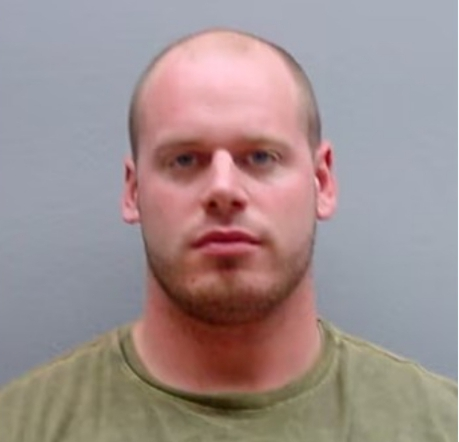
The arrest marks a significant chapter in the ongoing fight against organized crime and demonstrates the growing reach and cooperation of international law enforcement in addressing transnational criminal networks.
About The Author