IITA urges FG to prioritise Nigeria’s seed yam value chain for agricultural transformation
The IITA urges FG to prioritise Nigeria’s seed yam value chain as stakeholders push for policy reforms and innovation-driven strategies to unlock the full economic potential of one of the country’s most valuable food crops.
This call was made by the International Institute of Tropical Agriculture during the National Yam Advocacy Summit held in Abuja. The summit brought together policymakers, researchers, development partners and farmer groups to deliberate on strengthening yam production through improved seed technologies and institutional backing.
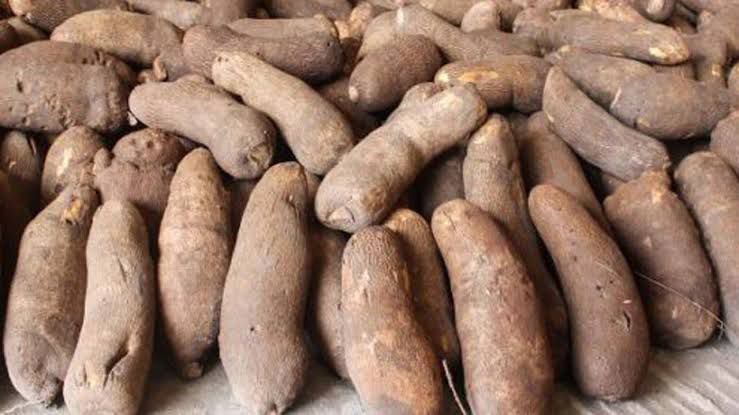
Seed system reform at the centre of discussions
Speaking at the event, the Deputy Director-General, Partnerships for Delivery and Scaling at IITA, Tahirou Abdoulaye, emphasised that a robust seed system is fundamental to modernising Nigeria’s yam sector.
According to him, yams remain Nigeria’s most economically significant food crop, yet production challenges linked to poor-quality planting materials continue to limit output and profitability.
The IITA urges FG to prioritise Nigeria’s seed yam value chain to ensure farmers gain access to improved, disease-free seed varieties capable of boosting yields.
He noted that an efficient seed framework would not only enhance availability but also improve processing prospects and expand export opportunities.
With growing demand from Nigerians in the diaspora and markets in the Caribbean, Abdoulaye said Nigeria stands at a strategic point to strengthen its global competitiveness.
Debunking myths around yam multiplication
One of the critical issues raised at the summit was the long-held belief that yam has a low multiplication rate, making large-scale seed production difficult. Abdoulaye said years of scientific research have disproved that assumption.
He highlighted innovations such as Single-Node Cutting, also known as leaf-bud cuttings, as transformative technologies that allow rapid multiplication of high-quality seed yams using minimal inputs.
These methods, he explained, are adaptable to different agro-ecological environments and accessible to smallholder farmers.
By scaling such technologies, the IITA urges FG to prioritise Nigeria’s seed yam value chain in a way that bridges yield gaps, reduces post-harvest losses and strengthens value addition across the supply chain.
Addressing yield gaps and production costs
Current yam yields in Nigeria average between eight and 10 tonnes per hectare, far below the potential of about 30 tonnes per hectare under optimal conditions.
Experts attribute this gap largely to the use of poor-quality planting materials and weak regulatory systems governing seed certification.
The Head of Station at IITA Abuja, Beatrice Aighewi, explained that the Seed System Innovation for Vegetatively Propagated Crops in Africa initiative is introducing multiplication techniques that enable farmers to generate clean planting materials from small mother plants.
She stressed that seed accounts for as much as 60 per cent of yam production costs, making it the single most expensive input. Improving seed efficiency, she said, would significantly reduce financial pressure on farmers while raising productivity.
As the IITA urges FG to prioritise Nigeria’s seed yam value chain, stakeholders argue that formalising seed production systems could create new agribusiness opportunities, particularly for youth and rural entrepreneurs engaged in certified seed multiplication.
Policy backing and regulatory oversight
Beyond technology adoption, experts at the summit called for stronger policy frameworks and quality assurance mechanisms. They said regulatory clarity is essential to ensure that improved varieties reach farmers without distortion or compromise.
IITA officials disclosed ongoing collaboration with the Federal Ministry of Agriculture and Food Security to align research outputs with national agricultural priorities. The goal, they said, is to integrate scientific innovation into mainstream farming systems.
A senior programme officer at the Bill & Melinda Gates Foundation, Audu Grema, described yam as one of Nigeria’s most profitable crops whose economic value remains underexploited. He urged stakeholders to treat the crop strategically and ensure farmers benefit from both technology and structured market access.
Export prospects and international markets
The President of the National Association of Yam Farmers, Processors and Marketers, Simon Irtwange, commended the repeal of the 1986 yam export prohibition, describing it as a significant policy shift.
He praised President Bola Tinubu for signing the repeal into law, noting that it opens new doors for international trade.
Irtwange recalled that Nigeria recorded its first structured yam export to the United Kingdom in 2017, marking a milestone in repositioning the crop as a global commodity. With improved seed systems and better coordination, he said Nigeria could significantly expand exports and capture niche markets abroad.
As the IITA urges FG to prioritise Nigeria’s seed yam value chain, stakeholders maintain that export readiness will depend heavily on quality standards, traceability systems and consistent supply volumes.

A roadmap for transformation
Experts concluded that transforming the yam value chain requires coordinated action across research institutions, policymakers, farmers, processors and exporters.
Innovation alone, they warned, will not suffice without enabling regulations and sustained investment.
The summit ended with renewed calls for government commitment to mainstream improved seed technologies and institutionalise quality control systems.
If implemented effectively, the reforms could double productivity, create rural employment, enhance food security and strengthen Nigeria’s standing in international agricultural markets.
With mounting global demand and emerging technologies already available, stakeholders insist the time to act is now.