

The Federal Government has declared that President Bola Tinubu’s administration is ushering in a new era for Nigeria’s highway infrastructure — one focused on durability, innovation, and long-term economic value rather than short-term fixes.
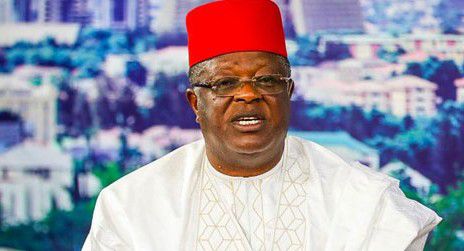
The Minister of Works, David Umahi, made this known during an inspection of the Abuja–Kaduna–Zaria–Kano Expressway, where he outlined the government’s strategy to end the country’s cycle of road failures through modern engineering methods and sustainable materials.
According to Umahi, the new approach would ensure that future highways last between 50 and 100 years, dramatically reducing the nation’s recurrent maintenance costs.
He described the plan as part of President Tinubu’s Renewed Hope Agenda to deliver infrastructure that stimulates commerce and development across all regions.
“We are building roads that will stand the test of time, roads that can last up to a century,” Umahi said.
“The era of patching and reconstruction every few years is over. Nigeria must adopt technologies that guarantee value for every naira spent.”
Redefining Nigeria’s Highway Infrastructure
The Works Minister explained that the new design standards represent a significant shift from the old “cut-and-fill” method that contributed to premature failures.
Instead, the ministry is adopting recycling, milling, and concrete reinforcement techniques to enhance pavement strength and extend service life.
Umahi said the system reuses existing asphalt layers, which are already compacted by years of traffic, giving them higher bearing capacity than fresh laterite or subgrade materials.
“When you recycle, you’re not just saving cost — you’re improving strength,” he noted.
“We are insisting on stabilising and strengthening existing layers instead of removing materials that remain structurally sound.”
He disclosed that the Abuja–Kaduna section, handled by Infiouest International Limited, showcases the government’s new construction model.
The contractor, he said, had deployed over 300 pieces of heavy-duty equipment and maintained strict adherence to international standards.
Transition from Asphalt to Concrete Roads
A key feature of the administration’s plan is the gradual transition from asphalt to rigid (concrete) pavement, especially for highways that carry heavy truck traffic. Umahi said concrete roads would significantly cut long-term maintenance costs while improving safety and performance.
“Concrete is durable and more economical over time,” he explained.
“Our focus is to deliver highways that can handle the realities of our transport system — from extreme weather to constant heavy loads.”
He added that where potholes or structural defects appear, the ministry now replaces entire sections with stabilised stone bases and properly compacted layers instead of simply patching visible damage.
This, he said, ensures long-term stability and prevents water from undermining the road structure.
Accountability and Quality Control
Umahi warned contractors and engineers against the common practice of discarding asphalt layers that remain in good condition, describing it as “technically unsound and wasteful.”
“Asphalt has a lifespan of about 25 years, but if milled and recycled correctly, it can serve longer.
We must end the wasteful culture of tearing down good materials just to start afresh,” he said.
He emphasised that strict field inspections are now part of every project to ensure contractors meet the new engineering benchmarks.
“We will only pay for quality. Every section must be inspected, verified, and certified before approval,” Umahi stated.
The Minister of State for Works, Bello Mohammed Goronyo, commended Umahi’s reforms, noting that Tinubu’s emphasis on durable infrastructure reflects his broader vision to turn roads into national assets rather than recurring liabilities.
Officials from the Ministry of Works confirmed that the Abuja–Kaduna–Zaria–Kano Expressway, a 375-kilometre dual carriageway, remains one of Nigeria’s most important trade corridors — linking the Federal Capital Territory with key northern markets.
The project, initially awarded in 2018 and partly financed through the Presidential Infrastructure Development Fund, had experienced delays due to security and design challenges.
However, Umahi said the redesign and funding support under the current administration had accelerated progress.
“This road is more than asphalt and concrete. It represents trade, security, and national unity,” the minister said.
Once completed, the highway is expected to reduce travel time by more than 50 percent, lower vehicle operating costs, and strengthen logistics between Abuja and the North-West region.
The Chairman of Infiouest International Limited, Joseph Aboue Jaoude, reaffirmed the company’s commitment to delivering high-quality work that meets both local and global standards.
He said the ongoing expressway project had become a benchmark for engineering excellence in Nigeria’s road sector.
Similarly, the President’s Special Assistants on Community Engagement, Abiodun Essiet (North Central) and Abdullahi Tanko Yakasai (North West), applauded the initiative, saying it reflects Tinubu’s promise to deliver infrastructure that enhances productivity and safety.
Nigeria’s road network, estimated at over 195,000 kilometres, has long struggled with poor maintenance and substandard construction, leading to frequent accidents and huge fiscal losses.
The current reforms, experts believe, mark a decisive move toward reversing decades of inefficiency.
Umahi concluded that the Federal Government remains committed to building sustainable and world-class road networks under President Tinubu’s leadership.
“This is the foundation of modern Nigeria’s highway infrastructure — one that will serve generations to come,” he declared.


