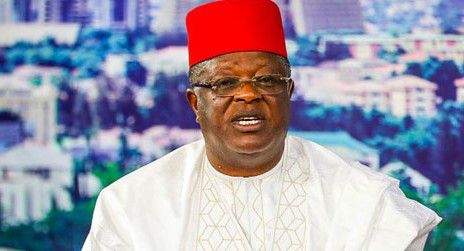
The Federal Government releases ₦2.3 billion to clear university salary arrears and promotion backlogs, showing strong commitment to academic staff welfare.
The Federal Government has approved the release of ₦2.3 billion to settle university salary arrears and promotion backlogs for academic and non-academic staff across public universities in Nigeria.
Minister of Education, Tunji Alausa, announced the development in Abuja, describing the payment as a strategic step by President Bola Ahmed Tinubu’s administration to clear inherited debts and improve the welfare of education workers.A
ccording to him, the payment—tagged Batch 8 arrears—demonstrates the administration’s commitment to ensuring fairness, accountability, and stability within the tertiary education system.

In a statement by the Ministry’s Director of Press and Public Relations, Mrs. Folasade Boriowo, Dr. Alausa confirmed that the ₦2.311 billion disbursed through the Office of the Accountant-General of the Federation (OAGF) would soon reflect in the accounts of universities.
“Beneficiary institutions should begin to receive payment alerts anytime from now,” the statement assured.
The Minister explained that the disbursement of university salary arrears was not just about paying debts but about restoring confidence in government commitments. He emphasized that the move reflects a broader plan to foster industrial peace and rebuild trust between the government and university-based unions.
“This payment marks another milestone in President Tinubu’s efforts to stabilize the education sector,” Dr. Alausa said.
“We are determined to end the era of unpaid arrears that disrupt academic calendars and demotivate workers.”
He also revealed that the government, through the Ministry of Finance and the OAGF, is finalizing the release of third-party deductions and pension remittances to the Nigerian University Pension Management Company (NUPEMCO), which will further strengthen financial accountability across institutions.
As part of its long-term reforms, the government has approved the full mainstreaming of Earned Academic Allowances (EAA) into the monthly salaries of university workers beginning next year.
Dr. Alausa said this reform would end delays associated with periodic allowances and ensure predictable and sustainable funding for university staff.
“By integrating these allowances into the regular payroll, we are institutionalizing fairness, transparency, and efficiency,” he explained.
“This ensures that every deserving staff member receives what is due without bureaucratic bottlenecks.”
The minister also confirmed that the Federal Government had released funds under the Needs Assessment of Nigerian Universities, a program aimed at improving infrastructure, research capacity, and learning environments.
He added that corresponding budgetary provisions have been made to sustain the initiative in the coming fiscal year.
“These interventions reflect our administration’s commitment to quality education and workforce motivation,” Dr. Alausa noted.
“Improving staff welfare and upgrading learning facilities remain at the core of our education reform agenda.”
Dr. Alausa reiterated that while the Federal Government remains deeply committed to improving the welfare of university workers, all agreements with unions will be guided by financial reality and sustainability.
He disclosed that in the last 26 months, the government has cleared a significant portion of inherited financial obligations while maintaining continuous dialogue with unions.
“The Ministry assures that every engagement is conducted in good faith,” he said.
“We are prioritizing agreements that align with available budgetary provisions to ensure long-term stability.”
The minister acknowledged the critical role of the Yayale Ahmed Negotiating Committee, which serves as a bridge between the Federal Government and university unions. He stated that the committee continues to facilitate open, respectful, and honest dialogue toward resolving welfare-related concerns.
“Negotiations are being conducted with sincerity and mutual respect,” he affirmed. “Our goal is to build a system where industrial peace and staff welfare are protected without compromising fiscal discipline.”
Dr. Alausa praised President Tinubu for his steadfast support of education reforms. He said many issues that had lingered for decades were now being addressed decisively through coordinated fiscal interventions.
He noted that the government’s proactive measures, including the settlement of university salary arrears, are part of the President’s Renewed Hope Agenda to rejuvenate Nigeria’s tertiary institutions.
“We are not just paying debts; we are rebuilding trust and strengthening institutions,” the minister added.
The Minister expressed optimism that settling the university salary arrears and mainstreaming allowances will restore stability and industrial harmony in public universities.
He emphasized that motivated staff, predictable funding, and transparent management are key to reviving Nigeria’s education system.
“With these reforms, we are building a university system that works for students, lecturers, and the nation,” he said.
“This administration’s goal is to create a sustainable framework that guarantees timely payments, promotes academic excellence, and enhances the global competitiveness of Nigerian universities.”
Dr. Alausa concluded by affirming that all government actions are aligned with budgetary priorities to ensure consistency and financial prudence.
He expressed confidence that the ongoing reforms will strengthen the foundations of higher education and position Nigerian universities for growth and innovation.
More news at ireport247news
About The Author