The Federal Government has officially kicked off the procurement process for the long-awaited port modernisation outside Lagos, a move aimed at balancing maritime infrastructure development across Nigeria and improving logistics efficiency nationwide.
This strategic step, announced by the Minister of Marine and Blue Economy, Adegboyega Oyetola, marks a critical phase in Nigeria’s effort to upgrade its ports and make them globally competitive.
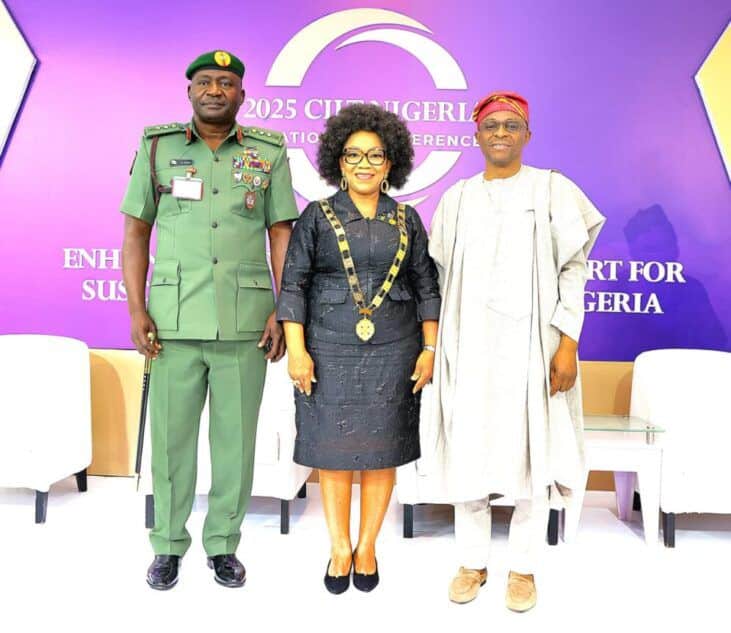
Oyetola made the disclosure during the 2025 Chartered Institute of Logistics and Transport (CILT) Nigeria Conference held in Lagos, themed “Enhancing Logistics and Transport for a Sustainable Blue Economy in Nigeria.”
Represented by the Managing Director of the Nigerian Ports Authority (NPA), Dr. Abubakar Dantsoho, Oyetola said the Federal Government was determined to ensure that maritime infrastructure growth was not concentrated in Lagos alone, but extended to other strategic port locations across the country.
Port Modernisation Outside Lagos to Drive Balanced Growth
According to the minister, the government has already approved a $1 billion port modernisation project for Lagos, covering major terminals in Apapa and Tin Can Island.
However, he stressed that the new procurement for port modernisation outside Lagos is essential to achieve balanced development and boost operational efficiency in Nigeria’s other seaports, including Calabar, Warri, Port Harcourt, and Onne.
“These initiatives are part of our national commitment to modernising port operations and improving cargo-handling capacity across all maritime gateways,” Oyetola said.
He added that the goal was to enhance the competitiveness of Nigerian ports, reduce turnaround time for vessels, and promote paperless, technology-driven systems that minimize corruption and administrative bottlenecks.
Technology and Transparency at the Core of Reforms
The minister emphasised that digitalisation remains at the heart of the port modernisation outside Lagos project.
By deploying advanced technology, he said the government seeks to streamline logistics operations, facilitate seamless documentation, and improve service delivery.
“Our vision is a port system that is efficient, transparent, and fully integrated into the global maritime network.
Through automation, we can eliminate unnecessary human interference and create a business-friendly environment that attracts investors,” he noted.
Oyetola also reaffirmed the ministry’s ongoing collaboration with private investors, logistics companies, and development partners to ensure sustainable funding and smooth execution of the modernisation plan.
Zero Piracy and Blue Economy Sustainability
Highlighting recent milestones, Oyetola commended the success of the Deep Blue Project, which has drastically reduced piracy on Nigerian waters.
He revealed that Nigeria has maintained zero piracy incidents for over three years, a record that has restored global confidence in the country’s maritime domain.
“With improved security, we are creating a safe and secure environment for shipping, trade, and investment.
This stability is crucial for the success of port modernisation initiatives, especially those outside Lagos,” he added.
He further revealed that the Federal Government has developed a 10-year National Blue Economy Strategy, designed to harmonize policies in maritime transport, fisheries, and coastal resource management under a sustainable framework.
“Our goal is not just growth, but inclusive and environmentally responsible growth,” the minister stated.
He urged industry stakeholders to adopt green transport technologies, promote capacity development, and support the ministry’s data-driven planning efforts for the logistics and transport sectors.
Private Sector Participation and Policy Alignment
Speaking on the economic implications of the port modernisation outside Lagos, Oyetola said the government was opening the maritime sector to increased private sector participation through public-private partnerships (PPPs) and investment incentives.
“The future of Nigeria’s port system lies in strategic partnerships.
By collaborating with the private sector, we can inject innovation, efficiency, and accountability into the system,” he said.
The minister assured that all modernisation projects would adhere to global environmental standards and social safeguards to ensure sustainability and community benefits.
CILT Commends Reforms, Reports Financial Growth
In her address, the President of the Chartered Institute of Logistics and Transport (CILT) Nigeria, Mfon Usoro, praised the Federal Government’s renewed focus on the Blue Economy, describing the port modernisation outside Lagos initiative as a major step toward equitable national development.
Usoro disclosed that the institute’s internal reforms had also begun yielding positive results, citing a significant rise in revenue and stronger financial discipline over the past four years.
“All financial disbursements are now reviewed by the Finance, Budget, and Audit Committee, ensuring accountability and transparency. The results have been remarkable,” she said.
Founded in 1958, CILT Nigeria operates under the international CILT network based in the United Kingdom and serves as a professional body for logistics and transport experts in the country.
The 2025 conference brought together industry leaders, policymakers, and academics to deliberate on sustainable transport systems, digital transformation, and blue economy prospects.
Building the Future of Nigeria’s Maritime Sector
As the Federal Government intensifies the procurement phase for port modernisation outside Lagos, stakeholders have expressed optimism that the project will reshape Nigeria’s logistics landscape, reduce congestion at Lagos ports, and enhance the country’s regional trade competitiveness.
With security stabilised, digital transformation underway, and renewed private sector confidence, analysts say Nigeria’s maritime industry is on the verge of a major turnaround that could unlock billions in trade and investment opportunities.