⁶Billionaire businessman and energy investor, Femi Otedola, has commended President Bola Ahmed Tinubu for introducing a 15% import duty on petrol and diesel, describing the move as a “bold and visionary policy” designed to protect the billions of dollars invested in Nigeria’s refining sector and strengthen the country’s industrial base.
In a statement shared on his verified X (formerly Twitter) account on Monday, Otedola said the new import tariff marks a turning point for Nigeria’s downstream oil market, ensuring that local refineries—such as the Dangote Refinery and other indigenous producers—operate under fair and competitive conditions.
According to him, the 15% import duty on petrol is not just an economic policy but a strategic step toward achieving Nigeria’s long-term industrial and energy independence goals.
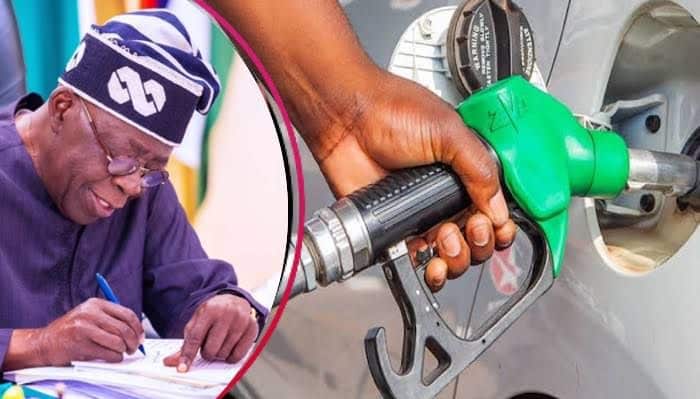
Otedola Hails Tinubu’s Economic Vision
“I commend President Bola Ahmed Tinubu for his bold and decisive step in implementing a 15 per cent import tariff on petrol and diesel,” Otedola stated.
“This policy represents a crucial move towards safeguarding local industries that have made substantial investments in domestic production and refining capacity.”
He explained that Nigeria’s industrial base has long been undermined by the importation of cheap and substandard goods, which weakened major sectors such as textiles, automobile assembly, and manufacturing.
The same, he warned, could have happened to the country’s refining industry if immediate protective action had not been taken.
“We cannot afford to allow history to repeat itself within the energy sector, particularly now that Nigeria possesses the capacity to meet its petrol and diesel requirements locally,” he added.
How the 15% Import Duty on Petrol Supports Local Refiners
The focus keyword — “15% import duty on petrol” — continues to dominate national debate, as experts say the policy will serve as a safety net for local investors and ensure the long-term sustainability of Nigeria’s energy infrastructure.
Otedola, who is also the chairman of Geregu Power Plc, emphasised that the tariff will help stabilise pricing in the domestic energy market, reduce reliance on imports, and ultimately create jobs.
“This tariff not only protects the billions of dollars already invested in refining infrastructure but also underscores the government’s commitment to driving industrialisation, creating employment, and building a sustainable energy future for our nation,” he said.
He further added that establishing a stable and predictable pricing system through the 15% import duty on petrol would help curb inflation and strengthen Nigeria’s fiscal outlook.
Industry Reactions: Divided Opinions on the New Tariff
The federal government’s decision has generated mixed reactions across the oil and business sectors.
While major energy analysts and economists, including Muda Yusuf, CEO of the Centre for the Promotion of Private Enterprise (CPPE), and Bismarck Rewane of Financial Derivatives Company Limited, have supported the new tariff, some political figures and industry stakeholders have expressed concern about potential short-term effects on fuel prices.
Yusuf described the 15% import duty on petrol as “an essential reform measure to encourage domestic refining and reduce foreign exchange pressure,” noting that such policies are crucial if Nigeria is to end its dependence on imported refined products.
However, Ayiri Emami, an All Progressives Congress (APC) chieftain from Delta State, faulted the decision, warning that it could push petrol prices higher and worsen the cost of living for ordinary Nigerians.
Currently, fuel prices hover between ₦945 and ₦960 per litre in Abuja, with possible nationwide increases once the import duty takes effect.
Policy Seen as Catalyst for Economic Growth
Despite the controversy, Otedola insists that the benefits of the policy far outweigh the risks.
He argued that Nigeria must adopt long-term strategies to achieve self-sufficiency in refining and energy production, especially as the nation aspires to build a $1 trillion economy by 2030.
“President Tinubu’s ability to deploy policy as a catalyst for economic transformation is truly commendable,” Otedola noted.
“His focus on empowering local producers and promoting value addition within Nigeria exemplifies the type of visionary leadership required to steer our nation towards realising its ambition of becoming a $1 trillion economy.”
He further urged Nigerians to view the 15% import duty on petrol not as a punitive tax but as a protective measure that ensures local refineries thrive, create jobs, and retain value within the economy.
Experts Predict Long-Term Gains for Nigeria’s Energy Market
Energy economists say the policy could reposition Nigeria as a major player in the global downstream market.

By discouraging excessive fuel imports, the 15% import duty on petrol is expected to boost the competitiveness of local refineries and reduce Nigeria’s fuel import bill, which currently exceeds $10 billion annually.
Analysts also note that the measure could incentivise more private investment in local refining and storage facilities, while enhancing the country’s energy security.
“If implemented effectively, this policy could mark the beginning of a true energy revolution in Nigeria,” said a senior analyst at Meristem Securities.
“The key is transparency, accountability, and consistency in enforcement.”
Femi Otedola’s endorsement of the 15% import duty on petrol underscores growing private sector support for policies aimed at strengthening Nigeria’s industrial and energy base.
While debates around the tariff’s immediate impact on fuel prices continue, experts agree that the reform—if properly managed—could set the foundation for sustainable economic growth, job creation, and energy independence.
About The Author