Fela Kuti Makes History as First African Artiste to Receive Grammy Lifetime Achievement Award
Nearly three decades after his death, legendary Nigerian musician and Afrobeat pioneer Fela Anikulapo KutiHome has been immortalised on one of global music’s most prestigious platforms, as the Recording Academy announces him as the first African artiste to receive a Grammy Lifetime Achievement Award.
The posthumous honour places Fela among a rare class of musicians whose influence transcends charts, generations and geography.
Instituted in 1963, the Grammy Lifetime Achievement Award recognises performers who have made “outstanding artistic contributions to the field of recording,” and Fela’s inclusion marks a historic moment for African music on the world stage.
Fela, widely regarded as the architect of Afrobeat, died in 1997 at the age of 58. Yet his music, activism and ideology continue to shape global culture, political discourse and contemporary soundscapes.
The award will be formally presented at the upcoming Grammy Awards ceremony, with members of his family, close associates and collaborators expected to receive it on his behalf.
Fela Grammy Lifetime Posthumous Award cements African music’s global rise
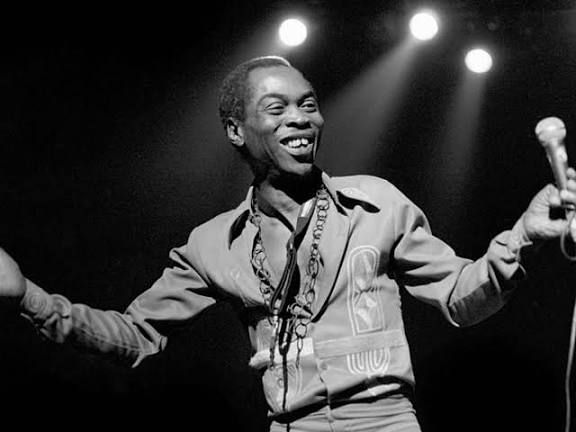
The Fela Grammy Lifetime Posthumous Award is widely seen as a symbolic and cultural milestone, reflecting the growing global embrace of African music and its historical roots.
Reacting to the announcement, Fela’s youngest son and bandleader of Egypt 80, Seun Kuti, described the recognition as long overdue.
Speaking in an interview, Seun said the honour validates decades of grassroots admiration that his father commanded without institutional endorsement.
“Fela has lived in the hearts of the people for so long,” Seun said. “Now the Grammys have acknowledged it. It’s a double victory — for his legacy and for African music.”
According to Seun, the recognition helps restore balance to the global narrative around Fela, whose life and work were often misunderstood or marginalised during his lifetime due to his confrontational politics and refusal to conform.
Longtime friend and former manager of the Afrobeat icon, Rikki Stein, echoed similar sentiments, describing the award as “better late than never.”
“For a long time, Africa was simply not on their radar,” Stein said. “That is clearly changing now.”
Grammy recognition reflects Afrobeats’ global dominance
Industry observers note that the Fela Grammy Lifetime Posthumous Award comes at a time when African music — particularly Afrobeats — is enjoying unprecedented global success.
In 2024, the Recording Academy introduced the Best African Music Performance category, a move widely celebrated across the continent.
Nigerian stars have since become regular fixtures at the Grammys, with artistes such as Burna Boy, Wizkid, Davido and Tems achieving international acclaim. Burna Boy is again nominated this year for Best Global Music Album.
Music historians argue that modern Afrobeats would not exist without Fela’s groundbreaking innovations, which fused West African rhythms with jazz, funk, highlife and socially conscious lyricism.
A revolutionary beyond music
Born Olufela Olusegun Oludotun Ransome-Kuti, Fela later dropped the surname “Ransome,” rejecting what he described as its colonial legacy.
Alongside drummer Tony Allen, he developed Afrobeat not just as a genre, but as a political weapon — one that challenged authoritarianism, corruption and social injustice.
Over a career spanning nearly three decades, Fela released more than 50 albums, each carrying sharp critiques of military rule, economic exploitation and Western imperialism.
His outspoken nature made him a constant target of Nigeria’s military governments, leading to repeated arrests, intimidation and violent repression.
One of the darkest chapters of his life occurred in 1977, when soldiers raided his self-declared commune, Kalakuta Republic, following the release of his album Zombie.
The attack left many injured and led to the eventual death of his mother, Funmilayo Ransome-Kuti, a renowned feminist and activist, who sustained fatal injuries after being thrown from a window.
Rather than retreat into silence, Fela transformed personal tragedy into protest, releasing albums such as Coffin for Head of State, further cementing his reputation as an unyielding voice of resistance.
Cultural impact beyond Nigeria
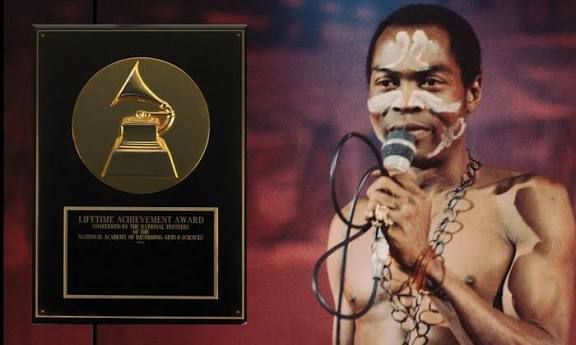
The significance of the Fela Grammy Lifetime Posthumous Award extends far beyond Nigeria. Fela’s music resonated across Africa, the Caribbean, Europe and the United States, inspiring movements rooted in Pan-Africanism and Black consciousness.
His performances at the Afrika Shrine in Lagos were legendary, blurring the lines between music, political rally and spiritual awakening. These nightly gatherings attracted locals, intellectuals, activists and foreign admirers, all drawn to his fearless expression.
Today, Fela’s influence can be heard and seen in the work of global artists across genres, including Burna Boy, Kendrick Lamar, Erykah Badu, and even actor-musician Idris Elba, who have all cited him as a creative inspiration.
Family, collaborators to receive award
Members of Fela’s family, former bandmates and close friends are expected to attend the Grammy ceremony to accept the award on his behalf. For many of them, the recognition represents not just a musical honour, but a vindication of Fela’s lifelong struggle against systems he believed oppressed ordinary people.
Stein emphasised that separating Fela’s music from his activism is impossible.
“He stood up for people who drew life’s short straw,” he said. “He challenged injustice, corruption and bad governance relentlessly.”
A legacy sealed in global music history
For Seun Kuti, who was only 14 years old when his father died, the award affirms a mission that transcends trophies.
“He wasn’t interested in awards,” Seun said. “He was interested in liberation — freeing the mind.”
With the Fela Grammy Lifetime Posthumous Award, the Recording Academy has effectively sealed Fela Kuti’s place not only in African history, but in the global music canon — recognising a revolutionary whose sound and message remain as urgent today as they were decades ago.
About The Author